China Takes on 'Ghost Kitchens': App-Only Restaurants That Don't Actually Exist, Because Why Let Reality Get in the Way of a Cheap Cake?
China cracks down on 'ghost kitchens' - app-only restaurants that don't exist - after a man complained about a cake with inedible flowers, sparking a 3.6 billion yuan fine spree and a new era of livestreamed cooking.
Chinese regulators have set their sights on a new menace in the country's cut-throat food delivery wars: "ghost kitchens" - restaurants that exist solely on apps, like a spectral buffet for the digital age. These phantom eateries outsource orders to third-party vendors who fulfill them at lower costs, letting merchants slash prices and fatten profits while customers wonder if their food was prepared in a broom closet.
Authorities have uncovered thousands of these culinary apparitions across China, sparking fears that bargain-basement prices come with a side of food safety risks. Starting this week, apps must verify restaurants' licenses and addresses, and merchants must ensure their online listings match their physical premises - a radical concept, apparently. They must also specify if they offer dine-in services, just in case you were hoping to eat at a non-existent location.
The crackdown began last year after a Beijing man filed a complaint about a cake topped with inedible flowers - because nothing says "food delivery" like decorative botanicals you can't eat. State media reported that the cake chain he ordered from listed nearly 380 locations on major e-commerce platforms but didn't have a single physical store. Its online shops allegedly used forged business licenses, which is one way to avoid rent.
Investigations revealed the chain accepted orders, then transferred them to a different platform, where they were outsourced to third-party vendors based on who had the lowest bid. Because nothing says "quality cake" like auctioning your dessert to the cheapest bidder. Authorities found 3.6 million cake orders across two order-transfer platforms, according to state news agency Xinhua last month.
They also recorded 67,000 "ghost shops" across seven major food delivery apps, which together with the order-transfer sites "formed an illegal supply chain through mutual collusion," per Xinhua. Food delivery platforms were complicit, with one staff member reportedly telling officials, "If we're too strict in our review, the merchants would go to other platforms." Ah, the classic race to the bottom, now with extra food safety hazards.
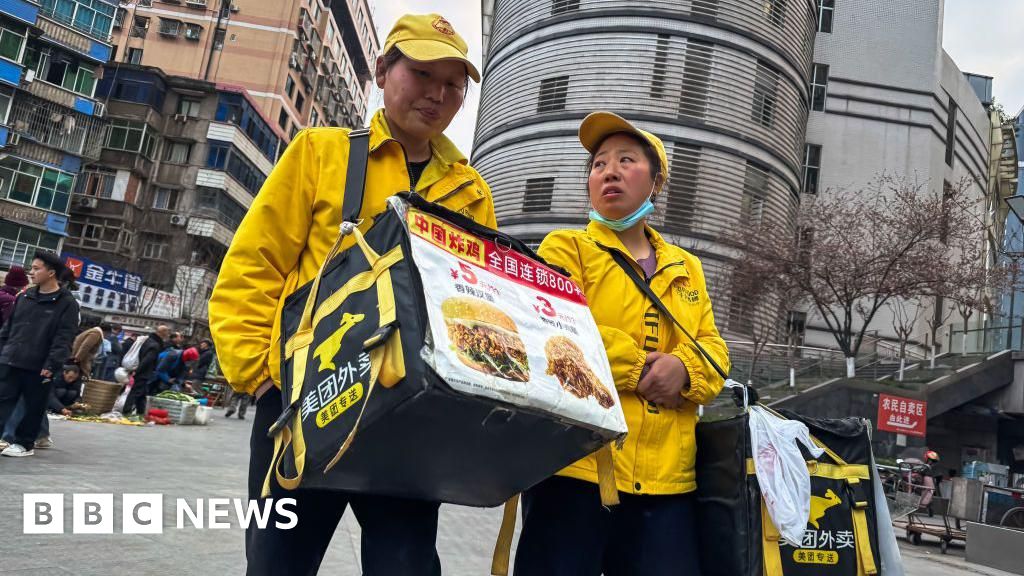
Online food delivery is a fiercely competitive industry in China. Last year, a price war among major apps prompted government warnings about a race to the bottom. Bearing the brunt are delivery riders scrambling to meet ever-tighter deadlines for a pittance, because why have safe working conditions when you can have faster takeout?
In April, the State Administration for Market Regulation fined seven e-commerce platforms - including Taobao, JD.com, Meituan, and Pinduoduo - a total of 3.6 billion yuan ($530 million; £400 million), mostly over deliveries from ghost kitchens. That's a lot of money for meals that never quite existed.
As the campaign continues, merchants are trying to reassure consumers. In the eastern city of Hangzhou, more than 20 takeout stalls have installed "transparent kitchens" with live broadcasting features, allowing customers to watch their food being prepared in real time. Because if you can't trust a ghost kitchen, at least you can trust a livestream. In nearby Anhui province, authorities signed a food safety agreement with Meituan, Taobao, and JD.com, which includes using AI models to monitor kitchens and rewarding delivery riders for whistleblowing on illegal restaurants. So now the robots and the gig workers are both on the case.
The Good Times
News in your inbox.
One sardonic roundup, delivered on your schedule. Free. Unsubscribe whenever your tolerance for wit runs out.
Already subscribed but we never reach your inbox? Check your spam folder and hit 'Not spam' (or 'Remove from spam') to bust us out of junk-mail purgatory. You'll be helping everyone else too.
Don't open any of our emails for a month and you'll be automatically removed from the mailing list.
Rewrite Article
Select parts to regenerate with a fresh AI pass. Translations will be updated automatically.
Generate AI Image
Creates a sardonic version of the article image using OpenAI.