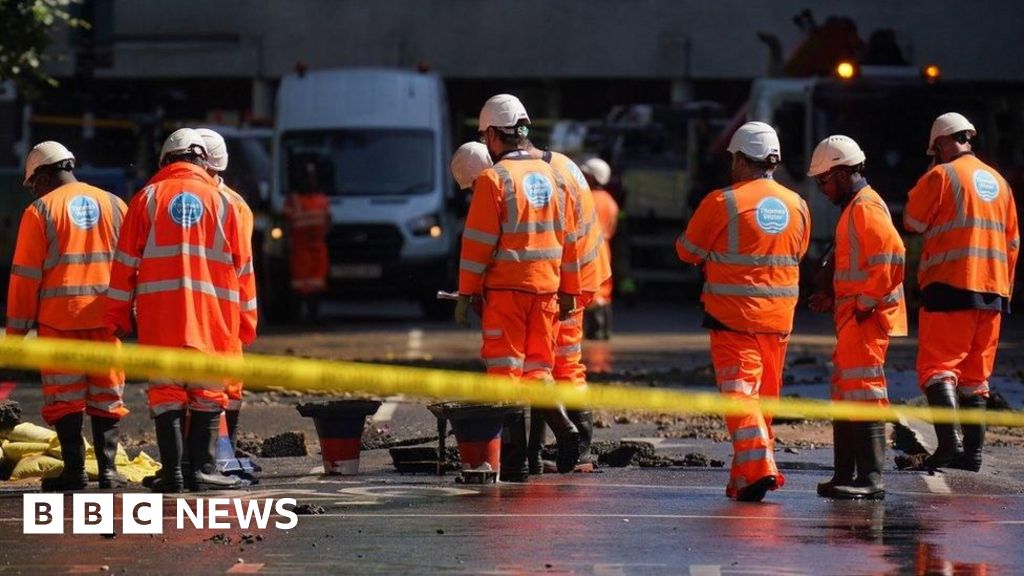
Thames Water Sinks Deeper Into Government Custody After Rescue Deal Rejected
UK government rejects Thames Water's £10bn rescue deal, nudging the debt-ridden utility toward temporary nationalisation. Because when your water company is drowning in debt and sewage, who better to call than the government?
The government has put its foot down on a proposed £10bn rescue deal for Thames Water, pushing the UK's largest water company one step closer to a form of nationalisation that sounds like a plan B nobody really wanted but everyone saw coming.
Environment Secretary Emma Reynolds wrote to the industry regulator on Monday to express her displeasure with the package put forward by the firm's lenders. A government spokesman told the BBC the current offer "does not do enough to protect consumers or the environment" - which, given Thames Water's recent track record, is a bit like saying a leaking bucket doesn't hold enough water.
Fears the company could collapse first emerged three years ago, and the government has been on standby to take control if required ever since. If it does go bust, households will still have drinking water and sewerage services - because even in a crisis, the government knows not to mess with the plumbing.
Thames Water serves about 16 million customers, mostly across London and parts of southern England, and has faced heavy criticism over its performance, sewage discharges, and pipe leaks. In May last year, it was handed a £122.7m fine - the biggest ever issued by the water industry regulator - for breaching rules on sewage spills and shareholder payouts. That's a lot of money for a company that can't seem to keep its water clean.
A group of its existing lenders offered to write off £9.4bn of its near £20bn debt pile and inject billions in new money, but wanted leniency from future pollution fines in return. London & Valley Water, a consortium of large financial institutions and investors, said some £3.35bn of cash would be put into the company along with a new £6.55bn debt facility, part of a £10bn business plan until 2030. A spokesman for the group said the deal would "fund significant improvements for customers, clean up local rivers and achieve full compliance as quickly as possible" - which sounds nice, if you believe in fairy tales.
Ofwat, the water industry regulator, has been reviewing the proposal and a decision is expected this summer. Without a rescue deal, Thames Water is set to run out of cash within a matter of months and could collapse. The Times reported the government's intervention was over concerns the deal would place an "undue burden" on customers. Reynolds is due to address Parliament on Tuesday, presumably to explain why the government is now in the water business.
The government has previously said it would prefer "a market-based solution", but would step in "if that were to become necessary". The form of temporary nationalisation on the table is known as a special administration regime (SAR), which ensures vital companies like water are kept running by government-appointed managers. Proponents say the SAR solution would give Thames a fresh start, allowing it to write off some of its losses and be sold without such a large debt pile.
But a spokesperson for Thames Water told the BBC that a SAR would create problems rather than solve them, saying it would "delay urgently needed improvements, increase costs, transfer risk and potentially create operational disruption". Its lenders previously warned "nationalisation is not the right answer", claiming it would restart the process of fixing Thames, require billions in government support, increase uncertainty for employees, put pensions at risk, destabilise the supply chain, and make it harder to deliver the improvements customers deserve.
Earlier this year, CKI Holdings, a company that wanted to buy Thames Water, argued that customers would be better served if the utility was allowed to collapse so that they and others could submit new bids to revive the debt-ridden company. Co-managing director Andy Hunter said CKI, which already owns 75% of Northumbrian Water, had a proven track record: "I think the next owner of Thames Water should be an experienced, credible, long-term focused operator with the expertise and the resources to fix Thames Water. But we seem to be sleepwalking into a conclusion that will result in the next owner of Thames Water - having, doubtless, many attributes - having none of these attributes."
In July last year, Thames Water boss Chris Weston said the company was "extremely stressed" and that it would take "at least a decade to turn around". So, in summary: the water is dirty, the pipes are leaking, the debt is massive, and the government is now the designated lifeguard. Splendid.
The Good Times
News in your inbox.
One sardonic roundup, delivered on your schedule. Free. Unsubscribe whenever your tolerance for wit runs out.
Already subscribed but we never reach your inbox? Check your spam folder and hit 'Not spam' (or 'Remove from spam') to bust us out of junk-mail purgatory. You'll be helping everyone else too.
Don't open any of our emails for a month and you'll be automatically removed from the mailing list.
Rewrite Article
Select parts to regenerate with a fresh AI pass. Translations will be updated automatically.
Generate AI Image
Creates a sardonic version of the article image using OpenAI.