In a groundbreaking discovery that will shock absolutely no one who has ever had a supportive relative, involving a patient's family and friends in their mental health treatment makes them three times less likely to be admitted to a psychiatric hospital. The first major study of Open Dialogue - a treatment approach that focuses on patient priorities, consistent clinicians, and the involvement of loved ones - found that patients also rated their recovery and quality of life higher than those receiving traditional care.
But before you start planning a family therapy session, the trial, conducted across five NHS trust areas, found that Open Dialogue did not prevent relapses. Critics, ever the party poopers, say more research is needed to prove its effectiveness beyond the extra resources it requires.
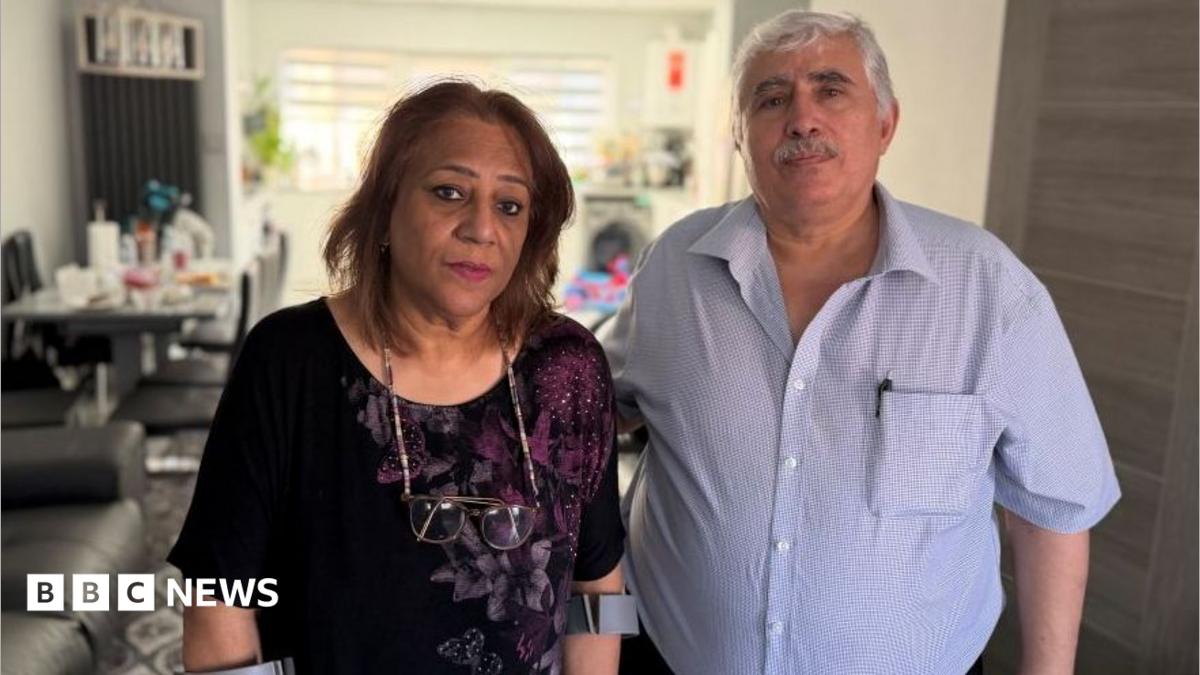
Take Dr Nihad Fathi, for example. In 2020, as the Covid pandemic descended, his life began to unravel. By summer 2021, work-related stress left him anxious, depressed, and feeling worthless. 'I caught myself like a lost child and I didn't know what's going on in my mind,' he said. His wife Farah was terrified: 'At that stage, I didn't know what to do.'
In one session, Nihad and Farah sit in a circle in their east London home with consultant psychiatrist Dr Bill Travers and community psychiatric nurse David Adebayo - the same team they've seen for five years. The NHS trust they work for, North East London NHS Foundation Trust, has been using Open Dialogue since 2019.
Open Dialogue was invented in Finland in the 1980s and is now used in over 20 countries, though research on its effectiveness has been, until now, a bit thin on the ground. The idea is simple: patients attend regular 'network meetings' with two practitioners and their friends, family, neighbours, or colleagues, who remain involved throughout recovery. These sessions are free-flowing conversations about how the patient feels, what help they want, and how to achieve it - plus a chance for the network to share their observations and feelings.
Dr Travers notes that while these meetings are longer than a typical appointment, patients need fewer of them. 'It enables you to reach a much firmer and deeper understanding of the underlying reasons for the problems and indeed to seek solutions that come very much from the person and their family,' he said.
The study, led by University College London, followed 500 patients who approached mental health services in crisis. Half received Open Dialogue; the other half got treatment as usual. While relapse rates were similar, the Open Dialogue group saw a dramatic reduction in psychiatric hospital admissions, and when they were admitted, their stays were on average half as long. They also felt better about their wellbeing and recovery.
Dr Russell Razzaque, the trial's clinical lead, sees big implications for NHS psychiatric care: 'There's a substantial reduction in cost because you're not spending all the money on inpatient beds, which are the most expensive part of the system. So yes, you might be spending a bit more time in the community, but that is what the NHS wants.'
But Dr Sameer Jauhar, a skeptical consultant psychiatrist, argues the benefits might just be the result of extra resources. 'The important question is whether the distinctive, resource-intensive elements of Open Dialogue itself add benefit beyond good, adequately staffed community care. On the evidence of this trial, that question remains unresolved,' he said.
For Farah, though, Open Dialogue was exactly what Nihad needed. 'It needs somebody to hear him, somebody to understand him, how he feels, what he's trying to even to achieve. They are helping him and then he sees a better picture,' she said.
If you're struggling with distress or despair, help is available in the UK via the BBC Action Line.
The Good Times
News in your inbox.
One sardonic roundup, delivered on your schedule. Free. Unsubscribe whenever your tolerance for wit runs out.
Already subscribed but we never reach your inbox? Check your spam folder and hit 'Not spam' (or 'Remove from spam') to bust us out of junk-mail purgatory. You'll be helping everyone else too.
Don't open any of our emails for a month and you'll be automatically removed from the mailing list.
Rewrite Article
Select parts to regenerate with a fresh AI pass. Translations will be updated automatically.
Generate AI Image
Creates a sardonic version of the article image using OpenAI.