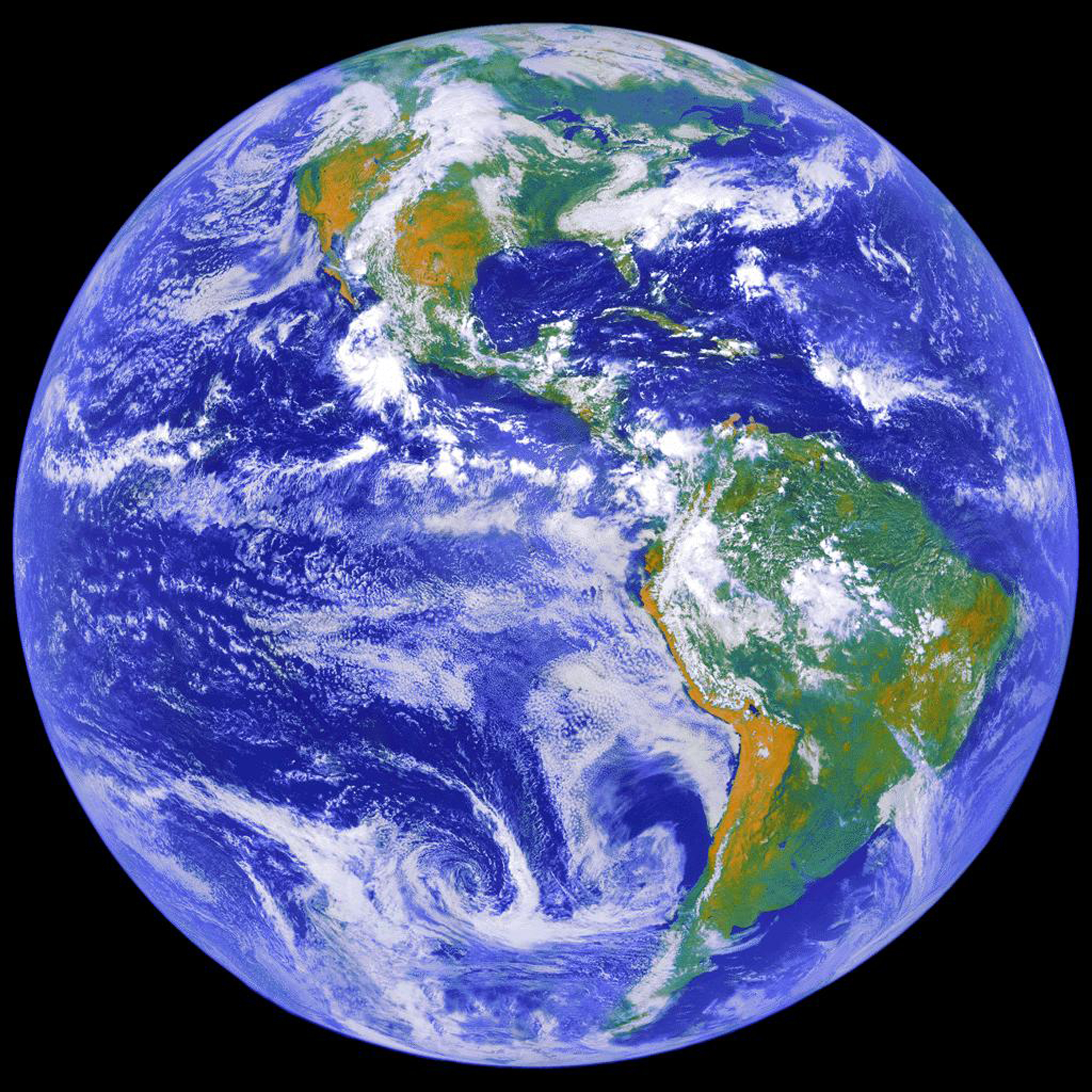
NASA’s Earth-observing satellites are out there, diligently tracking aerosols, sea levels, land cover, and cloud cover over years and decades. But keeping that data flowing isn't just about engineering muscle - it requires a crystal ball, or at least a really good risk assessment. Enter Lindsey Jacobson, a Pathways intern at NASA’s Langley Research Center, whose job is to help NASA anticipate disruptions before they happen, so senior leaders aren't left scrambling when a satellite decides to take an unscheduled vacation.
Jacobson, who splits her time between Langley and finishing her mechanical engineering dissertation at North Carolina State University, works with the NASA Earth Science Strategic Integration Environment (NESSIE) team within the Systems Analysis and Concepts Directorate (SACD). The team's mission: ensure that the dozens of Earth-observing missions keep delivering the data products that scientists and operational users depend on, come hell or high water - or just a delayed launch.
“There’s uncertainty about mission lifetimes and what could happen on orbit, and about schedules,” Jacobson explains. To navigate that uncertainty, she builds analysis tools that give the team what she calls a “foresight ability.” It’s the capacity to anticipate changes across the portfolio and have strategies ready, so when something goes sideways, NASA isn’t caught with its pants down.
Jacobson likens it to hurricane prep: “You get the storm shutters, you buy the sandbags, and you have them pre-positioned. Then when the warning comes, you’re not scrambling.” Because nothing says preparedness like having a stash of sandbags in the garage, ready for the apocalypse.
The work isn't all doom and gloom - sometimes missions outlive their expected lifespans, which is a pleasant surprise. But whether the news is good or bad, the principle holds: know your options before you need them.
Her graduate research on complex systems like the electric grid - infrastructure that can't be torn down and rebuilt - informs her approach. “We designed a grid, and now we live with that grid forever,” she says. “What we can do is modify, expand, and improve upon what we have.” Same goes for Earth science satellites, apparently.
Newcomers to NASA might expect the technical challenges to be the hardest part, but Jacobson found the real hurdle is the shifting landscape of Earth science itself. Commercial companies are muscling in, new space agencies are popping up, and technologies are evolving faster than you can say “orbital mechanics.” Keeping pace with that change is as crucial as any calculation.
And yes, AI is getting in on the act. Jacobson notes that Langley has a history of being first, and the team is keen to keep that streak alive by integrating new tools into their workflow. “We want to continue to be the first,” she says, echoing Langley’s director, Trina Dyal.
When she's not predicting satellite futures, Jacobson is reading books that ponder the meaning of life - fitting for someone whose work is all about the big picture. As she puts it, “The idea that space exploration can bring humanity together. That cosmic perspective.”
So next time you see a satellite data gap, remember: somewhere in Hampton, Virginia, Lindsey Jacobson is already on it, sandbags at the ready.
The Good Times
News in your inbox.
One sardonic roundup, delivered on your schedule. Free. Unsubscribe whenever your tolerance for wit runs out.
Already subscribed but we never reach your inbox? Check your spam folder and hit 'Not spam' (or 'Remove from spam') to bust us out of junk-mail purgatory. You'll be helping everyone else too.
Don't open any of our emails for a month and you'll be automatically removed from the mailing list.
Rewrite Article
Select parts to regenerate with a fresh AI pass. Translations will be updated automatically.
Generate AI Image
Creates a sardonic version of the article image using OpenAI.