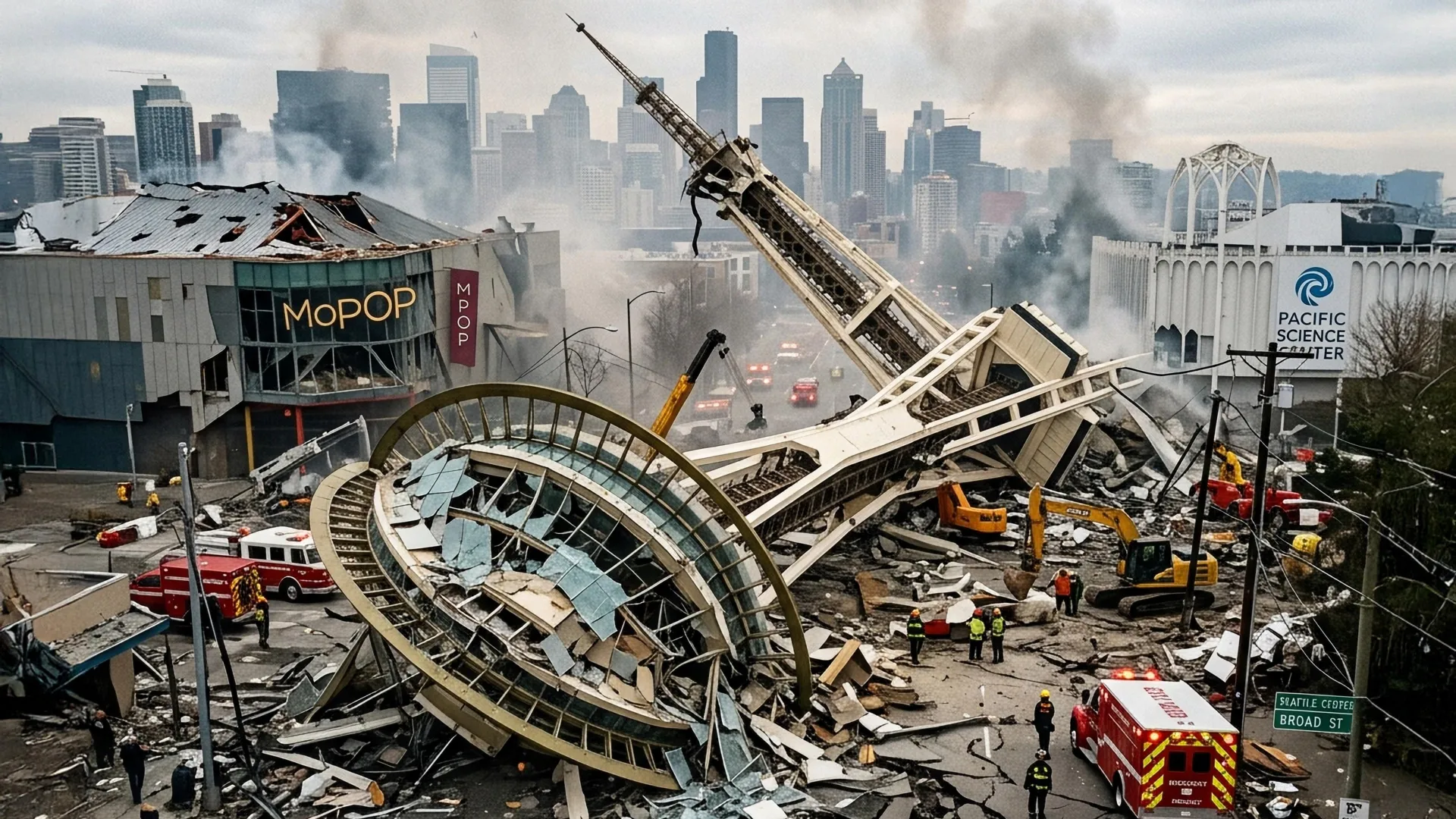
Seattle's Smaller Faults Are Being Rude, Active, and Overdue for a Visit
Seattle's lesser-known local faults rupture every 350 years, far more often than the big offshore one, and researchers are only now grasping how much trouble they could cause.
Seattle has long been bracing for the Big One from the Cascadia subduction zone, but a new study suggests the city should also watch its step around some unassuming local faults that are far more active than anyone gave them credit for. Published in GSA Bulletin, the research zeroes in on the Seattle Fault Zone (SFZ), an east-west system stretching through Bainbridge Island and Seattle, revealing that its secondary faults rupture every 350 years or so - a timeline that makes the main fault's 5,000-year gap look downright lazy.
"My job as a paleoseismologist," says Dr. Stephen Angster, a research geologist at the U.S. Geological Survey's Earthquake Science Center in Seattle and lead author of the study, "is to figure out when and how often these local faults rupture, which would help us predict roughly when we come in the window of the next potential rupture." The National Seismic Hazard Model typically ignores shorter faults because they don't meet length requirements for big quakes, but Angster argues this overlooks a pressing danger: "They're rupturing more frequently and pretty close to home."
The SFZ absorbs about 15% of the crustal strain between Portland, Oregon, and Vancouver, British Columbia. Studying these hidden faults requires detective work with magnetic surveys and lidar images to spot ancient scarps, then trenching across them to date displaced soil. The team's reconstruction of two newly identified secondary faults found they last ruptured in the 19th century, based on radiocarbon dating and tree ring evidence from trees killed by the quake. The Seattle metro area, home to roughly four million people, could face more destruction from these local shake-ups than from a distant Cascadia event. "I think we're still trying to wrap our heads around the size and the potential of these smaller faults," Angster says.
The Good Times
News in your inbox.
One sardonic roundup, delivered on your schedule. Free. Unsubscribe whenever your tolerance for wit runs out.
Already subscribed but we never reach your inbox? Check your spam folder and hit 'Not spam' (or 'Remove from spam') to bust us out of junk-mail purgatory. You'll be helping everyone else too.
Don't open any of our emails for a month and you'll be automatically removed from the mailing list.
Rewrite Article
Select parts to regenerate with a fresh AI pass. Translations will be updated automatically.
Generate AI Image
Creates a sardonic version of the article image using OpenAI.