Vast Space Decides Space Stations Are Not Enough, Will Now Also Sell High-Power Satellite Buses
Vast Space, having successfully tested a space station precursor, now wants to build high-power satellite buses, because apparently one space business isn't enough.
Vast Space, fresh off a successful test flight of its Haven-1 space station precursor, has decided that simply building private space stations is too limiting. The Long Beach, California-based company announced Tuesday it will now also sell high-powered satellite buses, because why stop at one way to make money in space?
“Every single successful space company is diversified in its products,” said CEO Max Haot, in what we assume is his best impression of a Fortune 500 PowerPoint slide. “So for us it really was a question of when, not if.”
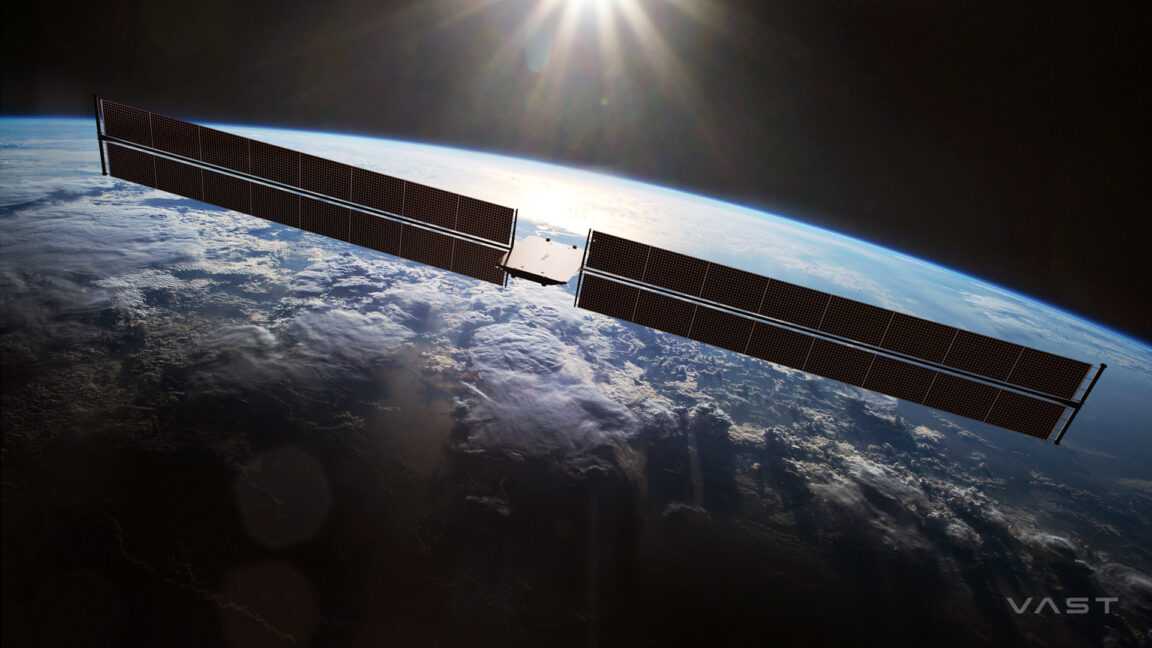
The company’s first offering is a 15 kW-class satellite bus, which is about 3 meters long, 4 meters tall, weighs 700 kg, and can carry at least 350 kg of payload. It has a design lifetime of five years and can operate from low-Earth orbit all the way out to lunar orbit. Vast aims to serve everyone from telecom companies to observation nerds to data service providers, and Haot also mentioned an NVIDIA Space-1 Vera Rubin Module for orbital data center inferencing - because what’s space without a little AI?
The satellite bus borrows heavily from the company’s Haven-1 space station technology, which is due to launch next year as the world’s first private space station. But Vast is also developing its own electric propulsion and deployable solar arrays in-house, because apparently off-the-shelf parts just aren’t dramatic enough.
Vast has already signed a customer for four satellites, with an option to buy up to 200 more. The company is targeting a launch of at least 10 Vast Satellites in the fourth quarter of 2027, which is roughly the time we’ll all be wondering where to park our personal orbital pods.
This puts Vast in an increasingly crowded market. Historically, big players like Boeing, Lockheed Martin, Northrop Grumman, Maxar, and Sierra Space made medium-to-large satellites, often costing tens to hundreds of millions of dollars. But the US government’s Space Development Agency now prefers proliferated constellations - many small satellites are harder to blow up than a few big ones - and the Falcon 9’s high cadence and rideshare missions have made it cheaper to get smaller birds into orbit.
Venture capital has flooded into new entrants like K2 Space, Rocket Lab, True Anomaly, Blue Canyon, and Millennium Space Systems. Haot, however, notes that most of these companies are still emerging with immature products, and he believes Vast could become a market leader if it executes - especially for power-hungry applications. Vast has already invested $1 billion in facilities for spacecraft manufacturing, including clean rooms that can handle both space stations and satellites.
The number of satellites in orbit has exploded from about 4,000 a few years ago to roughly 14,000 today, largely thanks to SpaceX’s Starlink. By some estimates, there could be 500,000 satellites in orbit within a decade. Haot expects about 90% of those will be built by SpaceX, Amazon, Blue Origin, or other major players. But even 10% of 500,000 is 50,000 satellites - which is a lot of potential customers for Vast and its competitors to fight over.
The Good Times
News in your inbox.
One sardonic roundup, delivered on your schedule. Free. Unsubscribe whenever your tolerance for wit runs out.
Already subscribed but we never reach your inbox? Check your spam folder and hit 'Not spam' (or 'Remove from spam') to bust us out of junk-mail purgatory. You'll be helping everyone else too.
Don't open any of our emails for a month and you'll be automatically removed from the mailing list.
Rewrite Article
Select parts to regenerate with a fresh AI pass. Translations will be updated automatically.
Generate AI Image
Creates a sardonic version of the article image using OpenAI.