
In the early 1990s, Qatar was in a financial funk - high debt, weak revenues, the works. So it bet big on natural gas, building the Ras Laffan industrial city and turning itself into the world's largest LNG export hub. For three decades, that bet paid off handsomely, making Qatar one of the richest countries on Earth.
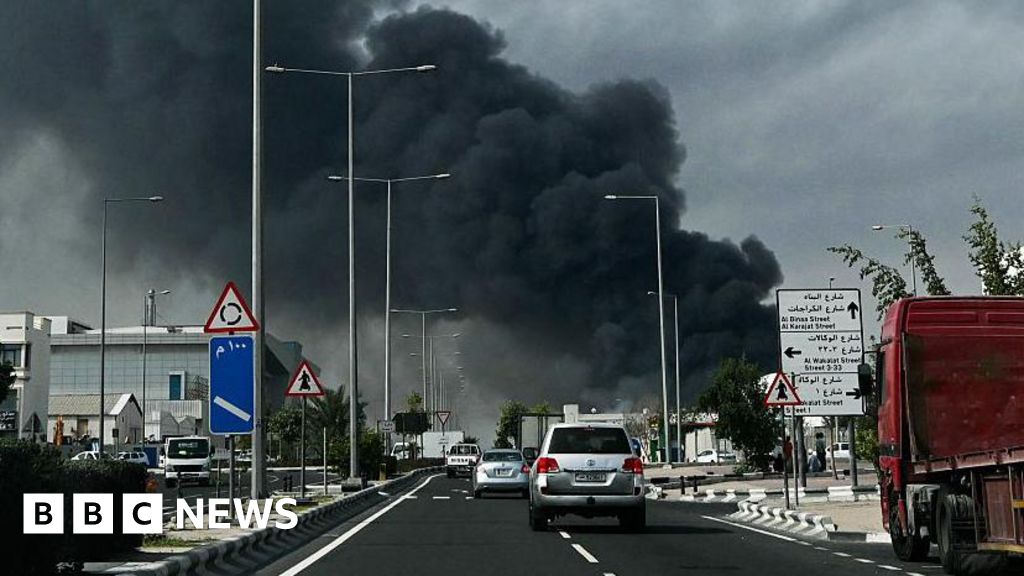
Then, on 18 March, an Iranian ballistic missile hit the main Ras Laffan complex, knocking out an estimated 17% of global LNG supply. The damage will cost state-owned QatarEnergy a predicted $20bn (£15bn) in lost annual revenues, with repairs taking three to five years. "The attack was a shock - both to global energy markets, but also to the Gulf states themselves, which are now feeling very vulnerable," says Karen Young, a senior research scholar at the Center on Global Energy Policy at Columbia University. QatarEnergy's chief executive Saad Al Kaabi said the damage had "set the region back by 10 to 20 years." The Iranian strike came after Israel bombed Iran's South Pars gas field, which borders Qatar's North Dome field - together, they form the world's largest natural gas reserve.
Across the Gulf, the continuing conflict with Iran has caused up to $58bn of damage, according to one estimate. More than 80 facilities have been hit since the US and Israel launched strikes on Iran on 28 February, with over a third severely damaged, per the International Energy Agency. Along with Qatar, damage has also been reported in Bahrain, Kuwait, Saudi Arabia and the United Arab Emirates. The World Bank has cut its growth forecast for the Middle East to 1.8% this year, warning the fallout could result in long-term "scarring." It previously estimated growth of 4% in 2026, but says Qatar and Kuwait will see the biggest contraction. Saudi Arabia and the UAE have shown more resilience thanks to oil exports that don't transit through the Strait of Hormuz, which Iran has closed. Justin Alexander, director at consultancy Khalij Economics, says the impact is severe and adds that it's still difficult to fully assess the damage given the conflict remains unresolved. "Even if the war were to stop today, there would still be a significant impact before things return to normal," he says.
It's not just physical damage to energy infrastructure that's hurting economies. The closure of the Strait of Hormuz - which normally handles around 20% of global oil and LNG flows - has sharply reduced exports. Saudi Arabia has been forced to rely on its East-West pipeline to transfer oil to the Red Sea port of Yanbu, while the UAE is using its Fujairah pipeline to bypass the strait. But together, these alternatives can carry less than half the volumes that normally pass through Hormuz. The head of the International Energy Agency has described the situation as the "biggest energy crisis in history." Meanwhile, Qatar's finance minister has warned that the full economic fallout from the Iran war is yet to be felt. Bader Al Saif, professor at Kuwait University and fellow at Chatham House, says the crisis could push countries such as Qatar, Kuwait and Bahrain to develop pipeline networks as an alternative to tanker ships. "They can't just rely on one route to transport oil and gas. It's Iran today. It could be some other external threat in the future," he says.
The economic fallout is spreading beyond the energy sector. Travel and tourism - a key pillar of diversification in several Gulf economies - has been hit hard. The World Travel & Tourism Council estimated in March that the Middle East was losing around $600m a day in tourism revenues since the war began. The UAE, which has spent decades building itself into a global tourism hub, has been among the most exposed, with businesses in Dubai reporting sharp declines in bookings, cancellations and reduced footfall, leading to job losses and unpaid leave. There are also signs of bigger financial system stresses emerging. Last month, Donald Trump said the US was considering extending currency swap lines to Gulf allies, including the UAE, to ease dollar liquidity pressures. Yet the UAE has played down the development; Yousef Al Otaiba, the country's ambassador to the US, said suggestions that the country requires external financial backing "misread the facts." The UAE has also announced it will quit oil producer group Opec, giving it more freedom to boost exports. It was the fourth-largest producer within the organisation, which controls about 37% of global supply.
Across the wider Middle East, Gaza, Lebanon and Syria are going to remain reliant on financial support from oil-rich Gulf states to rebuild their economies - but that support may now come under pressure as Gulf governments divert resources towards rebuilding their own. "The large amounts of aid and investment that perhaps some people in the region need might not be available," says Alexander. The conflict may also impact the economic diversification programmes of Gulf nations, which are investing billions in sectors such as artificial intelligence, sports and entertainment to reduce their dependence on oil revenues. Saudi Arabia and the UAE have funnelled billions to position themselves as regional AI and technology hubs, aiming to attract high-skilled talent. Some analysts question whether Gulf states may reduce their investments in the US. "Those committed trillions and billions in the US will be scrutinised again by some countries," says Al Saif. There are also concerns that unless there is a permanent deal to end the conflict with Iran, with guarantees that the Strait of Hormuz remains open, the economic strain could deepen further. "The Gulf states do have to prepare for perhaps an extended period of instability - an unresolved or low-intensity conflict within the region that may continue if there is no deal," says Young.