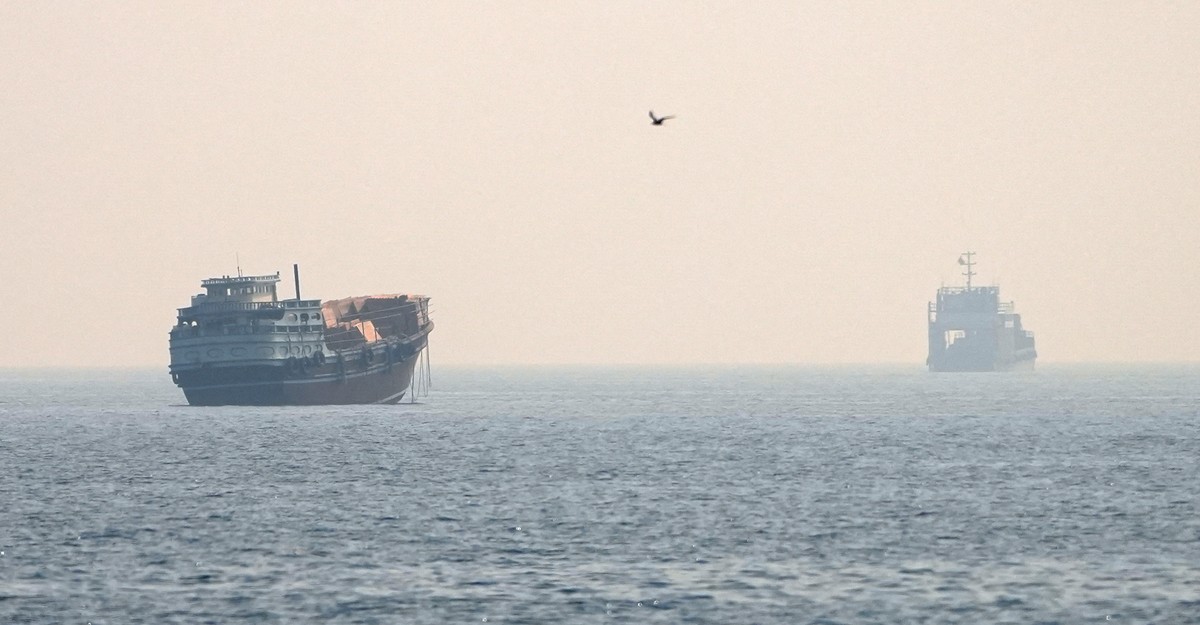
Iran and U.S. Engage in a Tense Game of 'Who Blinks First' Over a Very Important Waterway
Iran and the U.S. are locked in a cycle of strikes and threats over the Strait of Hormuz, with neither side wanting war but both unwilling to back down - classic geopolitical improv.
Iran’s decision to attack ships in the Strait of Hormuz and America’s retaliatory strikes have both sides dancing on the edge of a war neither actually wants. The Trump administration, already knee-deep in an unpopular conflict, tried to thread the needle this week by using missile and drone strikes to open the strait without reigniting full-scale hostilities. It’s a bit like trying to put out a fire with a flamethrower - technically possible, but not advisable.
Iran’s memorandum of understanding with Washington, signed three weeks ago, promised sanctions relief and frozen funds in exchange for cooperation. But Tehran hasn’t seen the cash yet, and a recent U.S.-brokered Israel-Lebanon deal has them feeling left out. So now Iran is squeezing the strait, its main bargaining chip, even if it means risking a return to war. As Vali Nasr of Johns Hopkins put it, “We may sleepwalk our way back to war.”
The tit-for-tat began Monday when Iran hit three commercial vessels. The U.S. struck over 80 Iranian targets, including small boats. Iran retaliated with attacks on Kuwait and Bahrain, home to U.S. bases. By today, the cycle continued, with Trump threatening more strikes. “We hit them very hard last night,” he said at the NATO summit. “We’ll probably hit them hard again tonight.” He also declared negotiations “over,” though his aides later clarified that talking and bombing can coexist - a diplomatic two-step.
Gulf States are alarmed at Iran’s plan to charge tolls for strait passage, a fee they find “simply unacceptable.” But a full-on war isn’t guaranteed. Retired General Joseph Votel described U.S. strategy as “controlled escalation,” while Iran mourns its slain leader Ayatollah Khamenei, whose funeral ends tomorrow, putting pressure on the regime to show resolve.
Negotiations may be suspended until tensions ease. Qatar’s mediator role is complicated after Iran attacked one of its LNG tankers. History offers mixed lessons: the Korean War ended in a stalemate, Vietnam in a protracted withdrawal. As Duke’s Peter Feaver notes, “It is too early to say where the Iran conflict will fall on that spectrum, but recent developments are not encouraging.”
Oil prices surged over 7% to nearly $80 a barrel, still below wartime highs. The U.S. mission shifted from “holding Iran accountable” to “degrading Iran’s ability to threaten navigation” - a sign that the agreement meant to end the war is already slipping away. Trump, eager to move on to Cuba and home renovations, may find that this particular problem doesn’t pack up so easily.
The Good Times
News in your inbox.
One sardonic roundup, delivered on your schedule. Free. Unsubscribe whenever your tolerance for wit runs out.
Already subscribed but we never reach your inbox? Check your spam folder and hit 'Not spam' (or 'Remove from spam') to bust us out of junk-mail purgatory. You'll be helping everyone else too.
Don't open any of our emails for a month and you'll be automatically removed from the mailing list.
Rewrite Article
Select parts to regenerate with a fresh AI pass. Translations will be updated automatically.
Generate AI Image
Creates a sardonic version of the article image using OpenAI.