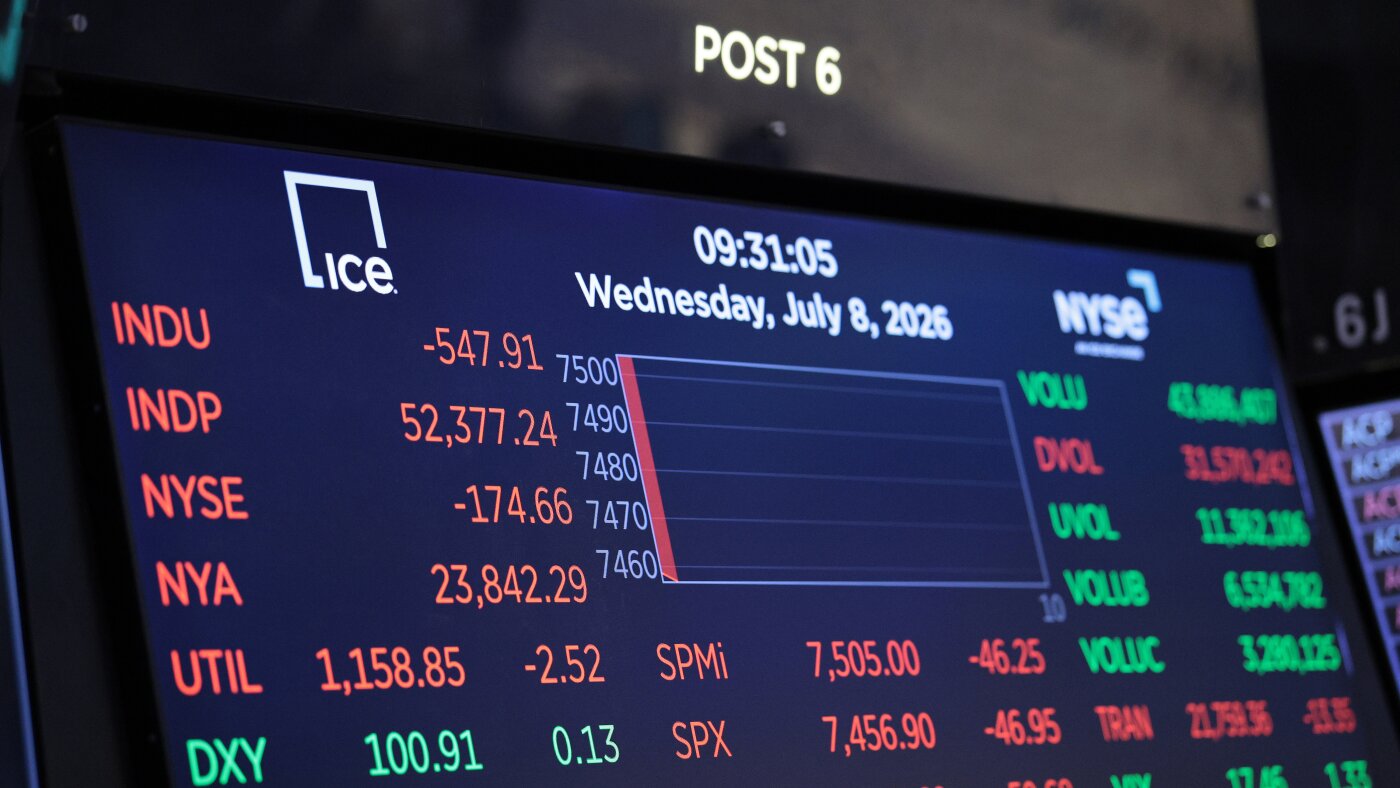
Just when global markets thought they could exhale, the U.S. and Iran have decided to resume their little disagreement, adding a fresh layer of uncertainty to an already shaky world economy. President Trump declared the fragile ceasefire in the Strait of Hormuz dead, and the U.S. military retaliated against what it says were Iranian attacks on vessels trying to navigate the vital waterway. The result? Crude oil prices jumped about 7% on Wednesday, and the Dow Jones Industrial Average tumbled more than 800 points (1.5%), erasing a record high set just two days earlier. Because nothing says 'investor confidence' like missile strikes near the world's most important oil chokepoint.
Retail gasoline prices in the U.S. barely budged - rising less than a penny per gallon overnight, per AAA - suggesting markets don't expect a full-blown return to war. Still, higher crude costs could trickle down in coming days, threatening to reignite inflationary pressure after a month of falling pump prices. Bond yields also jumped, signaling investors are bracing for more turbulence. The resumption of attacks comes just weeks after markets had breathed a collective sigh of relief following the initial ceasefire, proving once again that geopolitical stability is a fragile thing - like a cheap umbrella in a hurricane.
The renewed tensions are also putting pressure on the Federal Reserve under its new chairman, Kevin Warsh. The CME FedWatch tool now shows a better than 1-in-3 chance of an interest rate hike this month, up from about 1-in-4 before the ceasefire fell apart. The central bank is watching energy prices closely; inflation has already blown past its 2% target, and the Trump administration is preparing another round of global tariffs that could further boost import prices. Even before the latest attacks, the International Monetary Fund had downgraded its growth forecast, now expecting the global economy to expand just 3% in 2026, down from 3.5% last year. The IMF warned that renewed Middle East conflict could extend commodity price volatility, threaten supply chains, and weigh on financial conditions - in other words, the economic equivalent of a 'Do Not Disturb' sign that nobody respects.
The Good Times
News in your inbox.
One sardonic roundup, delivered on your schedule. Free. Unsubscribe whenever your tolerance for wit runs out.
Already subscribed but we never reach your inbox? Check your spam folder and hit 'Not spam' (or 'Remove from spam') to bust us out of junk-mail purgatory. You'll be helping everyone else too.
Don't open any of our emails for a month and you'll be automatically removed from the mailing list.
Rewrite Article
Select parts to regenerate with a fresh AI pass. Translations will be updated automatically.
Generate AI Image
Creates a sardonic version of the article image using OpenAI.