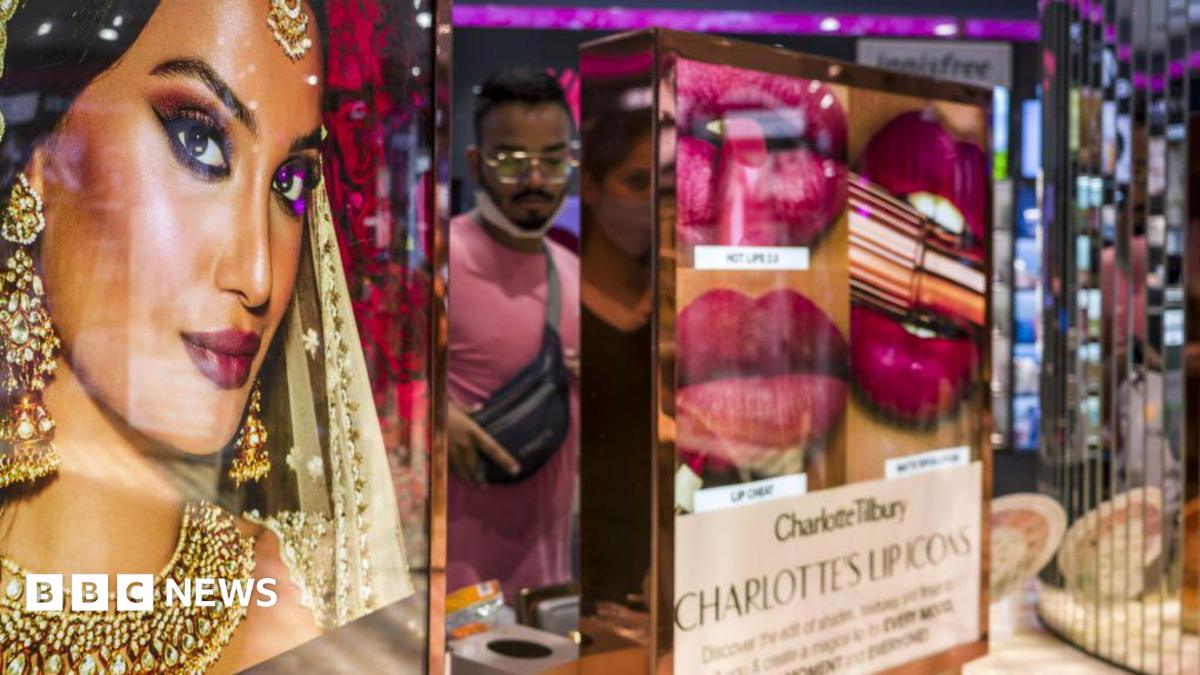
India's Gen Z Spends Like Millennials Never Did, Beauty Market Grows Twice as Fast as GDP
India's beauty market is booming, with Gen Z spending double what millennials did, and global giants like Estée Lauder and L'Oréal scrambling to get a piece of the $23bn pie that's set to nearly double by 2030.
India's beauty industry has become the unexpected darling of global capital, with Estée Lauder, L'Oréal, and Unilever all diving into the pool. In March, Estée Lauder fully acquired Forest Essentials, a homegrown ayurvedic brand that started in a garage in the Himalayan foothills and is now worth a cool billion dollars. L'Oréal followed in June with a majority stake in Innovist, a digital personal care brand. Unilever, not to be outdone, has made at least four beauty investments through its venture arm in the last couple of years.
This isn't just corporate vanity - India's beauty market is booming, valued at $23bn (£17.08bn) in 2025 and projected to nearly double to $40bn by 2030, growing at twice the rate of the country's GDP and the broader retail market. The reason? Money. India's per capita income crossed $2,000 in 2019, and as any economist will tell you, that's the magic threshold where people start buying things they don't strictly need, like fancy face wash instead of the all-purpose soap.
Kushal Bhatnagar, a partner at Redseer, explains it with refreshing honesty: "Historically we've underspent on beauty because there was just no purchasing power for anything other than the very basic stuff. But now, along with more spending power, there is improved access, distribution and product education. The internet broke these barriers." Indeed, e-commerce is expected to drive around 35% of overall beauty spending by 2030, up from just 8% five years ago.
The pandemic gave the industry a boost, too. Vaishali Gupta, co-founder of vegan skincare brand Hyphen with Bollywood star Kriti Sanon, and founder of mCaffeine (India's first caffeinated personal care brand, because why not), says Covid pushed people toward self-care and digital penetration spread like wildfire. "Suddenly Indian consumers had access to beauty and skincare education they'd never had before - such as what was trending in Korea or Europe, or what specific ingredients could do for brightening or acne control," she told the BBC. Her brands have grown their top line by 100% in the past year, and she's not alone - Bollywood stars like Deepika Padukone, Katrina Kaif, and Shilpa Shetty have all launched skincare lines.
The real kicker? It's Gen Z driving this, spending roughly double what millennials did on skincare and personal care. Flipkart, India's largest e-commerce platform (backed by Walmart), reports that 56% of its beauty shoppers are Gen Z, with 70% discovering products via social media. Two out of three beauty searches on Flipkart come from non-metro areas, so this isn't just an urban phenomenon. Redseer predicts Gen Z and Gen Alpha will account for 50% of beauty spending by 2030, up from 32% in 2024.
Priyanka Bhargav, who leads brand strategy at Flipkart, calls it an inflection point: what was once an "aspirational category has now become a daily expression of self-care." And the future looks even more sophisticated, with niche brands focusing on specific ingredients, dermatologist-backed products, and skin nutrition. While only a few brands have scaled meaningfully so far, Bhatnagar predicts 10-15 beauty companies will cross $200m in revenue in the next three to five years. "And when that happens, we expect many of them to tap the public markets, and for IPO and M&A activity to really intensify in the sector," he said. Because nothing says self-care like an IPO.
The Good Times
News in your inbox.
One sardonic roundup, delivered on your schedule. Free. Unsubscribe whenever your tolerance for wit runs out.
Already subscribed but we never reach your inbox? Check your spam folder and hit 'Not spam' (or 'Remove from spam') to bust us out of junk-mail purgatory. You'll be helping everyone else too.
Don't open any of our emails for a month and you'll be automatically removed from the mailing list.
Rewrite Article
Select parts to regenerate with a fresh AI pass. Translations will be updated automatically.
Generate AI Image
Creates a sardonic version of the article image using OpenAI.