HS2 at the Ultimate Y-Junction: Cancel Now or Build the World's Most Expensive Railroad Anyway
HS2 boss says cancelling the project costs as much as finishing it, so the UK might end up with a slower, later, more expensive railroad that doesn't go where it was supposed to - but hey, at least the bats are protected.
HS2 has arrived at what can only be described as the ultimate Y-junction, and neither path looks particularly appealing.
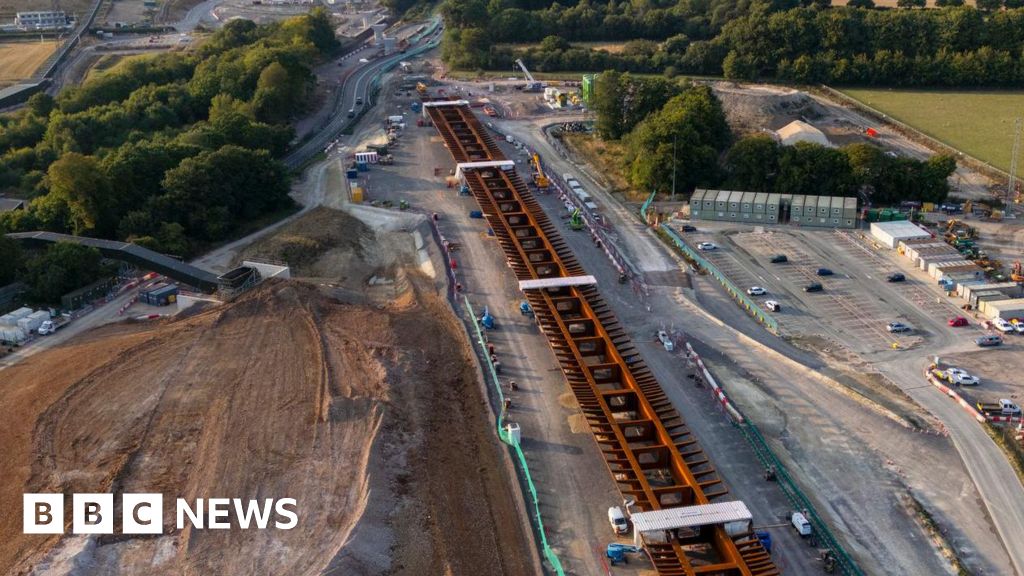
In one direction lies the complete cancellation of the project, despite the viaducts, tunnels, bat protection facilities, and floating platforms already built - because nothing says fiscal responsibility like abandoning half-constructed bat hotels. In the other direction lies spending the money on a slowed-down stump of a line that will connect west London to Birmingham by the late 2030s, a journey that will feel approximately as long as the wait.
HS2 boss Mark Wild has crunched the numbers and arrived at a conclusion that will surprise no one who has followed this project: the costs of cancellation and realistic remediation are in the same ballpark as completion - about £60bn. That brings the total to £100bn all in for what is now officially the world's most expensive railroad, a title nobody was competing for.
The original Y-shaped plan - branching from London to Birmingham, then onward to Manchester and Leeds - was designed for capacity, speed, and strategic economic rebalancing. The UK, being a long, thin country that excels at services, hoped to connect its growth hubs and create agglomeration effects that might help correct its lopsided economy. But after the Leeds leg was scrapped, followed by the Manchester leg, the top Department for Transport civil servant wrote the kind of memo that makes project managers weep: "The previously stated strategic case for HS2 - to generate transformational benefits and rebalance the economy by joining [northern England] and Midlands with London - no longer applies."
What's left is a line strategically justified as helping northern England that now stops at Birmingham, its budget blown south of the city partly to hide it from shire eyes, with a connection to the West Coast Main Line (WCML) not expected until between 2040 and 2043. And to keep the project alive, it will be slower, later, and risks making services beyond Birmingham worse. HS2 trains, specced for straight high-speed lines, won't be able to tilt around the WCML's bends, so they'll run at 110 mph - slower than the existing Avanti pendolinos that manage 125 mph. The WCML, built in the 1840s, is already the busiest mixed-use line in Europe, handling up to 15 trains per hour. This is not going to work, and everyone knows it.
Paradoxically, this epic failure might actually lead to the full Western leg being built. The government is already committed to Northern Powerhouse Rail, using HS2 legal powers and the route in central Manchester. Once the costs of London-Birmingham and Cheshire to Manchester are sunk, completing the line from Birmingham to Manchester Airport would offer maximum benefit for the least cost. Lower land costs and an expectation of fewer Buckinghamshire-style tunnels and verges mean a much lower cost per mile of track.
All of this at a time when nations from Japan to Spain, Morocco to Uzbekistan, are demonstrating that high-speed rail can be delivered cheaper and quicker. The UK government wants to show it has learned lessons from HS2's overspecification and hasty contract handing. Even if it has, it will have been an expensive way to learn - like buying a private jet to figure out that trains are cheaper.
The Good Times
News in your inbox.
One sardonic roundup, delivered on your schedule. Free. Unsubscribe whenever your tolerance for wit runs out.
Already subscribed but we never reach your inbox? Check your spam folder and hit 'Not spam' (or 'Remove from spam') to bust us out of junk-mail purgatory. You'll be helping everyone else too.
Don't open any of our emails for a month and you'll be automatically removed from the mailing list.
Rewrite Article
Select parts to regenerate with a fresh AI pass. Translations will be updated automatically.
Generate AI Image
Creates a sardonic version of the article image using OpenAI.