Appeals Court Tells Alabama Power Its 21.7 Million Tons of Toxic Coal Ash Can't Just Sit There
An appeals court revives a lawsuit over 21.7 million tons of toxic coal ash in Alabama's ecologically sensitive delta, telling Alabama Power it can't just cap the problem.
A yearslong legal saga over the 21.7 million tons of coal ash languishing in one of Alabama's most ecologically sensitive areas just got a new lease on life, thanks to a Monday ruling from the U.S. 11th Circuit Court of Appeals. The court decided that a lawsuit by Mobile Baykeeper - arguing that Alabama Power's plan to leave the ash in place violates EPA rules - can proceed, overturning a lower court's dismissal.
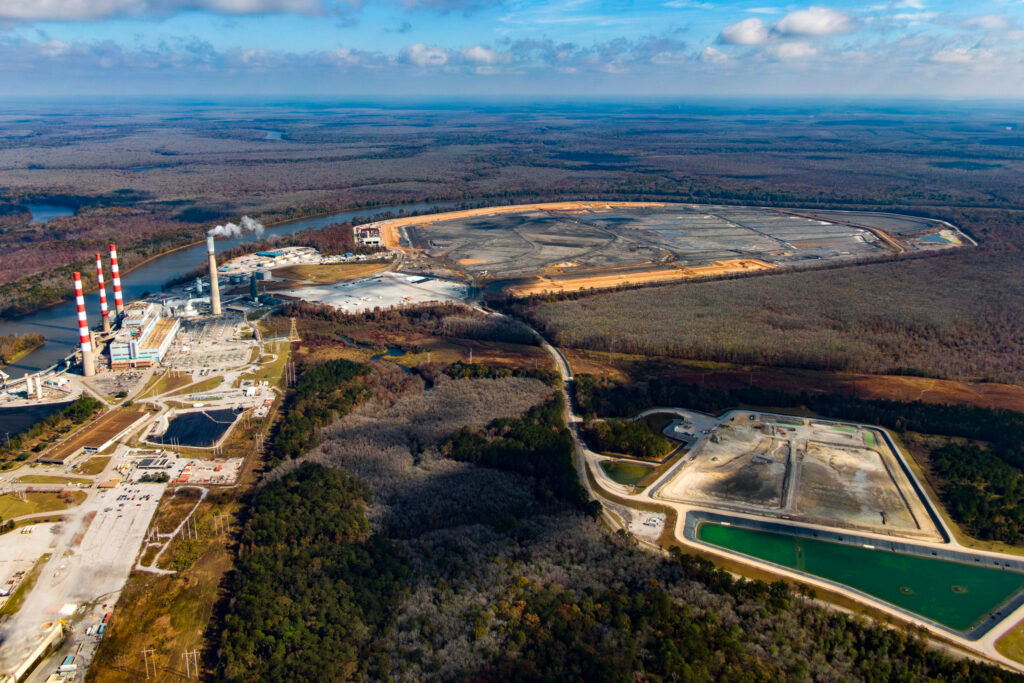
The nearly 600-acre coal ash pond at Alabama Power's James M. Barry Electric Generating Plant, near Mobile, is the subject of the dispute. Baykeeper's Cade Kistler told Inside Climate News he hopes the ruling will nudge Alabama Power toward actually removing the toxic waste instead of fighting to keep it in a soggy impoundment. "We certainly feel vindicated, but more importantly, I think it feels like an opportunity here for Alabama Power to see that there's a different way forward than battling this," Kistler said.
Alabama Power, through a spokesperson, insisted its coal ash ponds are in compliance with the law. "Alabama Power continues to be in compliance with all applicable federal and state environmental laws and regulations," the company said, adding that it will follow any final court decisions but can't comment further due to ongoing litigation.
Coal ash, for those not versed in industrial byproducts, is the solid leftovers from burning coal, laced with charming substances like arsenic, mercury, lead, and heavy metals that can cause cancer and other human health problems. At large plants like Barry, this material was flushed into wet, unlined ponds for decades, building up toxic volumes and polluting groundwater. New EPA rules from 2015 required utilities to close most unlined ponds by either moving the ash to lined landfills or covering it in place - provided they could prove contaminants weren't leaking into groundwater.
Alabama Power quickly announced plans to cover all its ash ponds in place and has stuck to that plan despite pushback, especially at Plant Barry, which sits on the banks of the Mobile River just upstream from the Mobile-Tensaw Delta - a biodiverse wonderland dubbed "America's Amazon." The company has already been fined $1.25 million in 2018 for groundwater pollution violations and another $250,000 in 2019. In 2023, the EPA issued a notice of potential violations, stating the company "potentially failed to meet the criteria" for closing the pond.
Monday's ruling said federal courts are the appropriate venue to decide whether capping ash in place with groundwater contact is legal. The lower court had dismissed the case on procedural grounds, agreeing with Alabama Power that Baykeeper lacked standing and the claims weren't ripe. The appeals court disagreed on both points, sending the case back for trial.
Barry Brock of the Southern Environmental Law Center, which represents Baykeeper, called the ruling a step toward holding Alabama Power accountable: "The company's reckless plan at Plant Barry is a danger to communities surrounding the Delta and Mobile Bay." Alabama Power has announced plans to recycle more ash at Plant Barry - an on-site recycling plant is under construction and expected online later this year - but it's unclear how much will actually be recycled. Kistler said the company should commit to recycling or removing all the ash: "Nobody in coastal Alabama wants this coal ash here, and now is a great opportunity for Alabama Power to figure out how to solve this problem that leaves everybody coming out feeling a little bit better."
The Good Times
News in your inbox.
One sardonic roundup, delivered on your schedule. Free. Unsubscribe whenever your tolerance for wit runs out.
Already subscribed but we never reach your inbox? Check your spam folder and hit 'Not spam' (or 'Remove from spam') to bust us out of junk-mail purgatory. You'll be helping everyone else too.
Don't open any of our emails for a month and you'll be automatically removed from the mailing list.
Rewrite Article
Select parts to regenerate with a fresh AI pass. Translations will be updated automatically.
Generate AI Image
Creates a sardonic version of the article image using OpenAI.