NASA’s Artemis II crew had plenty on their to-do list during their historic 10-day jaunt around the Moon - navigating, not crashing, and, oh yes, doing science. But between the technical and operational duties, they also moonlighted as scientific ambassadors to Earth’s nearest neighbor, analyzing and photographing impact craters and ancient lava flows on the far side. Their observations are meant to pave the way for future surface science, because apparently, we’re not done with the Moon yet.
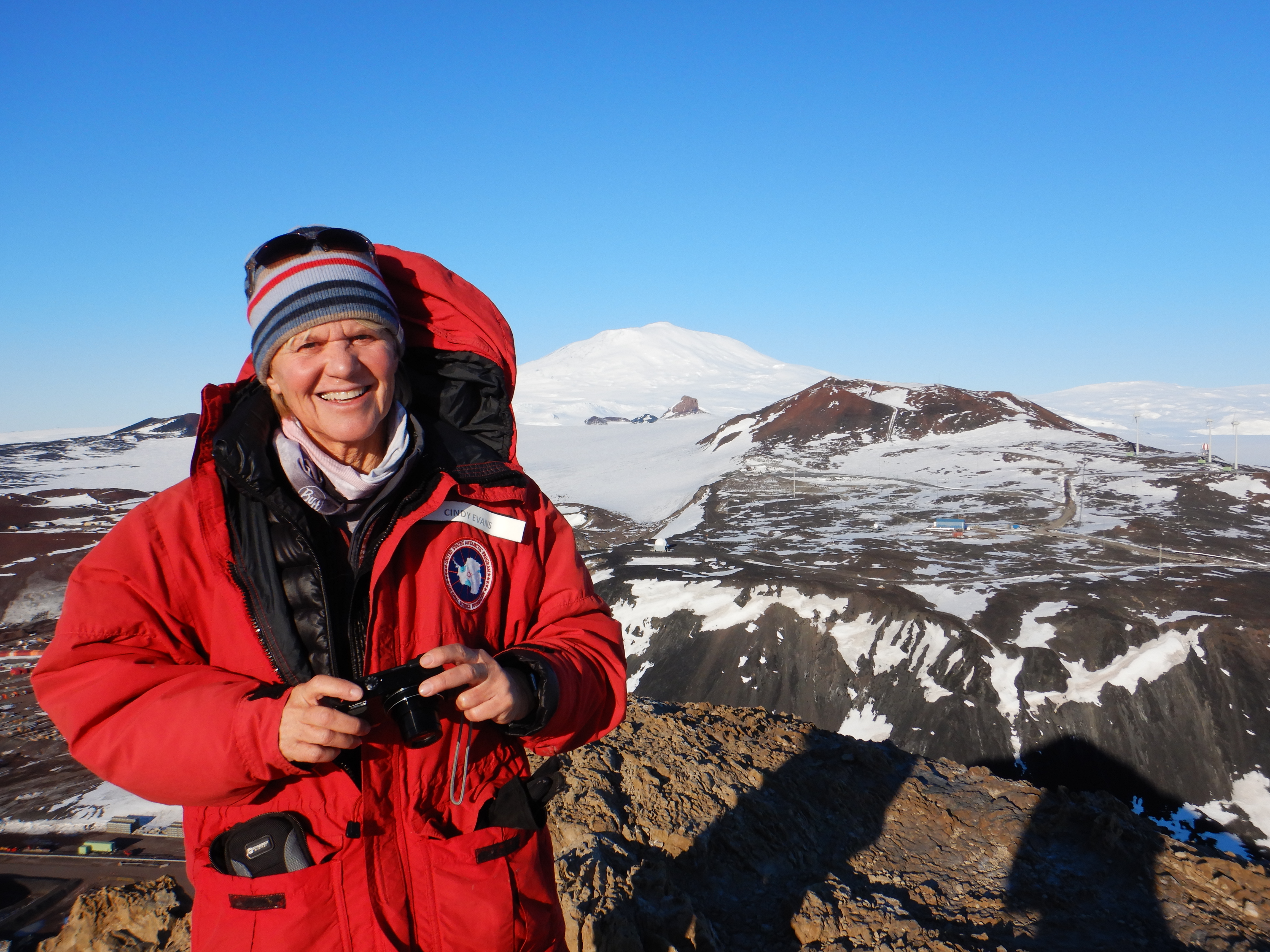
To pull off this geologic detective work, the crew leaned on the extensive geology training they received back on Earth, where they learned to describe the nuances of shapes, textures, and colors - all the juicy details that reveal an area’s geologic history. Leading that training is Cindy Evans, the Artemis exploration scientist and geology training lead, based at NASA’s Johnson Space Center in Houston. Evans is part of the Artemis Internal Science Team and spearheads geology training for crew members, mission managers, engineers, and flight controllers. Her curriculum? A hearty mix of classroom geology, lunar and planetary science, and a progressive series of field classes that sound far more exciting than your average PowerPoint.
“As the scientists ‘on the ground,’ Artemis crew members require geology and field skills so that they can execute the mission science requirements from lunar orbit and on the surface of the Moon,” Evans explained, likely while wearing a hard hat and holding a rock hammer. “Whether they’re looking out the spacecraft’s windows or walking the surface, Artemis astronauts are working on behalf of all scientists to collect clues to the ancient geologic processes that shaped the Moon and our solar system.” In other words, they need to know their rocks, so they can spot the interesting ones and not just bring back a bunch of boring gravel.
Evans’s own path to geology was a bit circuitous - she started as an oceanographer studying oceanic crust, and once dreamed of exploring the Moon as an astronaut. That dream led her to Johnson, but she never got the flight suit. Instead, she’s spent 37 years with the agency, contributing to the Space Shuttle Program, Shuttle-Mir Program, and the International Space Station before pivoting to Artemis. Among her notable achievements: establishing the Crew Earth Observations effort for Shuttle-Mir (so astronauts could photograph Earth’s ever-changing visage) and helping develop the Return to Flight imagery inspection process after the Columbia accident. “I have been both honored and incredibly fortunate to have participated in a wide variety of human spaceflight programs,” she said, and she’s proud of her current team’s work.
Evans also made two trips to Antarctica for deep-field geology sessions, where she camped on blue ice a couple hundred miles from the South Pole and collected space rocks. “Few things in this world are as wonderful as camping on blue ice just a couple hundred miles from Earth’s South Pole and collecting rocks from space,” she said, which sounds both magical and freezing.
Throughout her career, Evans has embraced interdisciplinary collaboration, noting that her oceanography training - where geology meets biology, chemistry, and physical oceanography - prepared her for working with engineers at Johnson. “As a planetary scientist at Johnson, I am challenged to work in a world of engineers, and embrace the complex teamwork between hardware engineers, operations engineers, management - many of whom are engineers - and scientists.” It’s a world where she’s learned to be flexible, because human spaceflight is a dynamic endeavor, and every role has stretched her perspective.
Her key lesson for aspiring space nerds? “It’s all about the people,” she says. “A common thread throughout my career at NASA is the professional fulfillment brought by relationships with and the talents of colleagues and teammates.” Her advice: reach out, build connections, and don’t pass up opportunities, even if they seem like a weird next step. “You never know where a pathway will lead,” she said. “Plans can change - don’t pass up opportunities!” So go ahead, take that random geology elective - it might just lead to the Moon.
The Good Times
News in your inbox.
One sardonic roundup, delivered on your schedule. Free. Unsubscribe whenever your tolerance for wit runs out.
Already subscribed but we never reach your inbox? Check your spam folder and hit 'Not spam' (or 'Remove from spam') to bust us out of junk-mail purgatory. You'll be helping everyone else too.
Don't open any of our emails for a month and you'll be automatically removed from the mailing list.
Rewrite Article
Select parts to regenerate with a fresh AI pass. Translations will be updated automatically.
Generate AI Image
Creates a sardonic version of the article image using OpenAI.