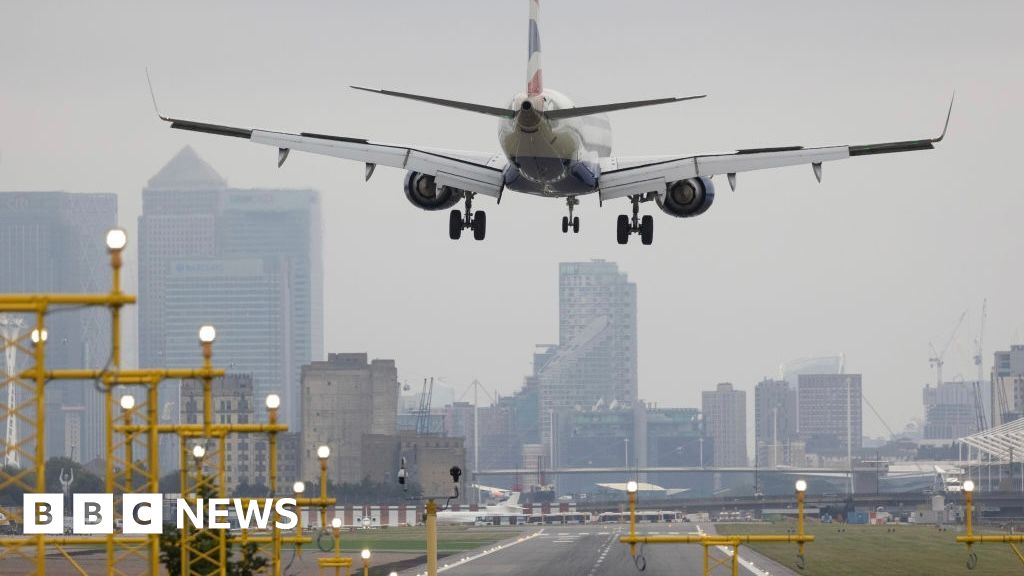
Government to Airlines: You Can Cancel Flights Early, Just Don't Blame Us for the War
UK government lets airlines cancel flights two weeks early to avoid last-minute chaos, because nothing says 'summer holiday' like planning your disappointment in advance.
Airlines will soon be able to cancel flights weeks in advance without losing their precious takeoff and landing slots at busy airports, provided they can convincingly blame fuel shortages. The new contingency plans, drawn up by the UK government, aim to let carriers plan ahead and avoid the messy business of last-minute cancellations that annoy passengers.
Ministers have also asked the UK's four refineries to maximize jet fuel supply and are exploring ways to increase imports from the US. Airlines claim they aren't currently experiencing fuel supply problems, but experts warn that disruptions from the Iran war could cause shortages within weeks. The UK imports about 65% of its jet fuel, much of it from the Middle East, but the closure of the Strait of Hormuz has thrown a wrench in that pipeline. The International Energy Agency warns that unless more fuel arrives from elsewhere, Europe will face shortages by June.
The government's plan allows airlines to save fuel by adjusting schedules in advance - cutting one or two flights a day on routes with multiple services to the same destination. Normally, airlines resist this because it risks losing their coveted slots at airports like Heathrow and Gatwick, which can trade for tens of millions of pounds. The current rules, enshrined in the Airports Slot Allocation Regulations 2025, require 80% usage to keep slots, encouraging airlines to fly half-empty planes just to hold onto them.
Transport Secretary Heidi Alexander said, "We're preparing to give families long-term certainty and avoid unnecessary disruption at the departure gate this summer." The new plan, announced Sunday, goes further by letting carriers temporarily hand back unused slots while retaining rights for the following year, allowing them to axe flights at least two weeks in advance. Airlines UK chief executive Tim Alderslade welcomed the move, saying it would help "avoid unnecessary flying and continue operating as efficiently as possible."
The legislation requires a statutory instrument and a short consultation this week. The government is also considering allowing US-specification Jet A fuel in the UK, which has a higher freezing point than the standard Jet A1 used by European airlines. Shadow transport secretary Richard Holden noted the plan showed Britain was "exposed to fuel supply risks that a properly energy-secure country would not face."
Meanwhile, passengers retain rights to refunds, rerouting, and compensation for severe disruption. Airlines have lobbied for fuel shortages to be classified as "extraordinary circumstances" to avoid payouts. The UK has so far ignored that plea, but the European Commission has suggested airlines might not have to compensate if they can prove the disruption was directly caused by the jet fuel shortage and all reasonable measures were taken.
The Good Times
News in your inbox.
One sardonic roundup, delivered on your schedule. Free. Unsubscribe whenever your tolerance for wit runs out.
Already subscribed but we never reach your inbox? Check your spam folder and hit 'Not spam' (or 'Remove from spam') to bust us out of junk-mail purgatory. You'll be helping everyone else too.
Don't open any of our emails for a month and you'll be automatically removed from the mailing list.
Rewrite Article
Select parts to regenerate with a fresh AI pass. Translations will be updated automatically.
Generate AI Image
Creates a sardonic version of the article image using OpenAI.