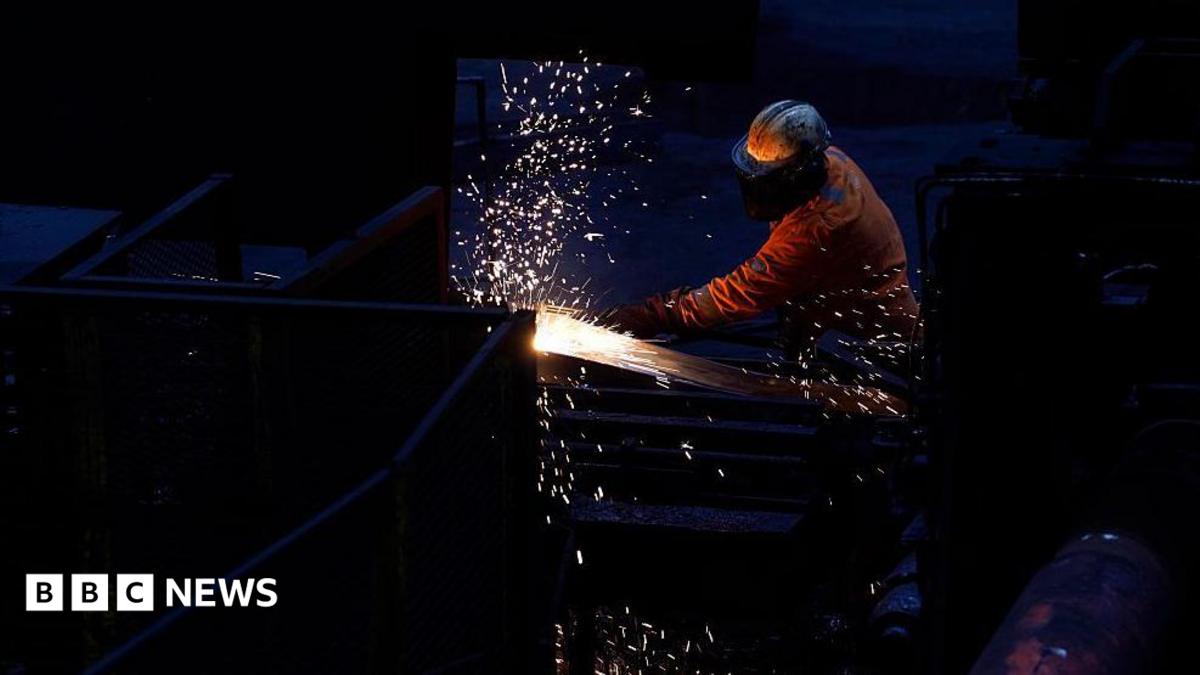
Government Finally Does the One Thing That Could Save British Steel, Nationalises It
In a shocking move that surprises absolutely no one, the UK government nationalises British Steel to prevent the country from losing its ability to make virgin steel - and because private investors mysteriously weren't lining up to buy a plant…
British Steel has officially become a ward of the state after the government decided that letting a 2,700-employee steelworks in Scunthorpe collapse might be slightly embarrassing for a nation that once led the Industrial Revolution.
Prime Minister Sir Keir Starmer, in a statement that could have been written by a steelworkers' union with a thesaurus, said: "Today's decision secures the future of steelmaking in the UK, protects skilled jobs and safeguards a vital national capability." He added that British Steel is "part of the fabric of our nation and a cornerstone of Britain's industrial strength," which is exactly the kind of language you use when you're about to nationalise something.
The government had been running the Scunthorpe operations since last year, but it was still technically owned by China's Jingye Group - a situation that was always going to end in either a sale or a very awkward divorce. Jingye, which bought British Steel in 2020 after its previous owner, private equity firm Greybull Capital, drove it into compulsory liquidation, has already started seeking compensation for the nationalisation. The government, however, has hinted it might limit or refuse that payout - presumably on the grounds that Jingye was losing £700,000 a day and the plant was costing taxpayers £1.3m a day.
Business Secretary Peter Kyle, clearly channelling the spirit of Clement Attlee, declared: "British Steel now belongs to the British people, and our focus is on the future: stabilising the business, backing the communities that rely on it and building a sustainable, competitive and decarbonised steel sector for the years ahead."
The move was made possible by the Steel Act, passed on Wednesday, which gives the government powers to nationalise steel companies when it meets a "public interest test" - a test that apparently became very easy to pass once the alternative was watching the last two blast furnaces in the UK go cold. If those furnaces had been starved of fuel, the UK would have lost its ability to produce "virgin steel" - the kind made from iron ore, used in major construction projects like buildings and railways. Restarting them would have been "extremely difficult and costly," which is government-speak for "impossible without a miracle and a blank cheque."
The government initially tried to find private investors, but when that failed, it did what governments do: it took over. Parliament passed the legislation on Wednesday, and by Thursday, the Department for Business and Trade confirmed it was "strongly minded" to use its new powers. And so, British Steel is now publicly owned, with all the efficiency, innovation, and occasional existential dread that implies."
The Good Times
News in your inbox.
One sardonic roundup, delivered on your schedule. Free. Unsubscribe whenever your tolerance for wit runs out.
Already subscribed but we never reach your inbox? Check your spam folder and hit 'Not spam' (or 'Remove from spam') to bust us out of junk-mail purgatory. You'll be helping everyone else too.
Don't open any of our emails for a month and you'll be automatically removed from the mailing list.
Rewrite Article
Select parts to regenerate with a fresh AI pass. Translations will be updated automatically.
Generate AI Image
Creates a sardonic version of the article image using OpenAI.