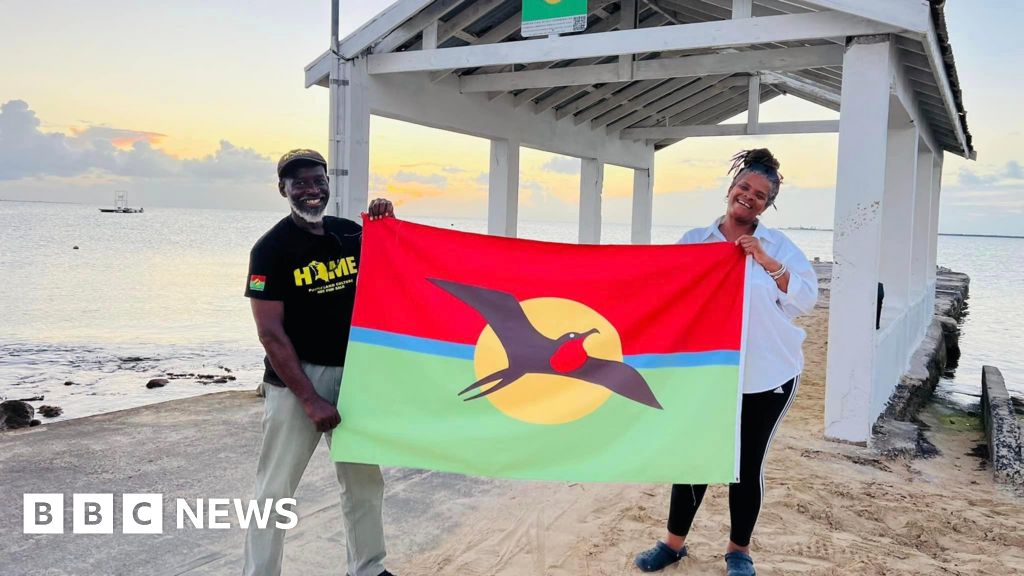
Barbuda's Beachfront Showdown: Locals vs. Developers Who Brought a Bulldozer to a Domino Game
Foreign developers are buying up Caribbean beaches, leaving locals like Miranda Beazer fighting to reclaim their land - and their domino spots - from luxury resorts backed by billionaires and Oscar winners.
On the small Caribbean island of Barbuda, the Pink Sands Beach Bar was more than a watering hole for 20 years - it was where locals played dominoes and decompressed after Sunday church. Then Hurricane Irma hit in 2017, forcing all 2,000 Barbudans to evacuate to Antigua. Owner Miranda Beazer lost her bar and her house. “I cried for two weeks,” she says. Before she could rebuild, her husband died, and foreign developers started waving wads of cash for her plot. She refused: “I actually want to retain my land.”
Then the bulldozers arrived - allegedly sent by those same developers - to demolish what Irma left standing. Miranda is now fighting a legal battle to reclaim her land, but Barbuda’s property laws make it a bureaucratic labyrinth. Land is collectively owned under the 2007 Barbuda Land Act, a post-slavery system where citizens get leases, not deeds. Miranda holds a lease to 30 acres of coastline but currently accesses only eight. The Global Legal Action Network (GLAN) says the rest is illegally occupied by developers Murbee Resorts and Peace Love and Happiness (PLH). Murbee claims it’s a legal lease holder and hasn’t built on unauthorized land; PLH says it “does not and has never” occupied the land. Miranda remains undeterred: “If you were to ever come here and experience it yourself, you would really understand why we’re so committed to this little piece of rock.”
Miranda’s plot is the last stretch of Barbuda’s southern coastline still open to locals. Not far down the coast, Oscar-winning actor Robert de Niro and Australian billionaire James Packer are backing Paradise Found’s The Beach Club Barbuda - a 400-acre resort with a Nobu Beach Inn (17 villas) and 25 beachfront homes, due to open later this year. Locals say a new bypass road now blocks access to the beach, and plots start at a cool $7 million (£5.2 million). The resort’s website calls it a “rare Island community on one of the Caribbean's last untouched shores.” Barbuda Council chairperson John Mussington argues this “community” was enabled by defying the 2007 Land Act. The government passed the Paradise Found Act in 2015, exempting the complex from the act. A legal challenge reached the UK’s Judicial Committee of the Privy Council, which ruled in 2022 that individual Barbudans have no property rights over the land. Paradise Found says it developed in accordance with the law and that public access to Princess Diana beach “remains unchanged.”
Barbuda isn’t alone in this colonial-era land tangle. Head 1,600 km (1,000 miles) west to Jamaica, where Devon Taylor of the Jamaica Beach Birthright Environmental Movement (Jabbem) says current legislation “clearly states we have no rights in or over the foreshore.” A proposed new law, Taylor argues, would put more restrictions on locals by pushing hotels to sell beach passes. “You’re selling back the access to the people,” he says, calling it “colonial logic.” Less than 1% of Jamaica’s coastline remains freely accessible to locals, and Jabbem is fighting five legal challenges over beach access. Meanwhile, in Grenada, Kriss Davies of Grenada Land Actors warns that more resorts could strip the island of its charm. The United Nations Development Programme notes the Caribbean is “the most tourism-dependent region in the world,” with roughly half of visitors from the US. As Devon Taylor puts it: “Travel is never neutral - it carries both an economic and moral weight.” For now, Caribbean land defenders worry that tourism, rather than opportunity, might just change the place they call home beyond recognition.
The Good Times
News in your inbox.
One sardonic roundup, delivered on your schedule. Free. Unsubscribe whenever your tolerance for wit runs out.
Already subscribed but we never reach your inbox? Check your spam folder and hit 'Not spam' (or 'Remove from spam') to bust us out of junk-mail purgatory. You'll be helping everyone else too.
Don't open any of our emails for a month and you'll be automatically removed from the mailing list.
Rewrite Article
Select parts to regenerate with a fresh AI pass. Translations will be updated automatically.
Generate AI Image
Creates a sardonic version of the article image using OpenAI.