SpaceX Finally Shows Its Receipts, Reveals It's Basically an AI Company That Also Does Rockets
SpaceX files for IPO, reveals $18.67B revenue, $4.94B loss, and a plan to dominate AI compute in orbit - because rockets alone weren't ambitious enough.
After nearly 25 years of treating its finances like a state secret, SpaceX on Wednesday voluntarily opened its books for the first time, submitting a nearly 400-page S-1 filing with the US Securities and Exchange Commission. The document, released in anticipation of an initial public offering as soon as June 12, confirms what many suspected: Elon Musk's company has a lot of money, spends even more, and has decided its future is in AI, not just space.
The filing shows SpaceX reported revenues of $18.67 billion in 2025, up from $14.02 billion the year before. But after eking out a small profit in 2024, the company lost $4.94 billion in 2025, mostly due to spending on artificial intelligence development. Because nothing says "responsible space exploration" like bleeding billions into the latest tech trend.
SpaceX projects a "total addressable market" of $28.5 trillion across space, data, and AI services. Of that, only about $2 trillion is directly related to space or Starlink. The remaining $26.5 trillion - because why stop at trillions? - is expected to come from AI, largely enterprise applications. "We believe we have identified the largest TAM in human history," the company boasts on page 171, presumably with a straight face.
The filing also reveals that after the IPO, Musk will retain 85.1 percent of combined voting power, serve as CEO and chairman, and be essentially impossible to remove. His 2025 salary was $54,080, tied to California's minimum for exempt employees - which is roughly what he spends on snacks. President and COO Gwynne Shotwell received $1.08 million in salary, but with stock awards, her total compensation hit $85.8 million. So at least someone is getting paid properly.
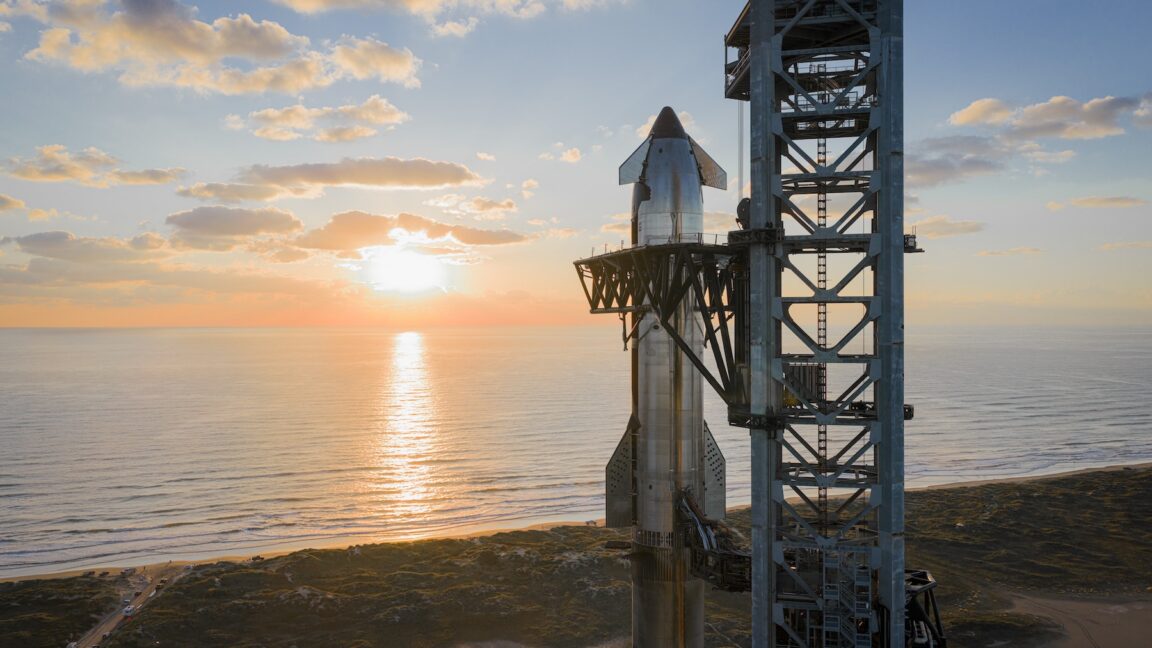
On the space side, there's little new: Falcon 9 costs remain opaque, Starship aims for $185 per kilogram to orbit, and V3 Starlink launches on the super-heavy rocket depend on test flights resuming Thursday from Starbase in South Texas. The filing also acknowledges Starship still faces "significant technological, engineering, and operational challenges" - translation: we haven't figured out how to land on the Moon or Mars yet.
SpaceX says it expects to begin deploying orbital AI compute satellites as early as 2028, with a goal of launching 100 gigawatts of compute to space each year. Because if you're going to bet the farm, bet it on putting data centers in orbit. The company that once launched a tiny Falcon 1 rocket now puts about 80 percent of all mass into orbit and operates more satellites than the rest of the world combined. But to reach its stratospheric valuation, it must evolve from a space company into an AI company. Investors will decide if that's a giant leap or a faceplant.
The Good Times
News in your inbox.
One sardonic roundup, delivered on your schedule. Free. Unsubscribe whenever your tolerance for wit runs out.
Already subscribed but we never reach your inbox? Check your spam folder and hit 'Not spam' (or 'Remove from spam') to bust us out of junk-mail purgatory. You'll be helping everyone else too.
Don't open any of our emails for a month and you'll be automatically removed from the mailing list.
Rewrite Article
Select parts to regenerate with a fresh AI pass. Translations will be updated automatically.
Generate AI Image
Creates a sardonic version of the article image using OpenAI.