Assassin Shows Up to White House Dinner, Prompting Grim New Status Symbol: Did You Get Secret Service Escorted or Left to Fend?
A would-be assassin attacks the White House Correspondents' Dinner, revealing a grim new Washington status symbol: whether you got Secret Service escort or were left to fend for yourself.
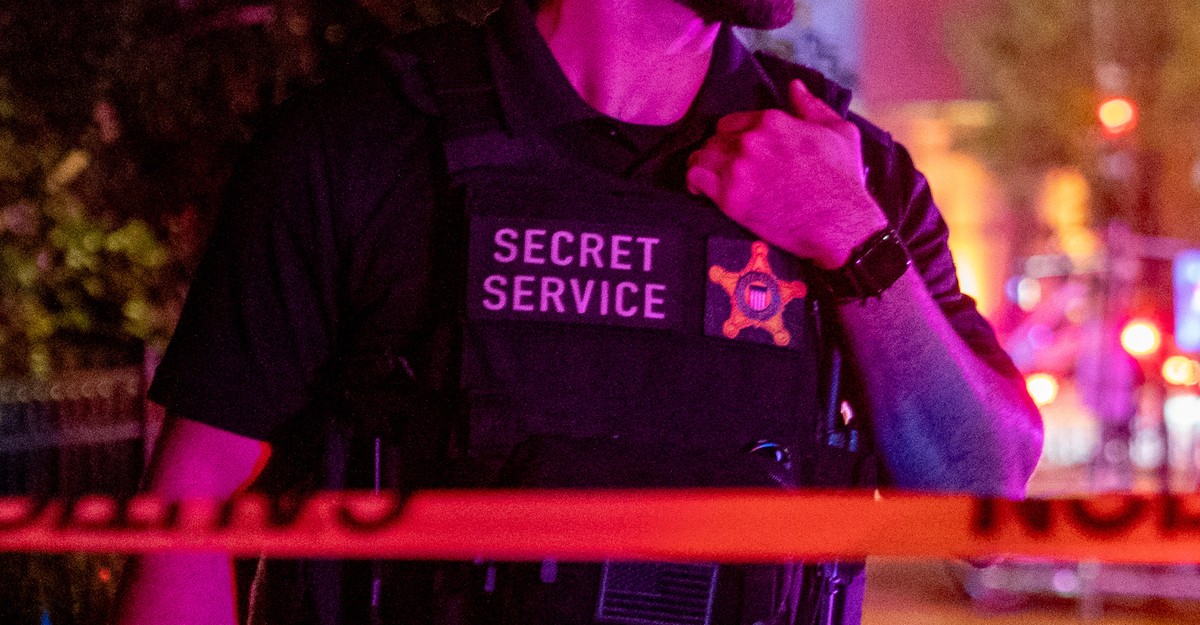
In a twist that somehow managed to be both terrifying and deeply on-brand for Washington, a would-be assassin was tackled in the hallway outside the White House Correspondents' Association's annual dinner last night. The system, on one level, worked: the perimeter held, the one bullet that found a human target - a U.S. Secret Service agent - was stopped by his phone and bulletproof vest, a counterassault team swarmed the stage with assault rifles and night-vision gear, and the nation's top leaders were whisked to secure locations in minutes. No one died.
But the collective sigh of relief and flurry of 'I am fine' texts belied a heavier reality: this attack was different from the two prior assassination attempts on Donald Trump because the president was not the only apparent target. The alleged attacker wrote in a manifesto obtained by the New York Post that he was after 'administration officials (not including Mr. Patel): they are targets, prioritized from highest-ranking to lowest.' So while the president, vice president, and Cabinet officials got swept away by security details, others - like spouses, colleagues, and lower-ranking officials - were left to climb over barriers in ball gowns and fend for themselves.
Health and Human Services Secretary Robert F. Kennedy Jr. was body-blocked by three agents as he walked from the ballroom; his wife, Cheryl Hines, followed alone a few feet behind, scaling obstacles in formalwear. Speaker Mike Johnson, away from his table when the shooting started, had to send armed officers to retrieve his wife. For Trump-administration officials without personal security details, no special consideration was given. As former Goldman Sachs CEO Lloyd Blankfein noted on social media, 'I noted a new litmus for status among the gov't elite - whether you were whisked away by secret service, or left to fend.'
This sort of thing, unfortunately, is not novel. Trump was targeted twice during the 2024 campaign, narrowly escaping death in Butler, Pennsylvania. UnitedHealthcare CEO Brian Thompson was assassinated in broad daylight on a Manhattan street, a crime celebrated in some internet corners. OpenAI CEO Sam Altman's home was attacked earlier this month by a man warning of humanity's 'impending extinction' from AI. Conservative activist Charlie Kirk, close to Trump, was gunned down last year at a political event; his widow, Erika Kirk, was at last night's dinner, visibly distraught as she was escorted out in her sequinned cream dress. 'I just want to go home,' she sobbed.
White House spokesperson Davis Ingle stated that the president was 'thankful for the brave men and women in law enforcement who took swift action to quickly neutralize the perpetrator.' Some senior White House officials have already been given extra protections: Deputy Chief of Staff Stephen Miller moved to a military base after protesters appeared outside his home, and Cabinet secretaries including Secretary of State Marco Rubio and Defense Secretary Pete Hegseth had already relocated due to threats.
The question now is what needs to change. Critics are questioning the wisdom of gathering so many senior government officials in one hall. Mike Pence wouldn't even ride the White House elevator with Trump in the first term, wary of succession risks. At last night's dinner, the president was joined by the next two in line, J. D. Vance and Mike Johnson. Had catastrophe struck, control of the U.S. nuclear codes would have passed to Senator Chuck Grassley, the 92-year-old president pro tempore. As Representative Michael McCaul told CNN, 'I think the Secret Service needs to reconsider having both the president and vice president together.'
Even before the shots, some light gallows humor settled over the ballroom. Administration officials, surprised to see Vance on the dais alongside Trump and much of the Cabinet scattered throughout, quipped that they hoped the night wouldn't conclude with a President Grassley.
The Good Times
News in your inbox.
One sardonic roundup, delivered on your schedule. Free. Unsubscribe whenever your tolerance for wit runs out.
Already subscribed but we never reach your inbox? Check your spam folder and hit 'Not spam' (or 'Remove from spam') to bust us out of junk-mail purgatory. You'll be helping everyone else too.
Don't open any of our emails for a month and you'll be automatically removed from the mailing list.
Rewrite Article
Select parts to regenerate with a fresh AI pass. Translations will be updated automatically.
Generate AI Image
Creates a sardonic version of the article image using OpenAI.