Volkswagen Tells Board How to Fix Itself; Unions Say 'Nah, We're Good'
Volkswagen's board rejects a restructuring plan that doesn't mention job cuts but clearly implies them, because unions hold half the seats and frown at redundancies.
Volkswagen Group is doing swimmingly with EV sales in its home region, but costly tariffs and a disappearing market share in China and North America have been giving it the business. Europe's largest automaker - owner of Audi, Porsche, Skoda, and Lamborghini - has watched its profit margins evaporate like morning dew. Yesterday, the company's supervisory board was presented with a plan to patch things up. An expected call for factory closures and redundancies wasn't included - at least not in VW Group's public statement - but according to Reuters, the measure failed anyway in a 12-7 vote.
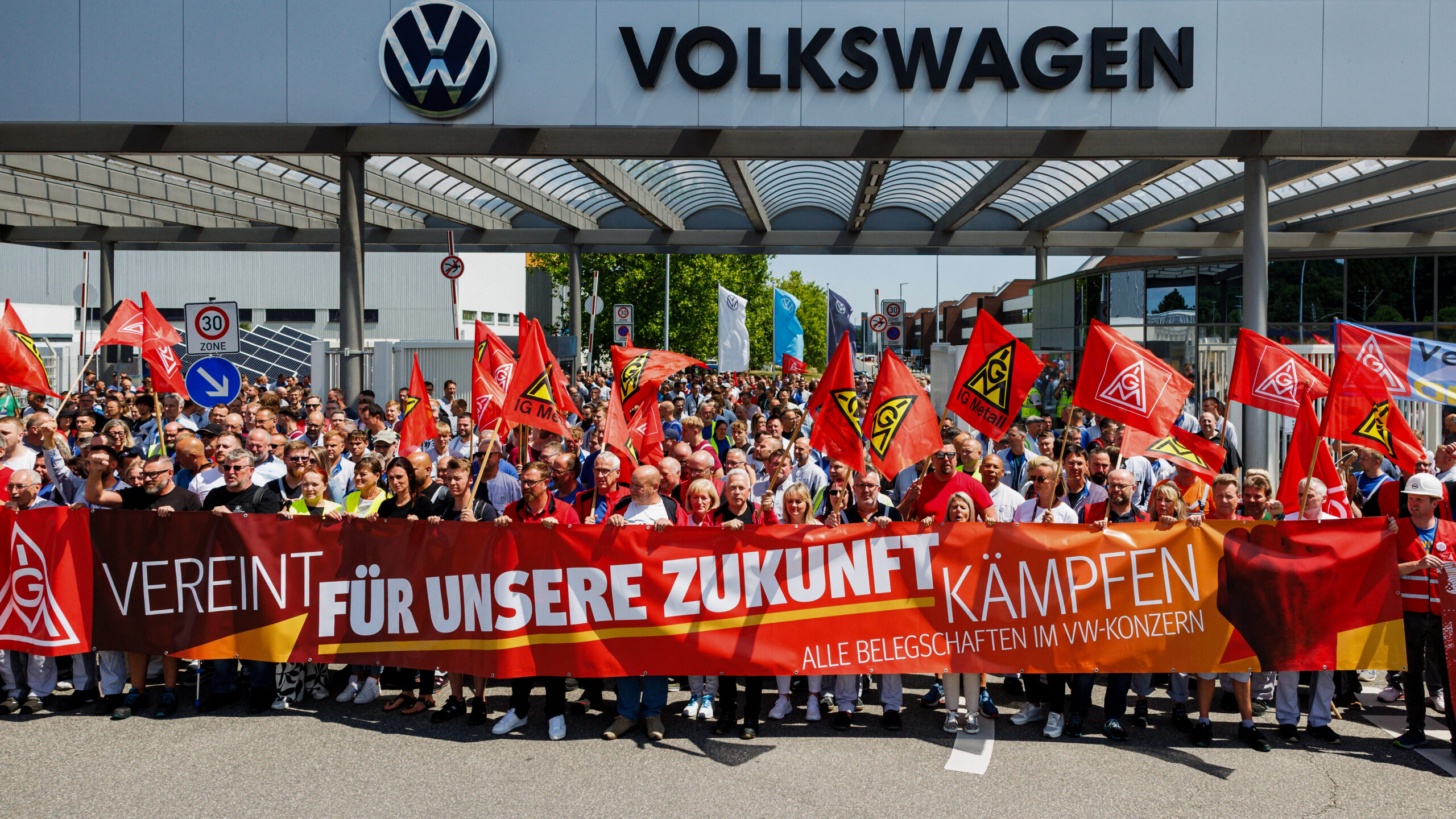
Unlike most automakers, worker unions are extremely powerful at VW Group. Half of the 20 seats on the supervisory board are appointed by worker councils. Another two are spoken for thanks to partial ownership by the German state of Lower Saxony - currently held by that state's minister of education and minister-president. So while profit has been important, it's not the only thing that matters to the decision-makers.
Over the years, there have been lengthy fights over any suggestion of redundancies. Lately, VW Group and its unions spent months in negotiations in 2024 before finally agreeing to a plan to cut 35,000 jobs by 2030. That number scaled up to 50,000 by this March, as the extent of its problems continued to grow. Then, in late June, a German magazine reported that now 100,000 jobs would go by 2030, along with the unthinkable: closing four German factories - something that has never been done in its history.
Volkswagen's public statement on the restructuring plan makes no mention of job losses or factory closures - at least not directly. But it does call for a heavily edited model lineup, with half as many vehicles offered across all its brands. These will be "concentrated on the most attractive market segments," VW Group says, which probably means mostly crossovers, now as beloved by European car buyers as their US counterparts. To make things simpler for the factories, "offering complexity - for example, the number of available equipment options - will be reduced by up to 75 percent."
The proposal also details a mismatch between global demand for VW Group products, at 9 million vehicles a year, and the company's annual capacity to build 10 million vehicles a year (though it notes VW has reduced capacity by 2 million units since COVID). So while the plan doesn't explicitly say VW will cut jobs and shutter plants, it does involve building fewer cars with less differentiation - something that sounds less labor-intensive. Or did. Assuming Reuters' sources are correct, it's time for CEO Oliver Blume and his colleagues to think of something else.
The Good Times
News in your inbox.
One sardonic roundup, delivered on your schedule. Free. Unsubscribe whenever your tolerance for wit runs out.
Already subscribed but we never reach your inbox? Check your spam folder and hit 'Not spam' (or 'Remove from spam') to bust us out of junk-mail purgatory. You'll be helping everyone else too.
Don't open any of our emails for a month and you'll be automatically removed from the mailing list.
Rewrite Article
Select parts to regenerate with a fresh AI pass. Translations will be updated automatically.
Generate AI Image
Creates a sardonic version of the article image using OpenAI.