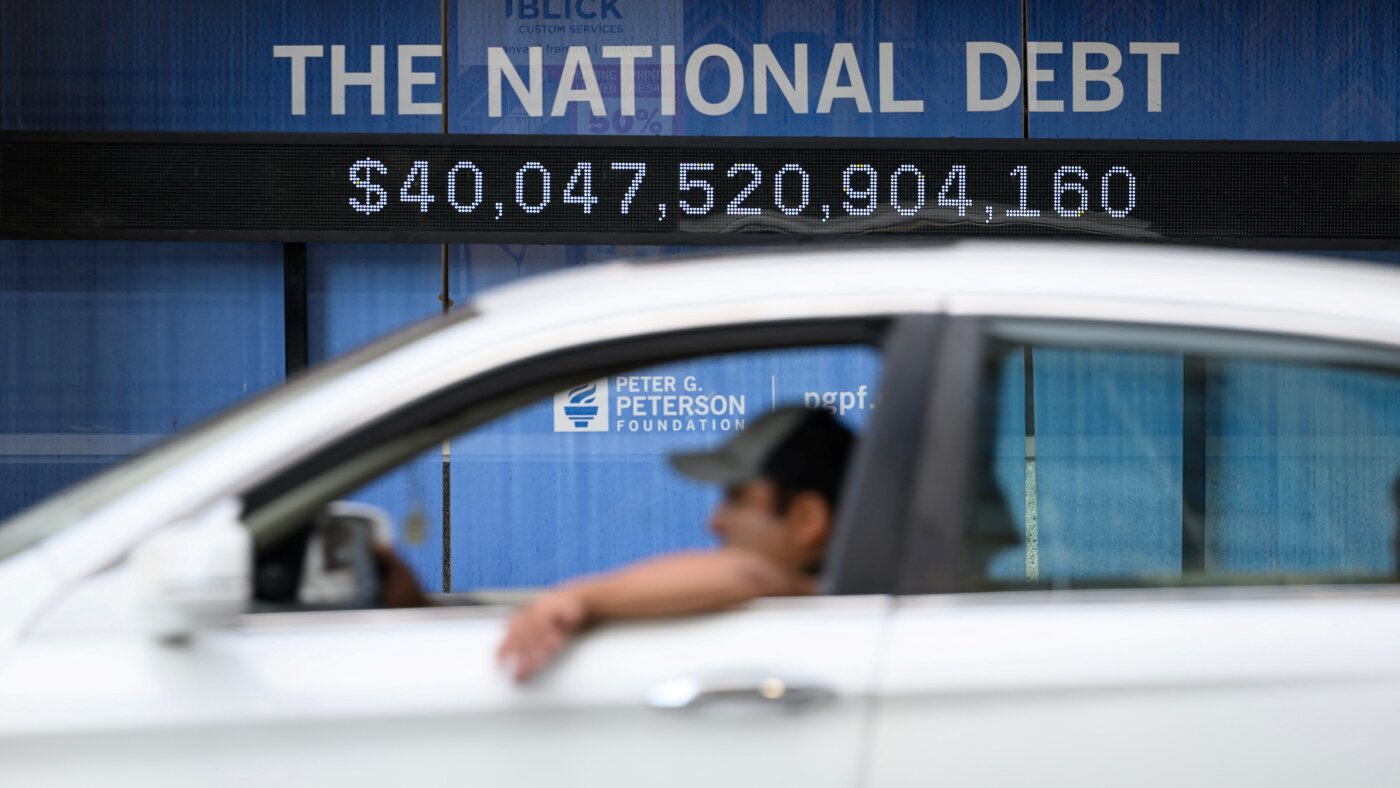
U.S. Debt Hits $40 Trillion, Bond Market Yawns, Then Demands More Interest
The U.S. federal debt hits $40 trillion, interest payments top a trillion, and the bond market is starting to get antsy - while Congress pretends it's all a bad dream.
The United States has officially achieved a new fiscal milestone: $40 trillion in federal debt. The Treasury Department reported this week that the red ink has reached an eye-popping level, with annual interest payments now topping a trillion dollars - making it the government's second-biggest expense, right after Social Security. Because nothing says 'fiscal responsibility' like paying a trillion dollars in interest alone.
For years, the government has spent more than it collects in taxes, partly due to political choices like waging wars, cutting taxes, or beefing up the social safety net during a pandemic. But much of the spending growth happens automatically as baby boomers retire, driving up Social Security and Medicare costs. Historically, debt as a share of the economy rose during recessions and stabilized during expansions, but lately the government has been running large deficits even when the economy is growing. The debt has doubled since 2017, and now the people who lend money to the government are demanding higher interest rates. Surprise, surprise.
The federal debt affects all Americans indirectly by limiting the government's ability to tackle other priorities, but it also hits some directly by making borrowing more expensive. As Michael Peterson, CEO of the Peter G. Peterson Foundation (a fiscal responsibility advocacy group), put it: "When the government borrows this much, and the rates for Treasurys go up, that brings up the rates for everything else, from mortgages to car loans to credit cards." Indeed, mortgage rates tend to follow the yield on 10-year Treasurys, and the rate on 30-year home loans has climbed near 6.7%, according to Freddie Mac. So if you were thinking about buying a house, maybe hold off.
The Treasury Department has tried to limit the damage: on Wednesday, Secretary Scott Bessent announced an expansion of the government's bond buy-back program, which briefly sent yields down. But the effect was short-lived - yields on 10- and 30-year Treasurys rebounded on Thursday. Earlier, the Treasury had also taken steps to prop up the Japanese yen to discourage Japan from selling its U.S. Treasurys. (Bond buying pushes yields down; selling pushes them up. It's not rocket science, but it's close.)
Ultimately, Congress will have to raise taxes, cut spending, or - most likely - do both. While some lawmakers once proudly called themselves deficit hawks, fiscal discipline has become about as popular in Washington as a tax increase. But anxious signals from the bond market might change that. "$40 trillion should be a wake-up call," said Carolyn Bordeaux, executive director of the Concord Coalition, a deficit watchdog group. "Both parties helped bring us here, and both parties now have a responsibility to change course." Don't hold your breath.
The Good Times
News in your inbox.
One sardonic roundup, delivered on your schedule. Free. Unsubscribe whenever your tolerance for wit runs out.
Already subscribed but we never reach your inbox? Check your spam folder and hit 'Not spam' (or 'Remove from spam') to bust us out of junk-mail purgatory. You'll be helping everyone else too.
Don't open any of our emails for a month and you'll be automatically removed from the mailing list.
Rewrite Article
Select parts to regenerate with a fresh AI pass. Translations will be updated automatically.
Generate AI Image
Creates a sardonic version of the article image using OpenAI.