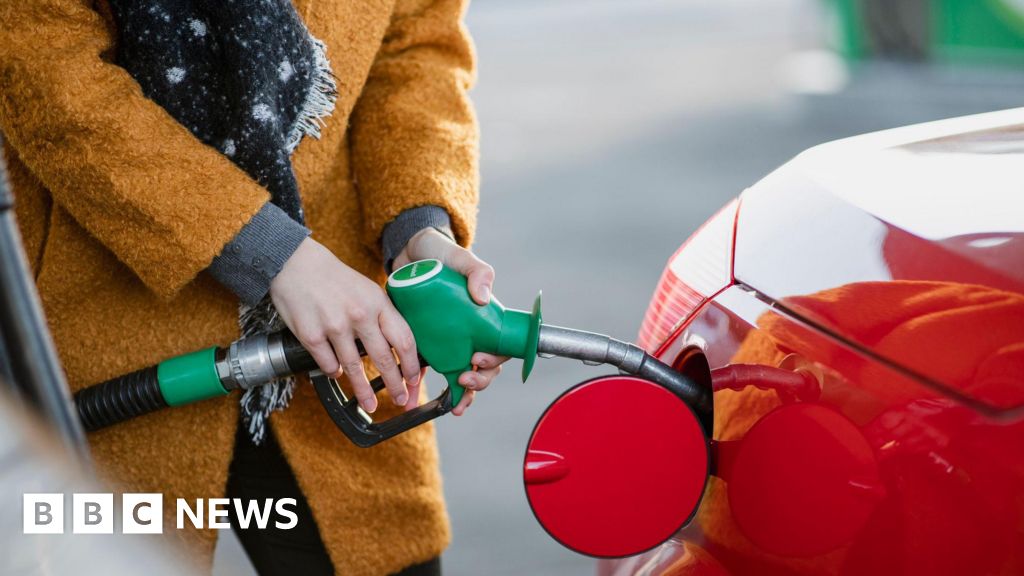
UK Watchdog Finds No Evidence of Fuel Price-Gouging, But Maybe Don't Celebrate Just Yet
UK competition watchdog finds no widespread fuel price-gouging, but admits margins are historically high and competition is lacking - so drivers can enjoy paying more with a clear conscience.
The Competition and Markets Authority (CMA) has delivered a verdict that will surprise approximately no one who has ever shopped for petrol: there is no widespread evidence of fuel retailers price-gouging in the wake of the US-Israel war with Iran.
According to the CMA, profit margins for fuel retailers were "broadly unchanged" between February and March, hovering around the 10.7 pence per litre average from last year. This suggests that, on the whole, retailers didn't suddenly develop a taste for extra profits during the Middle East conflict that sent wholesale prices spiking.
Prime Minister Sir Keir Starmer had previously warned the government would act if companies tried to "rip off customers," a statement that forecourt retailers called "inflammatory language" - presumably preferring their price hikes described as "robust market adjustments."
However, the watchdog did find that margins increased for two supermarkets and three non-supermarket retailers between February and March. CMA chief executive Sarah Cardell promised to investigate why and report back in May, which is corporate-speak for "we're watching you."
The CMA also noted that fuel margins were "historically high" in December and January before the conflict, reflecting an "ongoing concern" about competition in the fuel retail market. In other words, the problem isn't new; it's just gotten more attention.
The rapid rise in pump prices since the conflict began is largely attributed to higher oil prices, with about 20% of the world's oil and LNG usually passing through the now effectively closed Strait of Hormuz. Brent crude hit $126 a barrel this week, its highest since 2022, while petrol peaked at 158.3p a litre and diesel at 191.5p a litre in mid-April.
Pump prices have since fallen slightly, but petrol remains 24.2p per litre and diesel 46p per litre more expensive than before the war. The AA noted that wholesale diesel costs have fallen more than pump prices, and drivers on motorways pay up to 20p more per litre for petrol than those on A-roads.
Luke Bosdet, the AA's spokesman on pump prices, summed it up neatly: "Maybe not price gouging, but 'rocket and feather' and the pump-price postcode lottery are as strong as ever. The competition watchdog still has a lot of work to do."
Indeed, the CMA is also examining heating oil prices after receiving "a number of concerning reports from consumers who rely on heating oil." Because apparently, when you're cold and paying through the nose, that's when the real complaints start.
The Good Times
News in your inbox.
One sardonic roundup, delivered on your schedule. Free. Unsubscribe whenever your tolerance for wit runs out.
Already subscribed but we never reach your inbox? Check your spam folder and hit 'Not spam' (or 'Remove from spam') to bust us out of junk-mail purgatory. You'll be helping everyone else too.
Don't open any of our emails for a month and you'll be automatically removed from the mailing list.
Rewrite Article
Select parts to regenerate with a fresh AI pass. Translations will be updated automatically.
Generate AI Image
Creates a sardonic version of the article image using OpenAI.