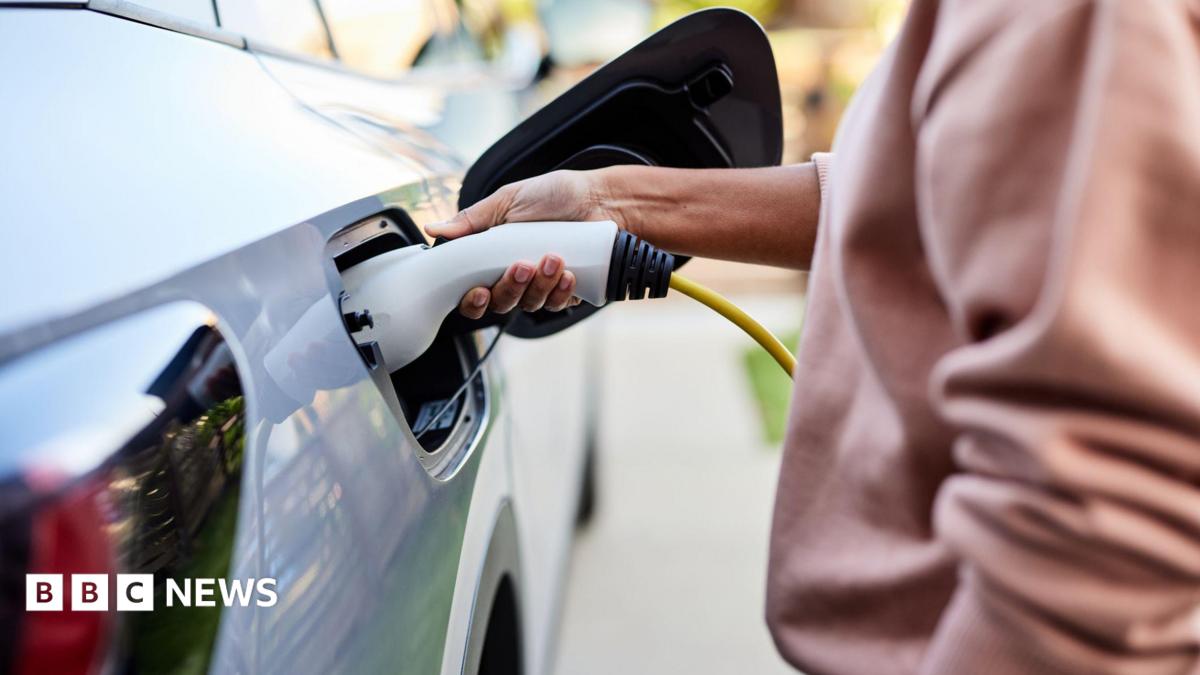
In a move that will surprise absolutely no one who has been paying attention to the UK's climate policy, the government is now considering cutting its electric vehicle (EV) sales target. Currently, 80% of all new cars sold in the UK must be EVs by 2030. But after some serious lobbying from car makers - who warned that hitting this target would cost too much and put jobs at risk - the government has decided to review this goal. They're now consulting on dropping it to as low as 50% by the end of the decade. Consultations will run until late October, which gives everyone plenty of time to argue about whether we should be doing the bare minimum.
Environmental groups are, predictably, not thrilled. They argue that watering down the target undermines the UK's long-term climate goals. Under the current policy, known as the ZEV mandate, the required percentage of EV sales increases each year, from 33% in 2026 to 80% by 2030. The outright ban on selling purely petrol or diesel cars after 2030 will remain in place - a promise Labour made in its election manifesto. But the proposed changes could allow car makers to sell more hybrids as a proportion of overall sales. If pure EV targets drop to 50%, the other 50% could be hybrids. Alternatively, they might keep the 80% target but extend flexibility for car makers until 2034. A longer-term deadline for phasing out new hybrid sales would still be 2035.
This isn't the first time the EV policy has been yanked around. Boris Johnson first announced a ban on new petrol and diesel vehicles by 2030, then Rishi Sunak pushed it back to 2035 and introduced more gradual targets. Labour has previously accused Conservative governments of 'moving goalposts on phase out dates.' Now Labour is doing a bit of goalpost-shifting of their own. Transport Secretary Heidi Alexander said on Friday: 'It's right we keep targets under review to ensure they're practical and back British industry. The end goal hasn't changed - but we need to take business with us on the journey.' Translation: we're still going to the same place, just more slowly and with more emissions along the way.
Mike Hawes, boss of the Society of Motor Manufacturers and Traders, the primary car industry lobby group, said the ZEV mandate was 'conceived under vastly different conditions' and called the review 'a timely opportunity to adjust the transition so it works for all.' Because nothing says 'working for all' like giving the fossil fuel industry a break. But electric car advocates and climate groups are not amused. Tanya Sinclair, boss of industry group Electric Vehicles UK, criticized the government for 'asking whether we should extend the availability of polluting vehicles amid our hottest summer on record.' Gurjeet Grewal, chief of Octopus Electric Vehicles, added that weakening the mandate 'would send exactly the wrong signal, just as EVs are becoming some of the best-value cars on the road.' The Green Alliance warned that watering down targets would 'lock in avoidable emissions while undermining the certainty manufacturers need to invest.'
So, the UK is now in the process of deciding whether to meet its climate goals or make car manufacturers happy. It's a classic dilemma: do we save the planet or do we keep selling internal combustion engines? The consultation is open until late October - plenty of time for everyone to weigh in on whether we should do the bare minimum or the slightly more than bare minimum.
The Good Times
News in your inbox.
One sardonic roundup, delivered on your schedule. Free. Unsubscribe whenever your tolerance for wit runs out.
Already subscribed but we never reach your inbox? Check your spam folder and hit 'Not spam' (or 'Remove from spam') to bust us out of junk-mail purgatory. You'll be helping everyone else too.
Don't open any of our emails for a month and you'll be automatically removed from the mailing list.
Rewrite Article
Select parts to regenerate with a fresh AI pass. Translations will be updated automatically.
Generate AI Image
Creates a sardonic version of the article image using OpenAI.