
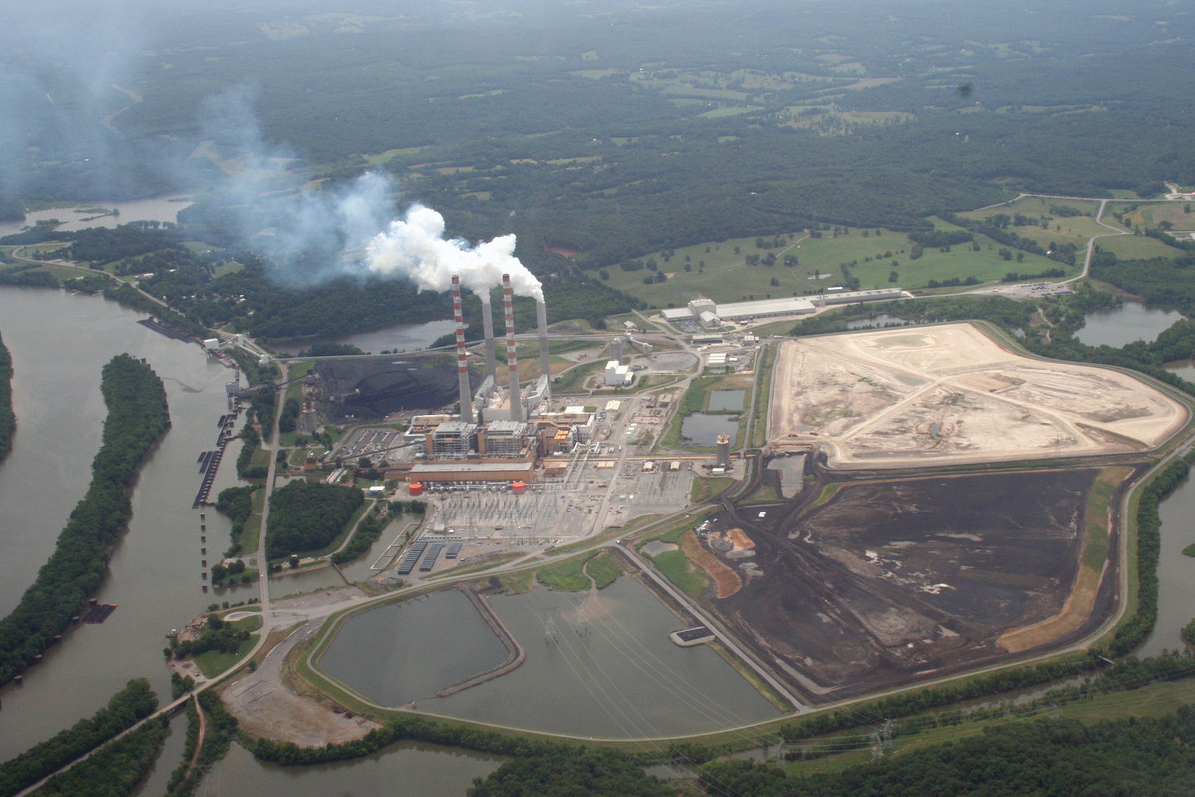
The Tennessee Valley Authority, America's largest public utility, recently handed out a 35-page booklet at a public meeting claiming coal ash is perfectly safe. Researchers who actually study coal ash have a different word for it: "lies."
The booklet, titled "Know the Facts: Coal Ash," was distributed at an April 15 public comment session held by the Tennessee Department of Environment and Conservation regarding TVA's coal ash remediation plan for its Cumberland Fossil Plant. Notably, the pamphlet lacked any TVA branding or author information, though TVA employees were spotted manning the table.
Avner Vengosh, chair of environmental quality at Duke University's Nicholas School of the Environment, reviewed the booklet and called it "unbelievable" and part of a "misleading public campaign." "It's scary," Vengosh told Inside Climate News. "It's like alternative reality."
The booklet's first page declares "Coal Ash is Not Hazardous" and notes that the EPA chose not to regulate it as hazardous waste under the Resource Conservation and Recovery Act. What the booklet conveniently omits is that the EPA classifies coal ash as a "special waste" - alongside cement kiln dust and crude oil waste - and that the agency's own website calls coal ash "potentially toxic" and notes it "can contain contaminants known to cause cancer and other serious health effects."
Howard Frumkin, professor emeritus at the University of Washington School of Public Health and former director of the CDC's National Center for Environmental Health, called the pamphlet "dishonest." "The headline declares that 'Coal Ash Is Not Hazardous;' this is simply untrue," Frumkin said. "The list of coal ash ingredients in the pamphlet omits dangerous metals; this is dishonest. The pamphlet minimizes the risk of coal ash by equating coal combustion to campfires and coal ash to garden soil; this is like equating an automatic weapon to a slingshot."
The pamphlet uses charts showing coal ash contains elements also found in "rocks and soil," and lists other ways people might encounter arsenic, mercury, lead and other heavy metals - as if pointing out that toxins exist elsewhere somehow makes them safer in your drinking water.
TVA spokesman Scott Brooks defended the booklet, saying it "was developed to help advance public understanding using information and data from credible third-party sources." He added that "the common narrative around coal ash is not rooted in reality or informed by the extensive science, monitoring, and regulatory oversight that govern its management today."
When pressed about Vengosh's criticisms, TVA responded not by addressing his points but by noting that Duke's Nicholas School "is not certified by the state of North Carolina" and its methodologies are not "approved by the EPA." Vengosh countered that TVA "denies the scientific facts that were published in peer-reviewed high level journals."
Stephen Smith, executive director of the Southern Alliance for Clean Energy, noted the tragic irony of TVA downplaying coal ash risks given the utility's history. In 2008, a dam breach at TVA's Kingston, Tennessee plant released 1.1 billion gallons of coal ash slurry into the Emory and Clinch rivers, destroying three homes and damaging dozens more. During the six-year cleanup, hundreds of workers reported developing illnesses they attributed to coal ash exposure, and dozens died. In 2018, a federal jury found the TVA contractor overseeing the cleanup failed to protect workers.
TVA manager Missy Hedgecoth, who was present at the meeting table, reportedly told the Stewart County Standard that people "play up arsenic, lead and mercury," and compared arsenic levels in groundwater to what you'd get from a cup of hot cocoa. Vengosh called that comparison "totally incorrect," noting contaminated groundwater in some cases reached "hundreds of micrograms per liter, far above the 10 micrograms per liter that is the EPA drinking water standard."
Hedgecoth is listed as co-author on a 2024 World of Coal Ash conference presentation titled "Coal Ash & the Public - Tell your story before someone else does!" The presentation notes that "technical reports containing 99% good news can become grist for the mill due to a single line or paragraph that feeds a headline" and suggests "effective and targeted outreach tools" can "level the playing field in the court of public opinion, reducing unwanted impacts to your organization."
TVA, which had been advancing plans to retire all its coal units, has now backtracked under new leadership appointed by President Donald Trump, who fired three Biden-appointed board members. "It's breathtaking that they're now going this far backwards," Smith said.