Your Brain's 'Feel Good' Chemical May Be Making That Ringing In Your Ears Way Worse
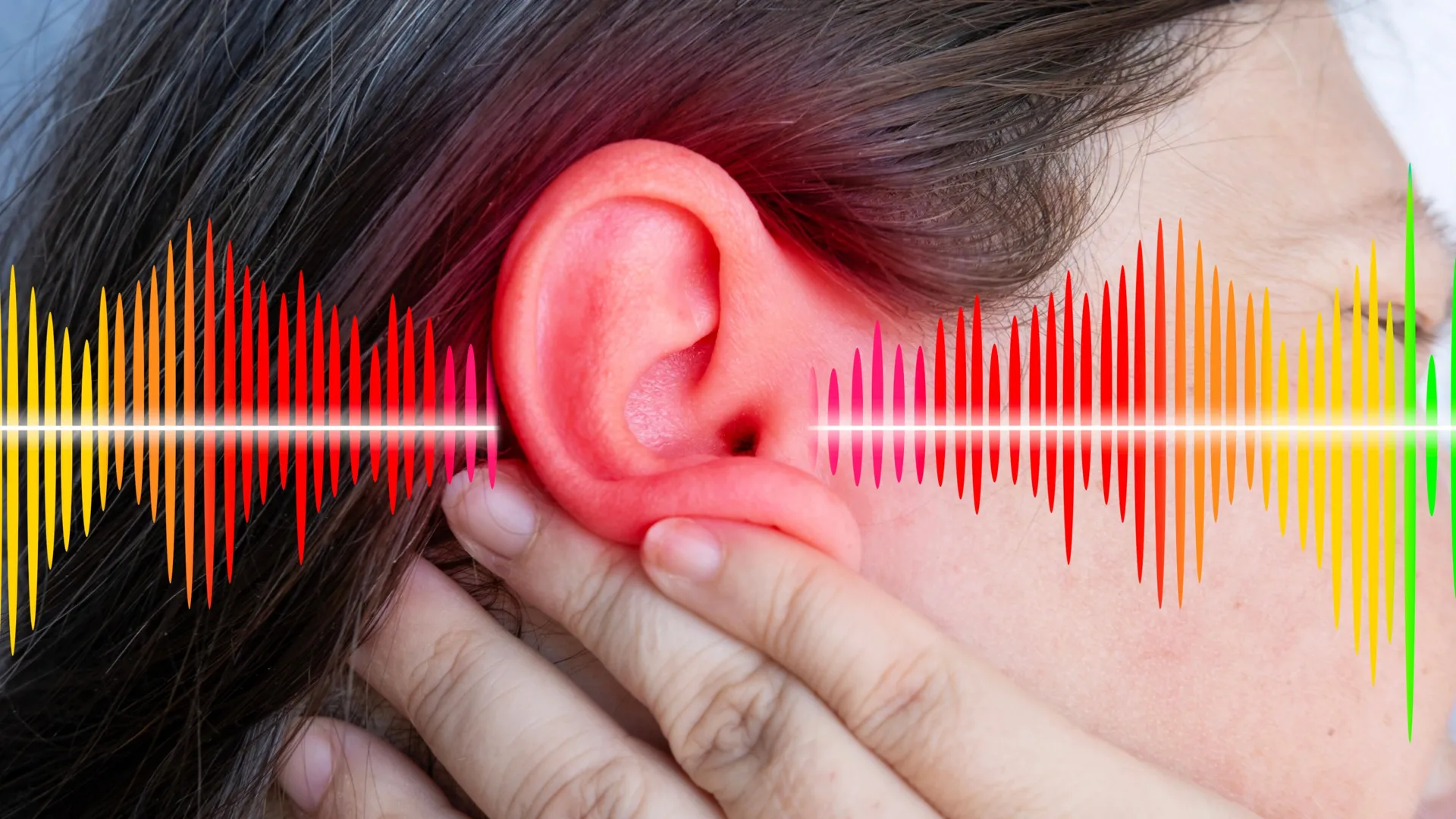
Scientists confirm that serotonin, the brain's mood-booster, can also make tinnitus worse - especially if you're on antidepressants. Great news for mice with off switches, less so for the 14% of humans hearing phantom noises.
In news that will delight no one currently hearing a phantom orchestra tuning up inside their skull, scientists have discovered that serotonin - that beloved mood-boosting brain chemical - may actually be making tinnitus worse. The research, published in the Proceedings of the National Academy of Sciences, suggests the feel-good molecule has a darker side.
Tinnitus, the persistent ringing or buzzing that affects an estimated 14% of people globally, can range from a mild annoyance to a life-disrupting nightmare. A team from Oregon Health & Science University and Anhui University in China decided to poke at the problem by studying mice. Their conclusion: pump up the serotonin, and you pump up behaviors that look a lot like tinnitus.
This is particularly awkward for the millions of people taking antidepressants called selective serotonin reuptake inhibitors (SSRIs), which do exactly that - raise serotonin levels. "People with tinnitus should work with their prescribing physician to find a drug regimen that gives them a balance between relief of psychiatric symptoms like depression and anxiety, while minimizing the experience of tinnitus," said co-senior author Laurence Trussell, Ph.D., professor of otolaryngology in the OHSU School of Medicine and a scientist at the OHSU Vollum Institute and Oregon Hearing Research Center. In other words: congrats on feeling less depressed - sorry about the phantom jet engine.
Researchers have long suspected serotonin was involved, but the exact mechanism was a mystery. Using optogenetics - a technique that sounds like something from a sci-fi movie, involving fiber optics and light to activate specific brain cells - the team targeted serotonin-producing neurons and triggered activity in the brain's hearing regions. The mice then acted as if they were hearing tinnitus, confirmed via a modified auditory startle test. "We've suspected that serotonin was involved in tinnitus, but we didn't really understand how," said co-author Zheng-Quan Tang, Ph.D., of Anhui University. "Now, using mice, we've found a specific brain circuit involving serotonin that goes straight to the auditory system, and found that it can induce tinnitus-like effects. When we turned that circuit off, we were able to ameliorate the tinnitus significantly." So the off switch exists - at least for rodents.
The findings, supported by the National Institutes of Health (award RO1DC004450), point toward a delicate chemical balancing act. "It may be possible to develop cell- or brain region-specific drugs that steer the elevation of serotonin in some brain regions but not others," Trussell said. "In that way, it may be possible to separate the beneficial and important effects of the antidepressant from the potentially harmful effects on hearing." Until then, maybe just accept that your brain's happiness pipeline is also the source of that infernal hum.
The Good Times
News in your inbox.
One sardonic roundup, delivered on your schedule. Free. Unsubscribe whenever your tolerance for wit runs out.
Already subscribed but we never reach your inbox? Check your spam folder and hit 'Not spam' (or 'Remove from spam') to bust us out of junk-mail purgatory. You'll be helping everyone else too.
Don't open any of our emails for a month and you'll be automatically removed from the mailing list.
Rewrite Article
Select parts to regenerate with a fresh AI pass. Translations will be updated automatically.
Generate AI Image
Creates a sardonic version of the article image using OpenAI.