Trump's New Vaccine Order: Because Confusing Parents Once Just Wasn't Enough
The Trump administration's latest executive order on vaccines is a masterclass in confusing public health guidance, splitting MMR shots and targeting 'high-risk' groups only - because who needs evidence when you have executive orders?
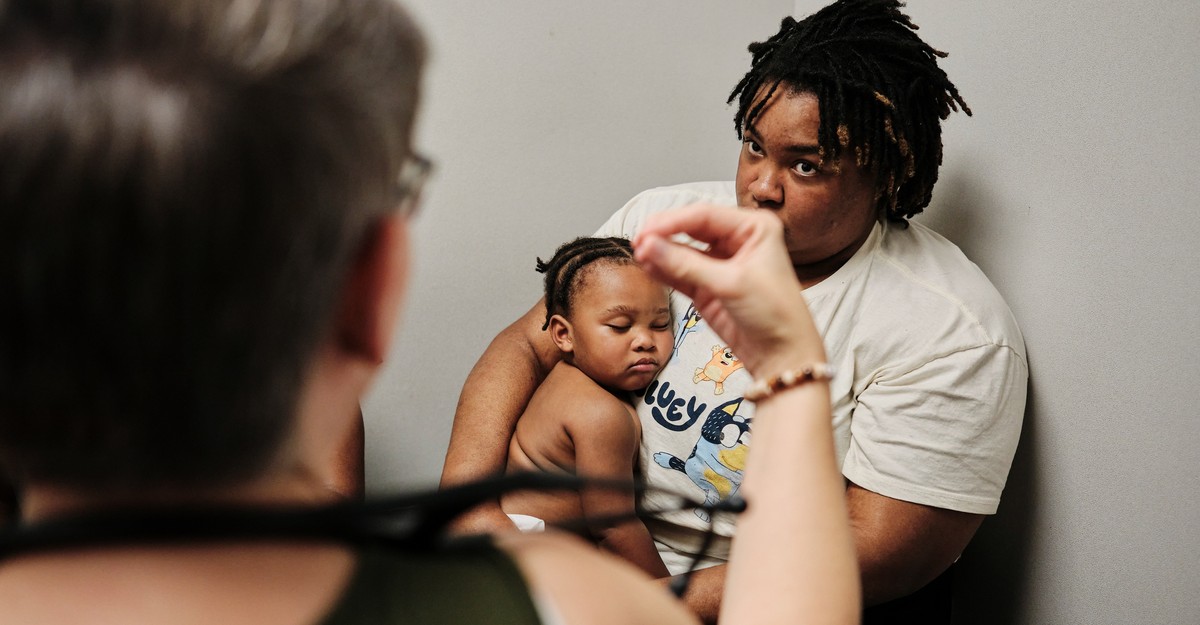
In January, the Trump administration attempted to fundamentally change how the U.S. handles childhood immunizations, and after a federal court undid that effort in March, President Trump doubled down with a new executive order on Monday. The order recommends that preventive shots for hepatitis A, hepatitis B, dengue, and other diseases be given only to "high-risk" groups, and it calls for splitting the two-dose MMR vaccine into three separate stages. It also directs the attorney general to pursue legal action against states that don't respect "parental authority, religious freedom, disability accommodations, and equal protection under the law." Because nothing says 'parental authority' like federal lawsuits against states.
The order claims to align U.S. policy with best practices from countries like Denmark, but experts note that what works in one country doesn't necessarily work in another. Jake Scott, an infectious-disease specialist at Stanford, told The Atlantic, "If you set out to write a policy that confuses people, it would look a lot like this one." And indeed, confusion is the name of the game.
State lawmakers are caught in the crossfire. Kansas's GOP-dominated legislature tried to align with the CDC's guidelines, but the Democratic governor vetoed it in April. Many other states have publicly said they'll reject the new guidelines. The American Academy of Pediatrics has already broken with the administration, calling the proposed schedule a "strong departure from the medical evidence."
Secretary of Health and Human Services Robert F. Kennedy Jr., who has a history of questioning vaccine safety, is driving the discussions. During Monday's press conference, Trump suggested the MMR vaccine could be "quite lethal" - a claim with zero evidence. Measles, on the other hand, can kill, as the U.S. saw last year with its first measles deaths in a decade.
Splitting the MMR vaccine would triple the logistical burden on parents, who would need to schedule three separate appointments. Harvard epidemiologist Maimuna Majumder warns this is "all but guaranteed to result in missed vaccines." And the order risks swaying the "mixed middle group" of Americans - about a third of adults, per a Kaiser Family Foundation study - who are unsure about vaccination. As Nick Florko, a public health reporter, notes, these are the folks who might think, 'Okay, maybe my belief that I want to delay this vaccine is well founded because the federal guidance now says that we should do that.'
So, in the grand tradition of doubling down, the White House has managed to create a policy that confuses everyone, helps no one, and might just make things worse. But hey, at least the president got to say 'quite lethal' about a vaccine that saves lives.
The Good Times
News in your inbox.
One sardonic roundup, delivered on your schedule. Free. Unsubscribe whenever your tolerance for wit runs out.
Already subscribed but we never reach your inbox? Check your spam folder and hit 'Not spam' (or 'Remove from spam') to bust us out of junk-mail purgatory. You'll be helping everyone else too.
Don't open any of our emails for a month and you'll be automatically removed from the mailing list.
Rewrite Article
Select parts to regenerate with a fresh AI pass. Translations will be updated automatically.
Generate AI Image
Creates a sardonic version of the article image using OpenAI.