Trump Tried to Kill the National EV Charging Program. It Kept Plugging Along Anyway.
Despite Trump's best efforts to pull the plug, the $5 billion NEVI program actually spent $94 million in 2025 - double the previous year - proving that even a hostile administration can't stop progress, just slow it down.
Remember the optimism of 2021, when the National Electric Vehicle Infrastructure (NEVI) program was supposed to make America an EV paradise? Ah, those were the days. The $5 billion initiative was the Biden administration's answer to the question: "How do we get 500,000 public EV charging ports by 2030?" Pete Buttigieg, then transportation secretary, declared it would "help us win the EV race." Then the race got a flat tire.
Fast forward: The Biden team took forever to write the rules, barely dishing out cash before Donald Trump returned to office. Trump promptly froze the funds and has been defending that decision in court ever since. You might assume NEVI fizzled out like a bad battery. But a Sierra Club report this week says otherwise. In 2025, states actually spent $94 million on projects - more than double 2024's $44 million. That translates to hundreds of new charging ports, with agreements for thousands more. Not bad for a program the current administration seems allergic to.
Where's the action? Pennsylvania and Ohio rank first and second in program funding, because they got organized early. California, despite its size, only scored $920,000. So much for coastal superiority. Still, more than 95 percent of the original $5 billion remains unspent, thanks to legal battles over the federal freeze. "Far more urgency, accountability, and action are needed," said Josh Stebbins, Sierra Club managing attorney, in an email. He's part of the lawsuits challenging the freeze - one of which (Washington v. U.S. Department of Transportation) saw 17 states and environmental groups successfully argue the Trump administration broke the law. A Jan. 23 ruling ordered funding resumed.
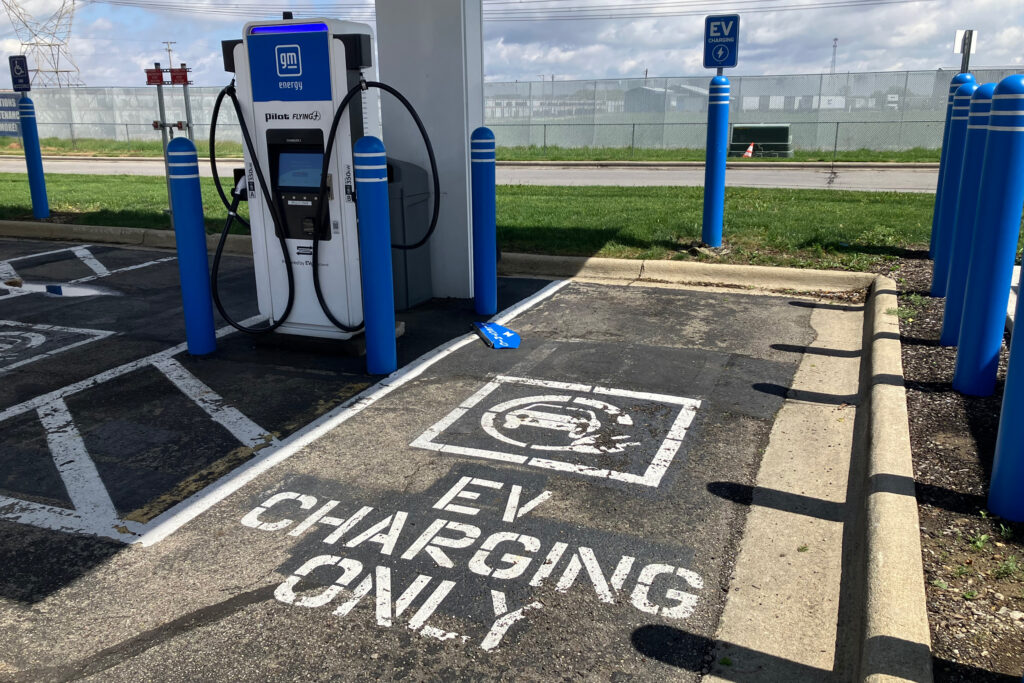
The first NEVI-funded project sits at a Pilot Travel Center in London, Ohio - a short drive from this reporter. Four charging ports, same as in 2023, and nobody was using them during my visit. But down the street at TA Travel Center (not NEVI-funded), I met Chip and Cathy Lillyman of Celina, Ohio, relaxing in their Lexus RZ 450e while it charged. Chip, a retired auto body shop owner, cited high gas prices ($4.29 that day) as a reason they bought an EV. He remembers the 1970s oil embargo - "I worked at a gas station at that time," he said. The Lillymans traded in their Honda CR-V for the Lexus last week and plan to charge mostly at home.
As of March, the U.S. had 170,158 public level 2 charging ports and 69,630 DC fast-charging ports, up from 81,601 and 17,231 five years earlier. But NEVI's contribution is a blip - most growth comes from private investment and state/local programs. The Biden-era goal of 500,000 ports by 2030 is still within reach, even if the current administration keeps throwing wrenches. Meanwhile, EVs are hitting tipping points in China, Southeast Asia, and Europe, per the Financial Times. In the U.S., the average new car cost $51,456 in March, while Chinese automakers offer EVs for about $10,000. And the Trump administration agreed to pay two more companies - Bluepoint Wind and Golden State Wind - to abandon offshore wind leases, totaling around $900 million. Because nothing says "energy independence" like paying firms not to build renewable energy.
The Good Times
News in your inbox.
One sardonic roundup, delivered on your schedule. Free. Unsubscribe whenever your tolerance for wit runs out.
Already subscribed but we never reach your inbox? Check your spam folder and hit 'Not spam' (or 'Remove from spam') to bust us out of junk-mail purgatory. You'll be helping everyone else too.
Don't open any of our emails for a month and you'll be automatically removed from the mailing list.
Rewrite Article
Select parts to regenerate with a fresh AI pass. Translations will be updated automatically.
Generate AI Image
Creates a sardonic version of the article image using OpenAI.