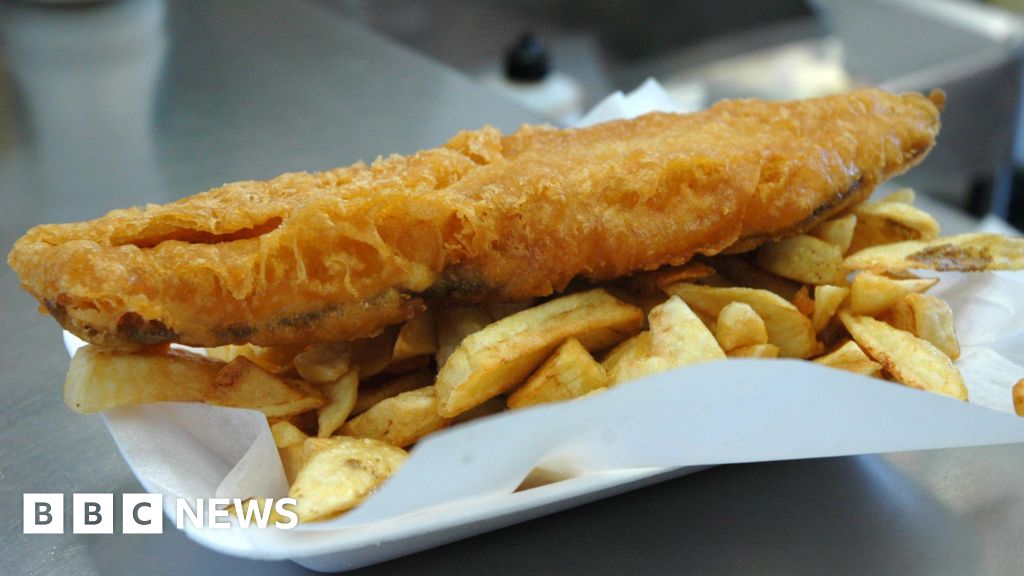
Chippies Serve Catfish as 'Traditional' Fish Supper, Because Why Let Facts Get in the Way of a Bargain?
Chip shops in the North West are swapping cod for cheap imported catfish, because nothing says 'traditional' like a tropical freshwater fish you didn't order.
In a revelation that will surprise absolutely no one who has ever stared suspiciously at a vaguely fish-shaped lump in a paper wrapper, rogue chip shops have been passing off catfish as "traditional fish and chips" to cut costs.
The BBC's North West investigation uncovered the scam, which is hard to detect because it relies on expensive DNA testing and the willingness of authorities to actually investigate. The Chartered Trading Standards Institute admitted the practice isn't widespread but acknowledged "there are still some unscrupulous businesses."
Catfish - specifically pangasius, also known as river cobbler - is farmed in Southeast Asia and costs a mere £3.40 per kilogram wholesale, compared to cod and haddock at £15 per kilogram. That's quite a savings, especially if you don't mind your "traditional" fish coming from a tropical freshwater bottom-dweller.
The investigation was sparked by a Liverpool chip shop owner who ratted out his competitors, saying, "This goes on more than you'd think and it's putting people like me at a disadvantage." The BBC then dove into online reviews where customers complained about mystery fish, leaving comments like "haven't a clue what type of fish it was" and "some cheap white fish."
DNA testing at Liverpool John Moores University revealed that three out of 10 sampled chip shops were selling catfish - three that didn't list a species on the menu. Professor Stefano Mariani, who oversaw the tests, said, "In my experience with fish and chips, three out of 10 is quite a lot - I don't recall seeing this level of catfish."
The catfish portions were sold for £3.80, £4.20, and £5, while cod or haddock went for between £4 and £6. Professor Mariani noted that telling the difference is "very difficult for a member of the public that is not a trained fish biologist."
National Trading Standards called it a "food labelling issue" and punted it to the Food Standards Agency, which said local authorities would handle it. The BBC contacted every local authority in the North West - 10 didn't respond, and 11 were either unaware of fish fraud or had no ongoing investigations. Salford Council had issued a warning to one trader after finding a different fish sold as cod.
Andrew Cook, president of the National Federation of Fish Friers, acknowledged the problem: "It probably does go on." He recalled a friend who ordered fish and chips at a pub, suspected catfish, and was told, "Yeah, it is." Cook urged shops to list the species on menus, adding, "As an industry, we've got to have the trust of the general public."
Customers had mixed reactions. Steven Booth, 41, noted his Thai wife enjoys catfish but stressed the importance of being told what you're eating. Linda Williams, 66, said she wouldn't be happy paying for cod and getting something else. Chris Jones, 68, who always orders cod, said he'd heard rumors and wouldn't be against trying catfish - but not at cod prices.
Dean Cooke of the Chartered Trading Standards Institute advised consumers to ask for the species if it's not listed, and to contact trading standards if they suspect deception. So next time your fish supper tastes a bit... muddy, you know who to call.
The Good Times
News in your inbox.
One sardonic roundup, delivered on your schedule. Free. Unsubscribe whenever your tolerance for wit runs out.
Already subscribed but we never reach your inbox? Check your spam folder and hit 'Not spam' (or 'Remove from spam') to bust us out of junk-mail purgatory. You'll be helping everyone else too.
Don't open any of our emails for a month and you'll be automatically removed from the mailing list.
Rewrite Article
Select parts to regenerate with a fresh AI pass. Translations will be updated automatically.
Generate AI Image
Creates a sardonic version of the article image using OpenAI.