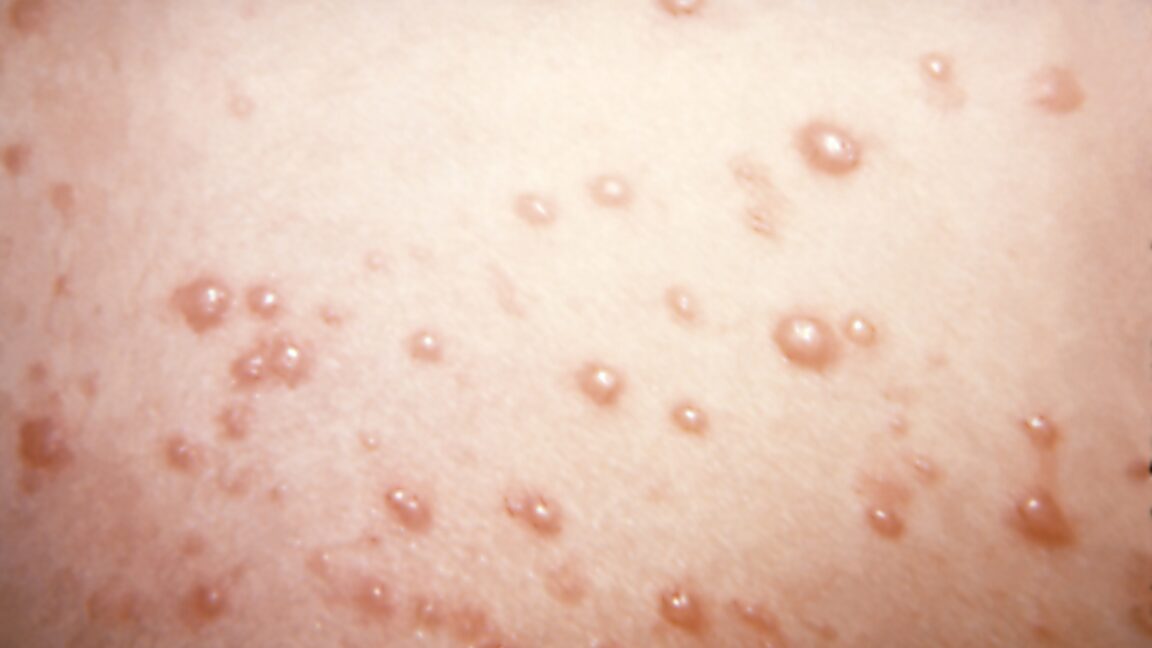
Anyone who survived childhood chickenpox remembers the special hell of that itchy rash. Oven mitts, snow gloves, oatmeal baths - all noble but ultimately futile attempts to keep tiny humans from scratching themselves raw. The rash runs its cruel course: raised papules, fluid-filled blisters, oozing leaks, crusty scabs, repeat. It's a cycle designed to test the patience of children and parents alike.
For one 15-year-old in Nepal, the ordeal didn't end when the blisters dried up. Instead of fading quietly, some of her chickenpox scars decided to go rogue, mushrooming into large, rubbery, painful, and permanent growths. The biggest, on her chest, measured 4 by 4 cm - roughly 1.6 inches square. It's not the kind of souvenir anyone wants from a childhood illness.
These growths are keloids - poorly understood skin overgrowths that happen when wound healing goes off the rails, expanding beyond the original injury. In this teen's case, five large keloids erupted from her chickenpox scars, popping up on her right jaw, chest, abdomen, and right flank. The simultaneous arrival earned them the diagnosis of 'eruptive keloids,' an ultra-rare complication so uncommon that only five previous cases exist in medical literature. Hers makes six, chronicled this week in the journal Clinical Case Reports.
Doctors noted the teen was otherwise healthy after recovering from chickenpox several weeks earlier. She'd been treated with the antiviral acyclovir. Why the keloids erupted remains mysterious - keloid formation in general is poorly understood. But something clearly went haywire in her healing process.
Wound healing has three main phases: inflammatory (limit damage), proliferative (build new tissue, with fibroblasts cranking out collagen), and maturation (final shaping and strengthening). Keloids form when the proliferative phase overstays its welcome - fibroblasts get hyperactive, survive longer, and churn out up to 20 times more collagen than normal skin. Genetics and environmental factors are likely culprits; keloids are more common in darker skin. The teen's doctors speculate that varicella infections might trigger pro-inflammatory signals that induce a hyperproliferative state. But that's just a hypothesis for now.
Treating keloids is a nightmare. Since the problem is faulty healing, any treatment that creates new wounds risks making things worse. Surgical removal has recurrence rates between 45 and 100 percent. Cryotherapy can kill scar tissue but may leave skin looking worse. Laser and radiotherapy carry risks and mixed results. The mainstay treatment is corticosteroid injections, which help with itching and burning.
After three months of monitoring, the teen's keloids were relatively stable, with no rapid growth - though they could expand over time. Given personal preference and financial limitations, she opted to skip aggressive treatment and manage symptoms with antihistamines and over-the-counter acetaminophen. Sometimes coexistence is the best you can hope for.
Meanwhile, chickenpox itself has an excellent prevention: the varicella vaccine, released in the US in 1995. Two doses offer 97 percent protection, and since its debut, cases and complications have plummeted. A reminder that a little pinch is infinitely preferable to a lifetime of rubbery nodules.
The Good Times
News in your inbox.
One sardonic roundup, delivered on your schedule. Free. Unsubscribe whenever your tolerance for wit runs out.
Already subscribed but we never reach your inbox? Check your spam folder and hit 'Not spam' (or 'Remove from spam') to bust us out of junk-mail purgatory. You'll be helping everyone else too.
Don't open any of our emails for a month and you'll be automatically removed from the mailing list.
Rewrite Article
Select parts to regenerate with a fresh AI pass. Translations will be updated automatically.
Generate AI Image
Creates a sardonic version of the article image using OpenAI.