
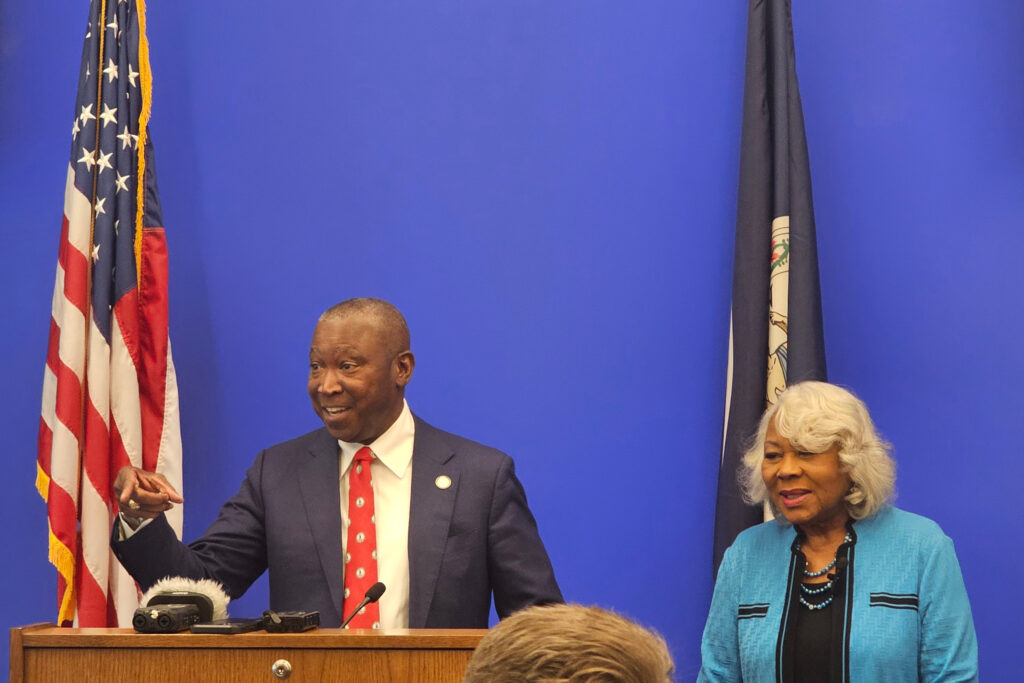
RICHMOND, Va. - Virginia’s Democratic lawmakers once again failed to agree on a budget Thursday, because nothing says “let’s get things done” like a spirited debate over whether data centers should keep their massive tax exemptions on computer equipment.
Lawmakers gaveled in and out of a one-day special session that was supposed to vote on a budget they couldn’t pass back in March at the end of the 2026 legislative session. So far, the only thing they’ve agreed on is that they haven’t agreed on anything yet.
“Let’s take our time and do this thing right,” Senate President Pro Tempore Louise Lucas, D-Portsmouth, said Wednesday, which is politician-speak for “we are nowhere close to a deal.”
At the heart of the impasse is a $1.9 billion sales and use tax exemption for data centers - a perk created in 2008 after the housing crisis to lure the industry to Virginia. Back then, lawmakers figured they’d waive about $1.5 million in tax revenue. Fast-forward to 2025, and the state waived $1.9 billion. Oops.
The exemption applies to data centers that invest $150 million and create 50 jobs in a community, saving them between 5.3 percent and 7 percent in taxes depending on the locality. Lucas and many Senate Democrats want to kill the exemption starting in January - eight years earlier than its scheduled 2035 expiration - and use the revenue for social programs. She initially wanted the full $1.9 billion but has graciously lowered her ask to $1.6 billion.
“There’s not going to be a cap, I want it to be perpetual and ongoing,” Lucas said of the data center revenue. She added that other states “are going to feel the same way we do about them taking money from the voters and giving it to these large, large corporations.” Her message to data centers: “We got the infrastructure, we got the water, we got the land. Where are they going? They’re not going to go anywhere.”
Not everyone shares her confidence. House Speaker Don Scott, D-Portsmouth, urged caution, warning that Virginia needs to “keep its competitive advantage” as the data center capital of the world. “Texas and others, they want to have what we have,” he said.
The Senate’s plan for spending the data center tax revenue over the next two years includes $1.1 billion for general fund programs, with $440 million for education, $300 million for transportation, $324.1 million for localities, and $190 million for other regional needs. Some of that money would also make up for federal funding cuts to SNAP and Medicaid under President Donald Trump’s One Big Beautiful Bill Act, which, in a twist no one saw coming, also gave tax breaks to the wealthy.
For their part, data center industry leaders say Lucas is asking for too much and that companies could easily move projects elsewhere. They want to contribute just $1.1 billion over two years - which conveniently matches what Senate budget documents say would go to the general fund anyway. In March, industry representatives from Microsoft, Amazon, and the Data Center Coalition held closed-door meetings with lawmakers, but no deal emerged.
State Del. Terry Kilgore of Wise County, the House minority leader, wants to keep the exemption but is open to squeezing more revenue from data centers. Rural communities starving for economic development want to stay competitive, he said. “We need data centers in the commonwealth. My issue with all this is we’ve made promises to these data centers when they came here to have this tax credit. We as Virginians need to fulfill our promises.”
Governor Abigail Spanberger, a moderate Democrat, is also digging in. At an April 9 groundbreaking for a data center computer rack manufacturer, she said “the fact that Virginia is a reliable partner matters as much as the incentives we put on the table, and we intend to protect that reputation aggressively.” She’s previously suggested an electricity consumption tax to generate revenue but now says it’s up to budget negotiators to figure it out.
Meanwhile, a politically tense Congressional redistricting fight has been sucking up oxygen, though Virginia voters settled that on Tuesday by approving a map that would shift the state’s U.S. House delegation from a 6-5 Democratic majority to an expected 10-1 Democratic majority, pending legal challenges. That might make budget negotiations a bit more streamlined. Speaker Scott said a deal could be hashed out by June.
Lost in all this is a House proposal to keep the data center tax exemption but tie it to clean energy requirements - like banning fossil fuels as a primary power source, matching energy needs with renewables, and ditching diesel backup generators for batteries. Data centers that choose fossil fuels would lose the exemption, generating some tax revenue. Illinois already has a tax credit for carbon-neutral data centers. Asked if she’s interested, Lucas said, “I have not had that conversation with my caucus so I can’t answer that.”
For now, Virginia remains the data center capital of the world, residents’ electricity bills keep rising, environmental groups fret about water and air quality, and lawmakers can’t agree on whether to keep handing out $1.9 billion in tax breaks. All perfectly normal.