Study Finds Sleep Is Good, Just Like Your Mother Said, But With 156 Associations and Bonferroni Correction
A new study confirms that sleeping 6-8 hours with plenty of REM and deep sleep is linked to lower risk of 83 diseases, while less than 5 hours increases risk of 37. Your mother was right.
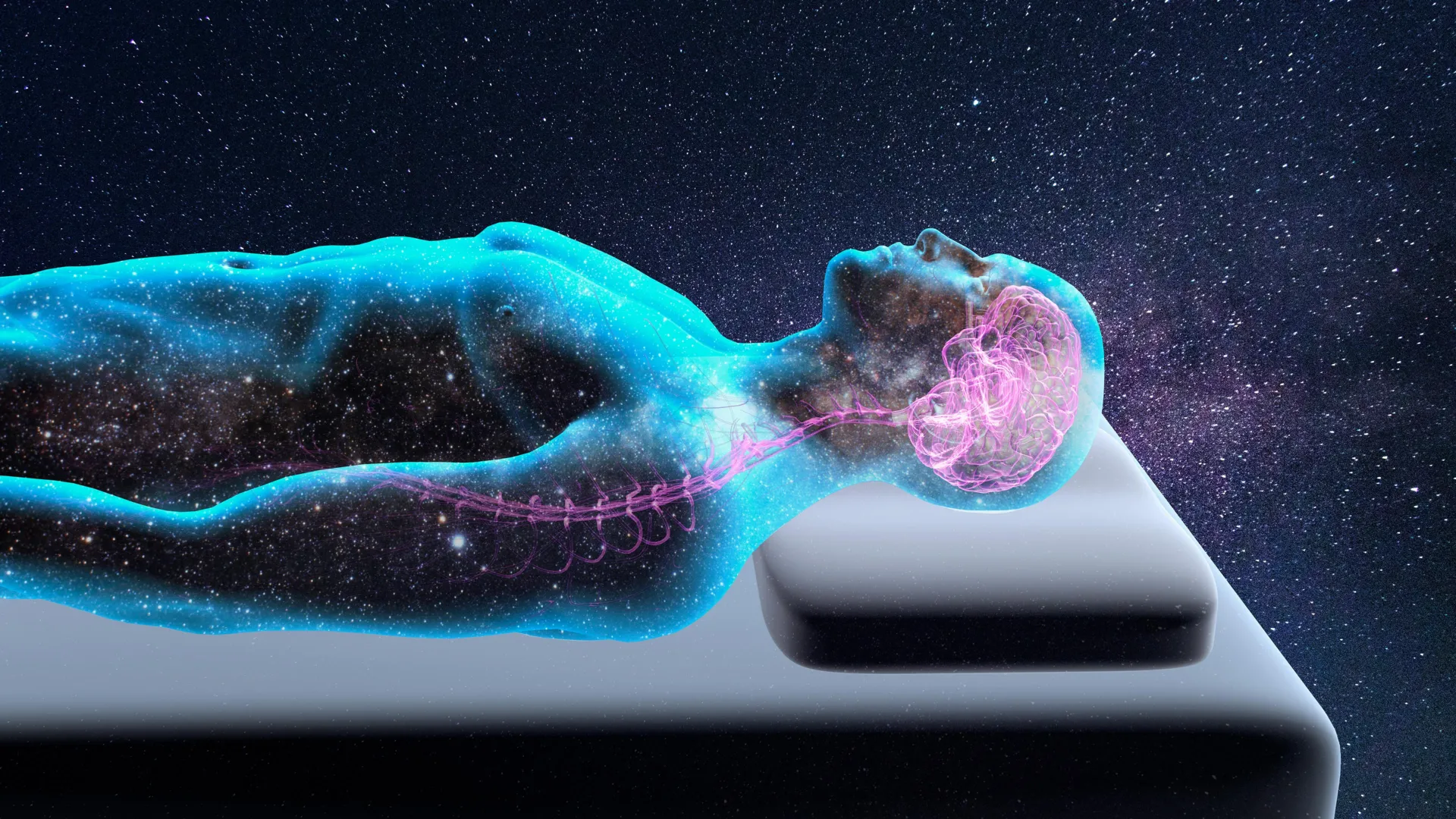
In news that will surprise absolutely no one who has ever been conscious, a new study published September 17th in the open access journal PLOS Medicine finds that getting enough good sleep is associated with lower risk of a staggering array of diseases. The research, led by Shengzhi Sun of Capital Medical University, China, and colleagues, analyzed data from 95,559 UK Biobank participants who wore wrist accelerometers for seven consecutive days and nights, because asking people how they slept apparently yields answers roughly as reliable as asking them how much they drink.
Sleep is a priority of China's National Health Commission, and the latest 2026 China Sleep Health White Paper reveals that the average surveyed Chinese person sleeps 6.97 hours per night, while 23 percent get less than 6 hours. Only 26 percent reported a consistent sleep schedule, and disturbances have increased over time. So yes, the country that brought us the Great Wall and bubble tea is also apparently suffering from the same collective insomnia as the rest of us.
Using a deep-learning algorithm to calculate sleep stages (REM, deep, and light sleep), total sleep duration, wakefulness after sleep onset, and night-to-night sleep irregularity, researchers followed participants for a median of 8.9 years, testing associations with more than 1,000 disease outcomes. Greater REM sleep (per interquartile range, 47.6 minutes) was associated with lower risk of 83 diseases, including heart failure (hazard ratio 0.74), dementia (hazard ratio 0.54), and Parkinson's disease (hazard ratio 0.20). Greater deep sleep was linked to lower risk of 7 conditions, including type 2 diabetes and major depressive disorder. Meanwhile, greater sleep irregularity and wakefulness after sleep onset were each linked to higher risk of several conditions, including anxiety and substance use disorders.
Total sleep duration showed a non-linear relationship with disease risk, with the lowest risk concentrated in a 6-to-8-hour window. People sleeping less than 5 hours faced the most elevated clinical vulnerability, with an increased risk of 37 conditions. As an observational study, the research cannot establish that sleep patterns directly cause disease risk - so don't go blaming your insomnia for everything just yet.
"The findings provide additional evidence supporting the role of a 6-8 hours' sleep duration as a health safeguard for middle-aged and older adults, likely attributable to more favorable distributions of sleep stages," the authors say. "Maintaining a sleep duration of 6-8 hours can effectively reduce the risk of multiple diseases, providing new insights for health promotion and preventive practice." The authors add, "Phenome-wide association analysis identified 156 significant associations between sleep patterns and incident diseases after Bonferroni correction." And "Sleep duration exhibited significant non-linear associations with 86 disease phenotypes, with the minimum-risk duration for the majority of these conditions (69 phenotypes) precisely concentrated within a 6-8 hour window."
This work was supported by the National Science Fund for Distinguished Young Scholars (82025031 to RC), the Key Program of the National Natural Science Foundation of China (82230109 to RC), the Beijing Outstanding Young Scientist Program (JWZQ20240101024 to RC), and the Young Beijing Scholars Project, the Chinese Institutes for Medical Research, Beijing (CX23YZ01 to RC). The funders had no role in study design, data collection and analysis, decision to publish, or preparation of the manuscript - they were probably too busy napping.
In other news, scientists discovered Canada's first dinosaur tracks from a rarely documented Cretaceous age, two dead stars are racing around each other every 6.2 minutes, a natural compound may help protect the brain and heart from excess salt, and a 240-million-year-old fossil discovery challenges the story of the first dinosaurs. But hey, at least you got eight hours last night. Right?
The Good Times
News in your inbox.
One sardonic roundup, delivered on your schedule. Free. Unsubscribe whenever your tolerance for wit runs out.
Already subscribed but we never reach your inbox? Check your spam folder and hit 'Not spam' (or 'Remove from spam') to bust us out of junk-mail purgatory. You'll be helping everyone else too.
Don't open any of our emails for a month and you'll be automatically removed from the mailing list.
Rewrite Article
Select parts to regenerate with a fresh AI pass. Translations will be updated automatically.
Generate AI Image
Creates a sardonic version of the article image using OpenAI.