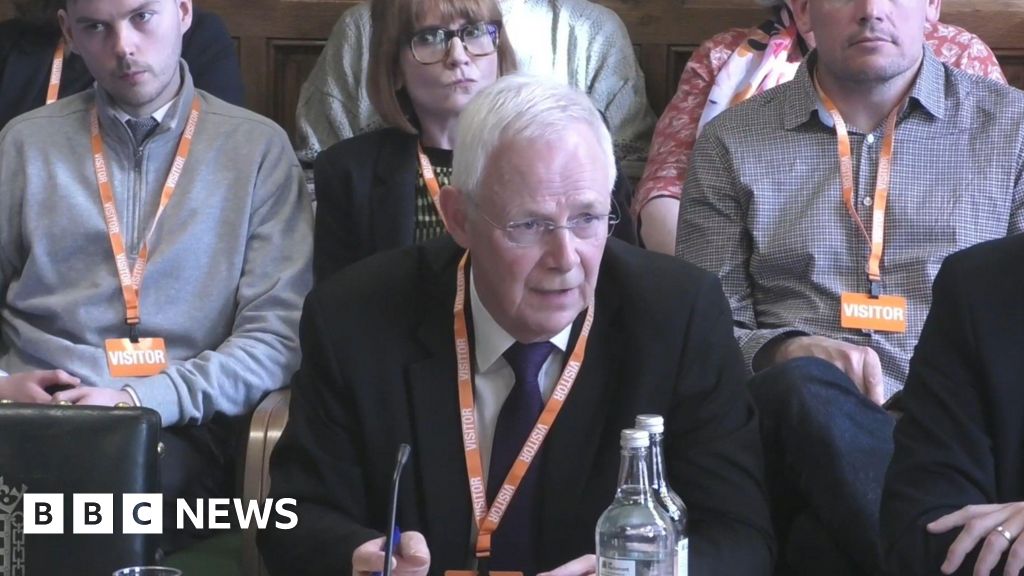
The chair of South East Water (SEW), Chris Train, has resigned following a report that described the company's leadership as an "unaccountable clique" - which is not the family-friendly vibe they were apparently going for.
Train stepped down on Friday after the damning report into major supply issues that left tens of thousands of homes without drinking water. SEW said new leadership was needed to oversee "a critical period of positive, transformative change" - because apparently the previous leadership's idea of change was just letting the taps run dry.
A cross-party group of MPs has declared no confidence in SEW bosses after a series of major supply outages. The Environment, Food and Rural Affairs Committee said CEO David Hinton and the board had not addressed "multiple and ongoing failures." Some 24,000 customers in Kent and East Sussex faced supply disruption in November and December, and weeks later up to 30,000 households endured days of water chaos.
Calls have also been made for Hinton to quit - he was awarded a £115,000 bonus last year on top of his £400,000 salary, proving that in the water industry, failure can be quite lucrative.
Lisa Clement, interim SEW independent non-executive chair, said the company's focus remained on delivering changes to strengthen network resilience. Meanwhile, Julian Leefe-Griffiths, who owns the Tunbridge Wells Hotel and believes he lost more than £60,000 due to outages, told BBC Radio Kent: "[SEW] are an utterly shambolic company delivering a truly appalling service."
Daphne Pilcher, a Tunbridge Wells resident, added that it was not fair that one person was "carrying the can" - her objection was the "overall lack of honesty... and personal greed" of SEW's leaders.
In a highly critical report published Friday, MPs accused SEW of poor leadership, weak governance, and a culture where nobody was held accountable. Sources close to the environment secretary told the BBC the government was "looking at all options for turning this company and the wider industry around," including possibly calling in shareholders to ask what they think about all this.
The committee said it had taken the "unusual but necessary step" of declaring no confidence because SEW appeared "shielded from the consequences of its incompetence."
Responding to the report, SEW apologized and said it planned to double investment in its supply network over the next five years. Tunbridge Wells MP Mike Martin said the report "confirms that SEW poses a clear and present danger to public health" and added: "It's not if there will be another water crisis, but when."
Bills for SEW customers increased by 7% from April, bringing the average yearly bill to £324 for 2026/27 - up from £303. So customers get to pay more for less water. The report follows two parliamentary hearings into an outage at the Pembury Treatment Works in late 2025, which left tens of thousands of homes, schools, GP surgeries, and care settings without clean water for up to two weeks.
Committee chairman Alistair Carmichael said: "One cannot overstate the dangers of so many communities losing water supply for extended periods." The committee also urged SEW shareholders - including the Utilities Trust of Australia, NatWest Group pension fund, and Desjardins Group - to act.
Regulator Ofwat said SEW had one of the worst records in the industry for supply interruptions over the last decade and is consulting on a proposed fine of up to £22.46m over failures linked to the Tunbridge Wells incident. That's a lot of money, but probably not enough to make anyone spill their bottled water.
The Good Times
News in your inbox.
One sardonic roundup, delivered on your schedule. Free. Unsubscribe whenever your tolerance for wit runs out.
Already subscribed but we never reach your inbox? Check your spam folder and hit 'Not spam' (or 'Remove from spam') to bust us out of junk-mail purgatory. You'll be helping everyone else too.
Don't open any of our emails for a month and you'll be automatically removed from the mailing list.
Rewrite Article
Select parts to regenerate with a fresh AI pass. Translations will be updated automatically.
Generate AI Image
Creates a sardonic version of the article image using OpenAI.