Solar Saves Europe's Grid While Everything Else Melts, Dries Up, or Gives Up
Europe's grid survived a summer of record heat and drought thanks to solar and batteries, while nuclear, gas, coal, and wind all took a nap. Who needs AC when you have climate change?
Europe just survived a summer that felt like a stress test for its energy grid, and honestly, the grid deserves a participation trophy. Record-breaking heat waves cooked the continent, delivering the hottest June on record. Meanwhile, a drought - possibly related, because physics - shriveled rivers to record lows. Wind power struggled under stagnant conditions, and nuclear, gas, and coal plants had to throttle back as waterways warmed and dried, taking away their cooling water. But solar? Solar was the overachiever, performing better than normal and, with batteries, keeping thousands of AC units humming through the historic heat.
Scientists are still scratching their heads over why so many heat waves kept showing up, but studies confirm that individual heat events are more likely and more intense thanks to climate change. One study found the June heat wave that scorched Western Europe was roughly 200 times more likely in today's fossil fuel-warmed climate than it would have been two decades ago. As Europe warms and more people install cooling systems - only 23 percent of households currently have access to or use AC - experts say this summer offers a preview of what's to come.
Extreme temperatures in late June bumped Italy's power demand by 28 percent compared to the previous week, according to the energy think tank Ember. France saw a 14 percent increase. Electricity and natural gas prices spiked in the evening as demand peaked and solar generation wound down, with some prices hitting their highest levels since the 2022/2023 winter gas crisis following Russia's invasion of Ukraine.
While demand and prices climbed, generation in some areas fell. In the United Kingdom, five gas plants cut output by a combined 2.5 gigawatts because heat reduced their cooling systems' effectiveness. Heat-induced low wind speeds halved the country's typical wind farm generation in June.
Historic dryness dropped river levels across Europe: England and Wales reported their driest July on record, while the Danube River in central and Eastern Europe hit record lows, exposing WWII shipwrecks and prehistoric relics. Europe's hydropower production hit its lowest July level in a decade, and several countries curtailed nuclear power generation as warm, low rivers threatened cooling water supplies. France lost 18 percent of its nuclear capacity to 'environmental factors' in mid-July, Ember found, continuing a summertime nuclear outage trend. French nuclear plants use river water for cooling, drawing it in and discharging it slightly warmer. French law caps the discharge temperature to protect aquatic life, so when rivers are already warm from heat waves or drought, plants must reduce cooling and power generation.
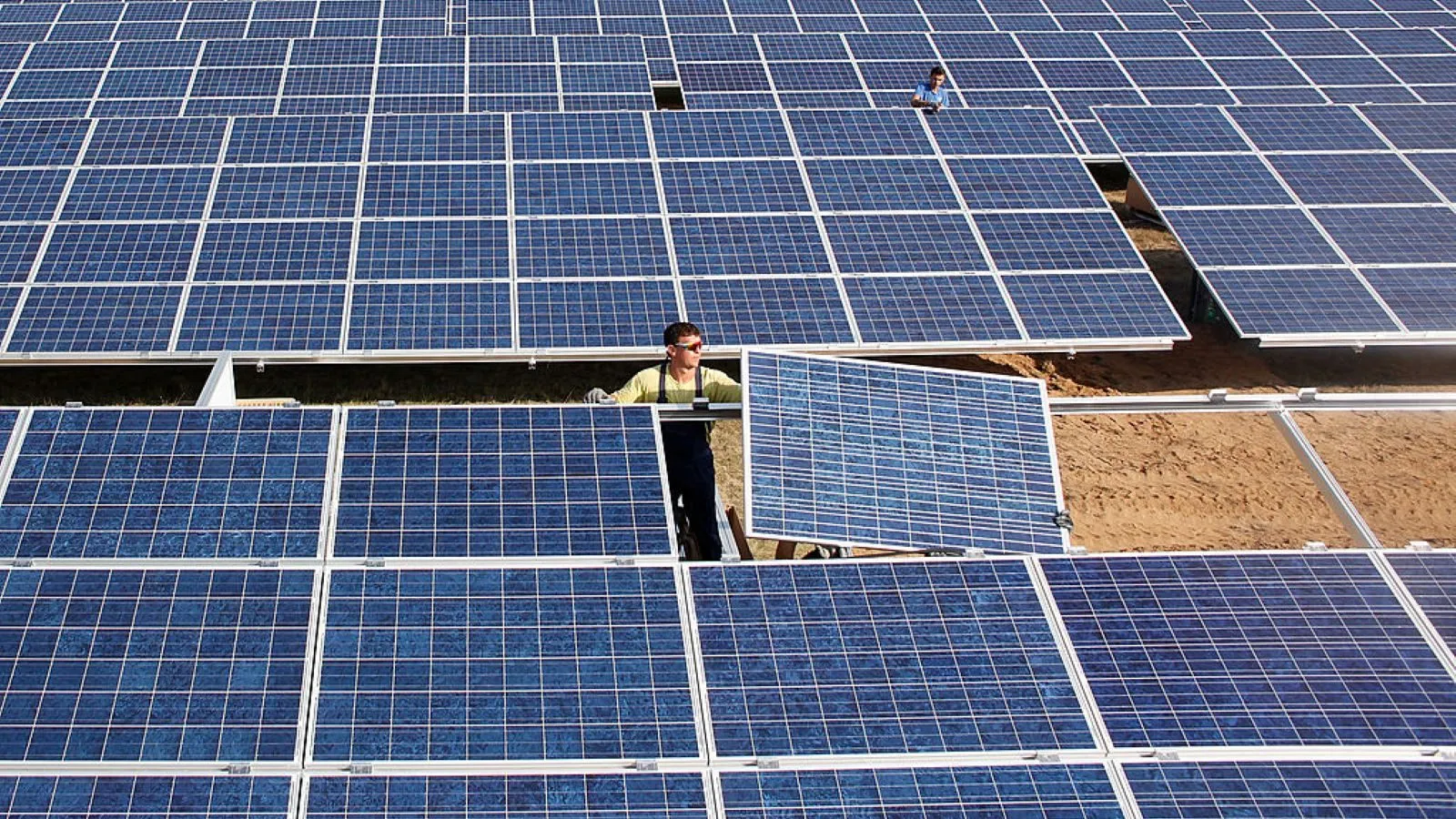
But where others faltered, solar shone. European heat waves bring clear, sunny days - perfect for solar. Europe's solar panels produced 17 percent more power during the summer's heat waves than usual, stabilizing the grid as afternoon cooling demand climbed, according to Ember. Battery systems delivered this solar power into the evening, when heat lingered and AC units cranked to help households sleep.
'The next challenge is the evening period. Temperatures often remain high after sunset and AC demand can stay elevated, even as solar production declines,' said Walburga Hemetsberger, CEO of SolarPower Europe, an industry group. 'This is why battery storage is becoming such an important part of the energy transition.'
Europe's cooling demand has plenty of room to grow: About half of households in Italy and Spain have AC, a quarter in France - compared to 90 percent in the United States.
'There are places where we just can't do without it now,' Marine Tondelier, national secretary of the Ecologist Party, said this June, reversing the party's longstanding argument against AC because of its greenhouse gas emissions.
France's state-owned utility plans to spend over $10 billion to adapt its nuclear and hydropower plants to warmer temperatures and lower water availability over the next 15 years, including investments in equipment to cool discharged water to meet environmental standards. But adapting to new demand could also require new generation and storage, especially as grids face increasing demand from data centers.
Solar and batteries have been growing at a breakneck pace across Europe, with 36 gigawatt-hours installed in 2025, a 48 percent increase over new additions the previous year. Battery installations saw their 12th straight year of growth in 2025, according to SolarPower Europe.
'Extreme price spikes during heatwaves are a blaring signal for regulatory changes that increase power system flexibility,' said Beatrice Petrovich, a senior energy analyst covering Europe at Ember. 'Treating this summer as a turning point for energy storage would be an opportunity to remove existing barriers.'
The Good Times
News in your inbox.
One sardonic roundup, delivered on your schedule. Free. Unsubscribe whenever your tolerance for wit runs out.
Already subscribed but we never reach your inbox? Check your spam folder and hit 'Not spam' (or 'Remove from spam') to bust us out of junk-mail purgatory. You'll be helping everyone else too.
Don't open any of our emails for a month and you'll be automatically removed from the mailing list.
Rewrite Article
Select parts to regenerate with a fresh AI pass. Translations will be updated automatically.
Generate AI Image
Creates a sardonic version of the article image using OpenAI.