Greenland Shark's 400-Year-Old Eyes Are Basically Fine, Scientists Report
Scientists discover that Greenland sharks, the longest-living vertebrates, may not be blind after all - their eyes are just fine, thank you, and might hold secrets to human longevity.
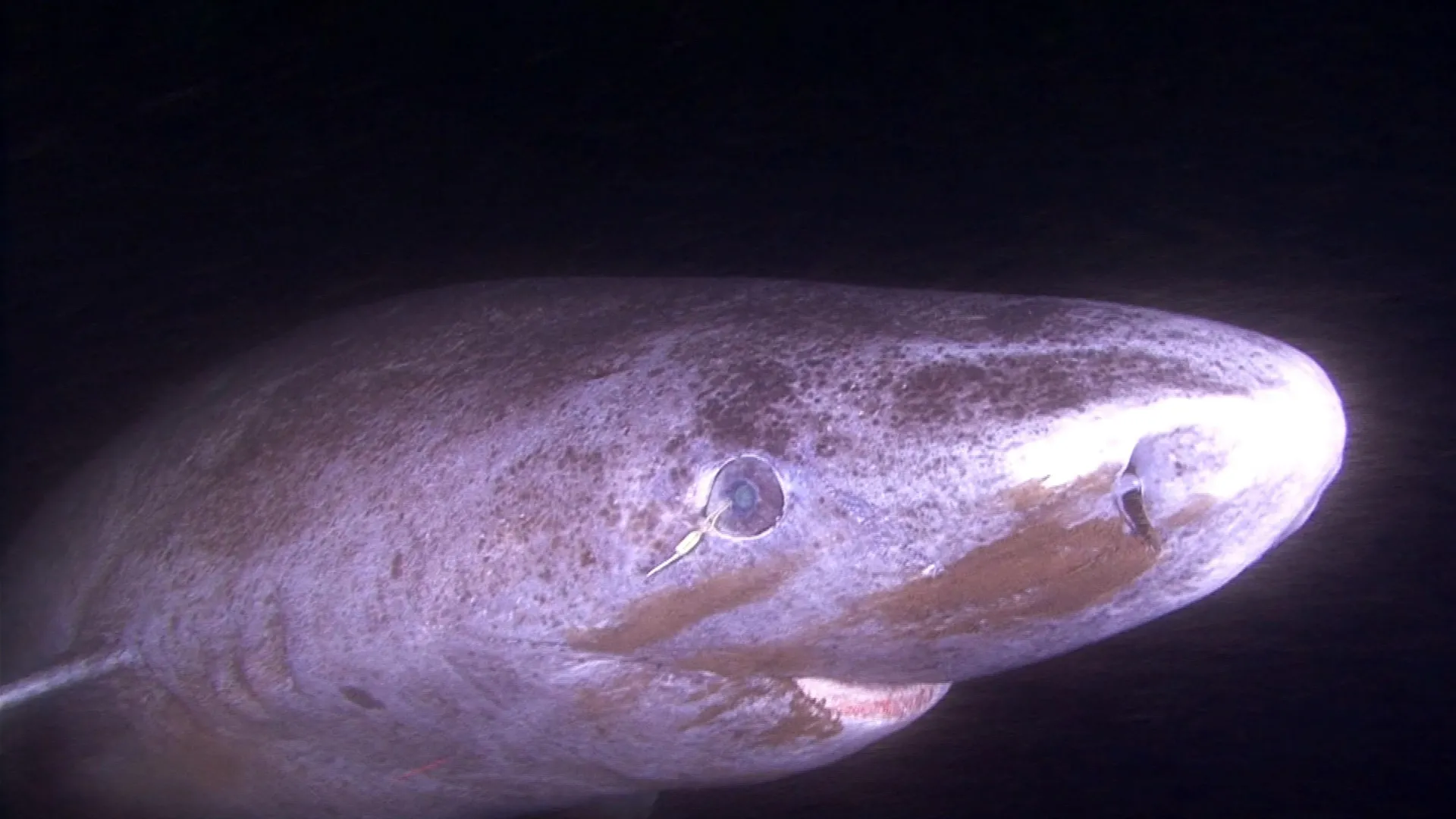
A Greenland shark drifts through the dark Arctic waters on a computer screen, and Dorota Skowronska-Krawczyk, an associate professor of physiology and biophysics at the University of California, Irvine, points out something remarkable: the shark is moving its eye to track light. This might not sound like a big deal, but for a creature that can live up to 400 years, with cloudy eyes often covered in parasites, scientists had long assumed the shark was functionally blind.
Turns out, that assumption was about as reliable as a weather forecast in the Arctic. New research led by Skowronska-Krawczyk, published in Nature Communications, suggests that Greenland sharks may actually see just fine, thanks to a DNA repair mechanism that keeps their retinas in tip-top shape for centuries. The study, co-authored by Walter Salzburger and Lily G. Fogg from the University of Basel, Switzerland, and involving a team that includes Emily Tom, a UC Irvine Ph.D. student, challenges the notion that these ancient fish are blind.
The sharks examined were caught between 2020 and 2024 near Disko Island, Greenland, using scientific long lines, and their eyes were dissected and preserved. When Tom opened the package containing one of these eyes, she was greeted by a 200-year-old eyeball on dry ice, staring back at her. "We're used to mouse eyeballs the size of a papaya seed," she said, "so we had to scale up to a baseball-sized eyeball." The lab smelled like a fish market, but the research paid off: the team found no evidence of retinal cell death, and rhodopsin, a protein essential for dim-light vision, was still active and tuned to detect blue light - a handy adaptation for the murky depths.
This research doesn't just challenge assumptions about shark vision; it offers a potential roadmap for understanding aging and age-related eye diseases like macular degeneration and glaucoma. If a shark can keep its eyes healthy for four centuries, maybe we can learn a trick or two. Skowronska-Krawczyk, who first got interested after reading a 2016 Science paper by John Fleng Steffensen, remains optimistic despite funding uncertainties: "We will prevail." And with students like Tom on board, sharing the joy of discovery, the future of shark vision research looks, well, clear.
The Good Times
News in your inbox.
One sardonic roundup, delivered on your schedule. Free. Unsubscribe whenever your tolerance for wit runs out.
Already subscribed but we never reach your inbox? Check your spam folder and hit 'Not spam' (or 'Remove from spam') to bust us out of junk-mail purgatory. You'll be helping everyone else too.
Don't open any of our emails for a month and you'll be automatically removed from the mailing list.
Rewrite Article
Select parts to regenerate with a fresh AI pass. Translations will be updated automatically.
Generate AI Image
Creates a sardonic version of the article image using OpenAI.