Scientists Confirm Stairs Are Basically a Heart-Saving Machine (You Still Have to Climb Them)
Study confirms that climbing stairs - the oldest cardio machine - can slash heart disease risk and add years to your life, but only if you actually do it.
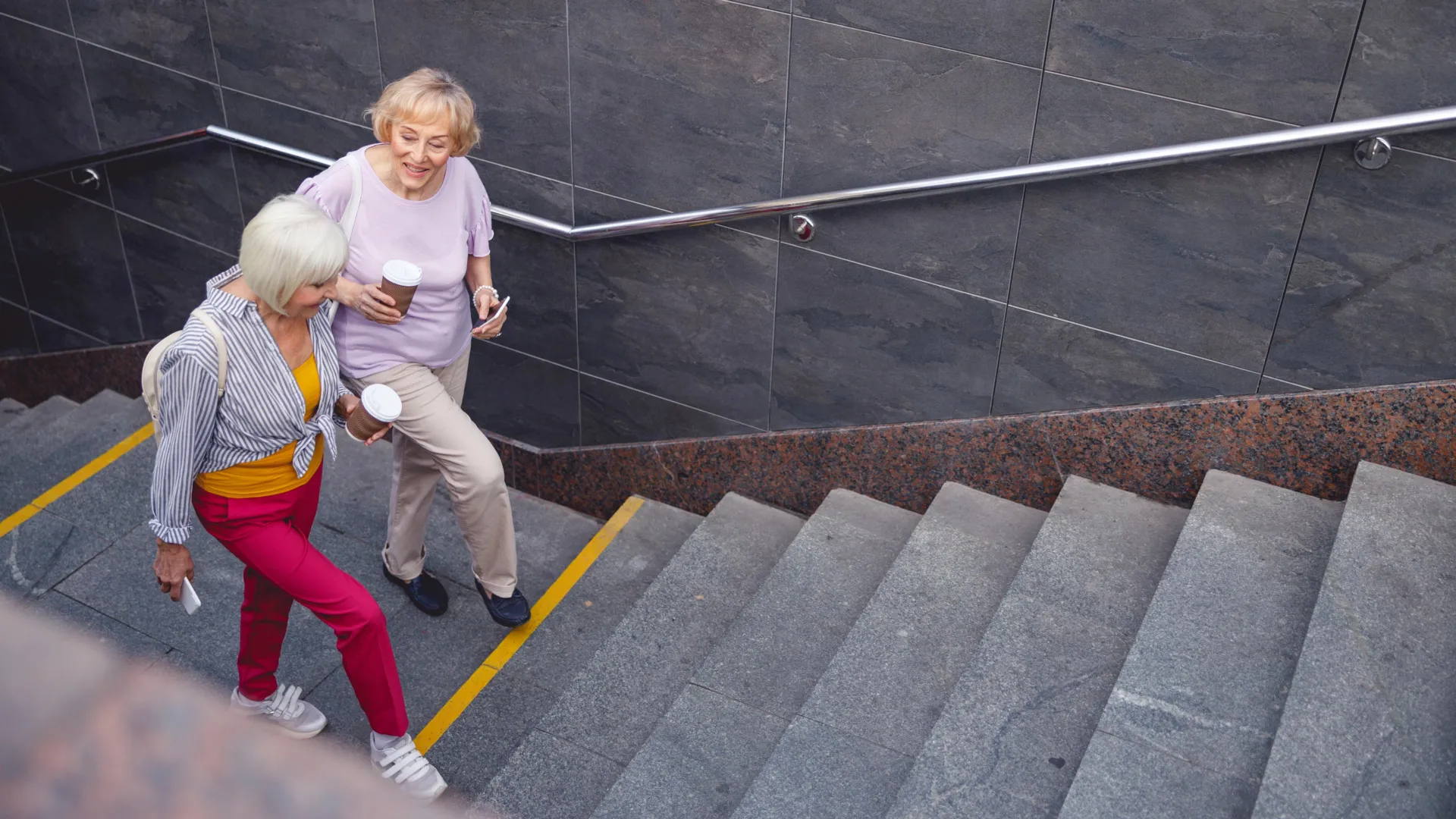
In groundbreaking news that will surprise absolutely no one who has ever felt their heart pound after a brisk climb, researchers from the University of East Anglia and the Norfolk and Norwich University Hospital have confirmed that taking the stairs might actually help you live longer. The large study, which pooled data from over 480,000 participants across nine high-quality studies, found that regular stair climbers were 39% less likely to die from cardiovascular disease and 24% less likely to die from any cause compared to those who avoided the stairs like they were a personal vendetta.
But wait, there's more! The study, published in the American Journal of Cardiovascular Drugs, also found that frequent stair climbing was associated with a lower risk of developing serious heart conditions, including heart attack, stroke, and heart failure. Because apparently, your heart appreciates a little vertical effort now and then.
Lead researcher Prof Vassilios Vassiliou from UEA's Norwich Medical School, with a name that sounds like a Greek god of cardiovascular health, noted that cardiovascular disease is the leading cause of death worldwide, with cases nearly doubling between 1990 and 2019. But he's optimistic, saying, "Taking the stairs is a practical and often overlooked way to build physical activity into daily life."
Dr. Sophie Paddock, also from UEA and a cardiology specialist registrar at NNUH, echoed the sentiment, adding, "Unlike going to the gym or doing a workout, climbing the stairs is something you can easily fit into your day at home, at work or when you're out." She also offered the sage advice, "If you have the choice of taking the stairs or the lift, go for the stairs as it will help your heart."
The study reviewed nearly 1,900 studies before settling on nine that met their high standards. Participants ranged in age from 35 to 84, and 53% were women, making it a fairly representative sample of humanity. They were followed for a median of 14 years, which is a long time to be watched while climbing stairs.
Earlier research cited in the study suggests that even a few minutes of stair climbing several times a week can improve cardiorespiratory fitness and reduce cholesterol levels. One large cohort study even indicated that climbing about six flights of stairs daily might provide the greatest benefit. However, the researchers admit they're not yet sure of the ideal "dose" of stair climbing - because apparently, you can have too much of a good thing, though we're not sure anyone has actually tested that.
Dr. Paddock noted, "Some of the studies we looked at showed that the more stairs climbed, the greater the health benefits. But even small changes had a measurable impact." So, even if you're not scaling the Eiffel Tower every day, a few flights here and there might do the trick.
Prof Vassiliou highlighted that with more than a quarter of adults worldwide failing to meet recommended activity levels, choosing the stairs offers a realistic, scalable intervention. "Encouraging people to take the stairs in workplaces, public buildings and homes could form part of a wider strategy to reduce cardiovascular disease at population level," he said, envisioning a future where escalators are replaced with grand staircases.
But before you sprint to the nearest stairwell, a word of caution: the researchers note that stair climbing may not be appropriate for everyone, especially those with mobility limitations or joint conditions. So, if you have knees that creak like an old ship, you might want to stick to the lift.
The study, titled 'Evaluating the Impact of Stair Climbing on Cardiovascular Risk Reduction: A Systematic Review and Meta-analysis,' was published in the American Journal of Cardiovascular Drugs. Materials were provided by the University of East Anglia, and we're pretty sure they didn't use the stairs to deliver them.
The Good Times
News in your inbox.
One sardonic roundup, delivered on your schedule. Free. Unsubscribe whenever your tolerance for wit runs out.
Already subscribed but we never reach your inbox? Check your spam folder and hit 'Not spam' (or 'Remove from spam') to bust us out of junk-mail purgatory. You'll be helping everyone else too.
Don't open any of our emails for a month and you'll be automatically removed from the mailing list.
Rewrite Article
Select parts to regenerate with a fresh AI pass. Translations will be updated automatically.
Generate AI Image
Creates a sardonic version of the article image using OpenAI.