There are, by various estimates, several trillion planets in our local group of galaxies, including our own Milky Way. Many of these are in the habitable zone of their stars. So if life finds a way, where are all the alien civilizations? This is the crux of the Fermi paradox, which posits that if life is fairly common, we should have seen evidence of extraterrestrial civilizations by now. Some think there's a 'filter' preventing advanced civilizations from sending out probes or life-bearing spacecraft to nearby stars.
Philip Johnston, a mathematician and physicist from the UK, thinks a lot about the Fermi paradox. He's also the co-founder of Starcloud, an orbital data center company valued at $2.3 billion. Johnston is busy scaling up Starcloud, but he also wants to send a mission to the nearest star to our Sun to investigate the paradox.
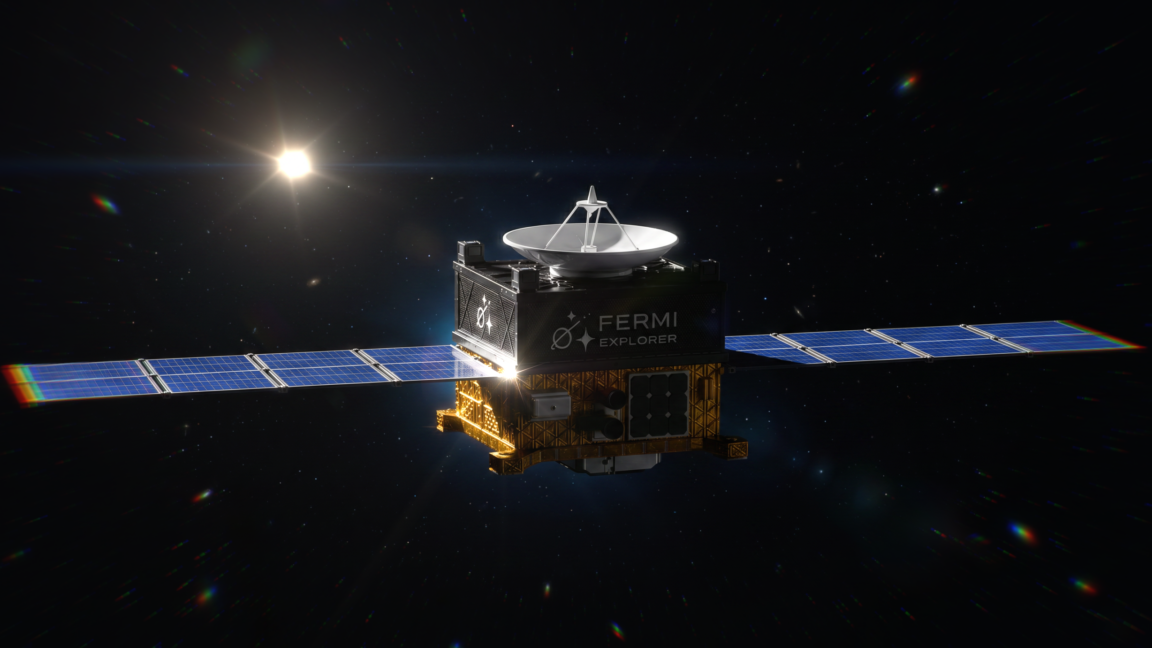
On Tuesday, Johnston and a handful of other entrepreneurs announced the 'Fermi Explorer' mission. The concept is simple: raise $15 million to build a small spacecraft with a 1-kg payload and launch it to Alpha Centauri, reaching the system in less than 80,000 years. Why? To knock two 'filters' off the list: that species won't want to send spacecraft beyond their home star, or that interstellar transit is too difficult.
The team didn't want to run to NASA for a $1 billion mission or develop new propulsion like Breakthrough Starshot. Instead, they wanted to use existing technology to do something cheap, fast, and launch by 2029. As Johnston put it, 'We were like, 'Fuck it, let's send a spacecraft for the cheapest amount possible, a bog-standard minimum viable mission to Alpha Centauri.''
The main challenge is getting the probe - essentially a large tank of Xenon gas, solar panels for solar-electric propulsion, and a few small scientific payloads - moving fast enough. Solar-electric propulsion is efficient, but beyond Jupiter, solar energy flux is nearly zero for a spacecraft this size. Johnston and his team consulted trajectory experts at NASA's Jet Propulsion Laboratory, but nothing worked until he linked up with Alex Wissner-Gross, a physicist who founded Physical Superintelligence, an AI company. They fed the parameters into the AI, and it returned an 18-page technical feasibility assessment with a novel mission profile: hang around our Sun for more than a decade before charging out to Alpha Centauri.
Essentially, after launching into low-Earth orbit on a rideshare mission, the spacecraft would fly retrograde arcs to decrease its perihelion distance from 1 astronomical unit (Earth-Sun distance) to 0.42 AU. At these close approaches, taking advantage of higher solar flux and the Oberth effect, it would perform 'perihelion pump' maneuvers to increase velocity. It would achieve escape trajectory after about 12 years at a velocity of about 25 km/s (about 55,000 mph). At this speed, Fermi Explorer could reach Alpha Centauri in about 77,000 years, flying on a ballistic coast.
The team would only have contact with the spacecraft for about 18 months, Johnston said. With retroreflectors, ground-based telescopes could track it until it reaches Jupiter. After that, it's gone - long gone - until it shows up in the Alpha Centauri system a very long time from now.
If this seems whimsical, well, maybe it is. But Johnston says the point is to get humanity thinking about our place in the Universe. If Fermi Explorer can knock down a couple of filters, that leaves fewer options for why the galaxy isn't littered with alien civilizations. One is that civilizations are exceptionally rare - in which case, humans should take our role as galactic stewards more seriously. Another is that superintelligence doesn't last long. Perhaps governments shouldn't be building swarms of killer drones? Maybe we should be careful about LLM agents running amok? 'We could really be facing the great filter,' Johnston said. So let's go forward with eyes wide open.
The Good Times
News in your inbox.
One sardonic roundup, delivered on your schedule. Free. Unsubscribe whenever your tolerance for wit runs out.
Already subscribed but we never reach your inbox? Check your spam folder and hit 'Not spam' (or 'Remove from spam') to bust us out of junk-mail purgatory. You'll be helping everyone else too.
Don't open any of our emails for a month and you'll be automatically removed from the mailing list.
Rewrite Article
Select parts to regenerate with a fresh AI pass. Translations will be updated automatically.
Generate AI Image
Creates a sardonic version of the article image using OpenAI.