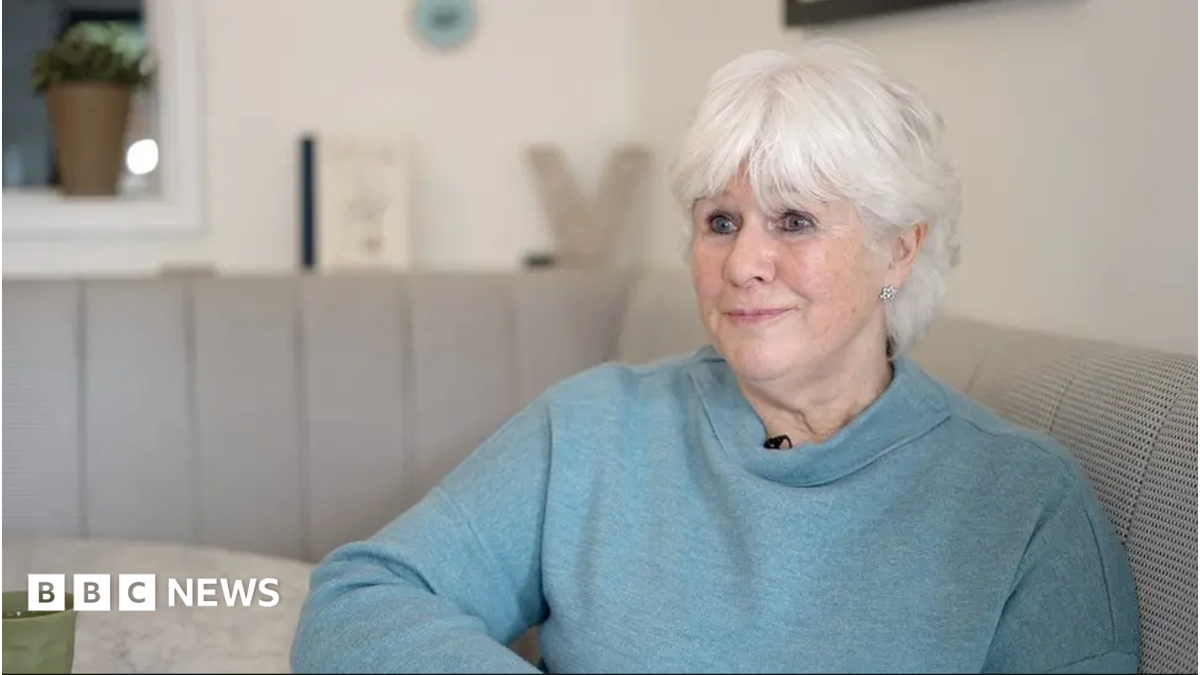
Some apologies take decades. Some take a parliamentary inquiry and a BBC investigation. On Thursday, Prime Minister Sir Keir Starmer will deliver a formal apology to victims of forced adoptions that occurred between 1949 and 1976, when an estimated 185,000 babies were taken from young mothers - mostly because they had the audacity to be unmarried.
Campaigner and former Labour MP Ann Keen, who was sent to a Swansea mother and baby home at age 17 in 1966, said she was looking forward to 'being released from my shame' when Starmer apologises on behalf of the British state. 'We all need this apology because we have always been accused of giving up our babies and we didn't give them up,' she told BBC Radio 4's Today programme.
The apology follows years of campaigning and a March parliamentary inquiry from the Education Committee, which found that government decisions had 'shaped the environment in which unmarried mothers were often shamed and coerced into having their children put up for adoption.' The inquiry recommended improved access to adoption records and support for family reunions, but stopped short of recommending financial redress - though it did suggest the government 'rigorously assess' how other countries (Australia, Northern Ireland, and the Republic of Ireland) handled things.
A previous report from the Joint Committee on Human Rights called for a state apology in 2022, but the then-Conservative government said it was 'sorry on behalf of society' while insisting a formal apology wasn't appropriate 'since the state did not actively support these practices.' Education Secretary Bridget Phillipson confirmed two weeks ago that this government disagreed. The prime minister will now have 'more to say on this shameful period in our history,' she said.
The apology comes three years after devolved governments in Cardiff and Holyrood apologised for forced adoptions in Wales and Scotland. Northern Ireland is expected to follow after a public inquiry concludes. The Church of England already apologised in June, with Archbishop of Canterbury Dame Sarah Mullally telling victims: 'You have nothing to be ashamed of. The shame is ours.'
Victims like Gaynor Weatherly, whose mother was 16 when she was born in 1963, told the BBC in 2021 she felt 'cheated out of a different life.' Diana Defries, who was 16 when she gave birth, recalled: 'I yelled to bring her back, but the nurse then just walked past me and put my daughter on a table out of my reach.' For the 185,000 affected, the apology is a start - even if it can't give back what was taken.
The Good Times
News in your inbox.
One sardonic roundup, delivered on your schedule. Free. Unsubscribe whenever your tolerance for wit runs out.
Already subscribed but we never reach your inbox? Check your spam folder and hit 'Not spam' (or 'Remove from spam') to bust us out of junk-mail purgatory. You'll be helping everyone else too.
Don't open any of our emails for a month and you'll be automatically removed from the mailing list.
Rewrite Article
Select parts to regenerate with a fresh AI pass. Translations will be updated automatically.
Generate AI Image
Creates a sardonic version of the article image using OpenAI.