Nuclear Comeback Tour Hits a Snag: Worker in Reactor Cavity, Fuel Rods Take a Tumble
Holtec's Palisades restart - the flagship of America's nuclear comeback - features a worker in the reactor cavity, a tilting fuel bundle, and a workforce too chilled to speak up. Move fast and break atoms, apparently.
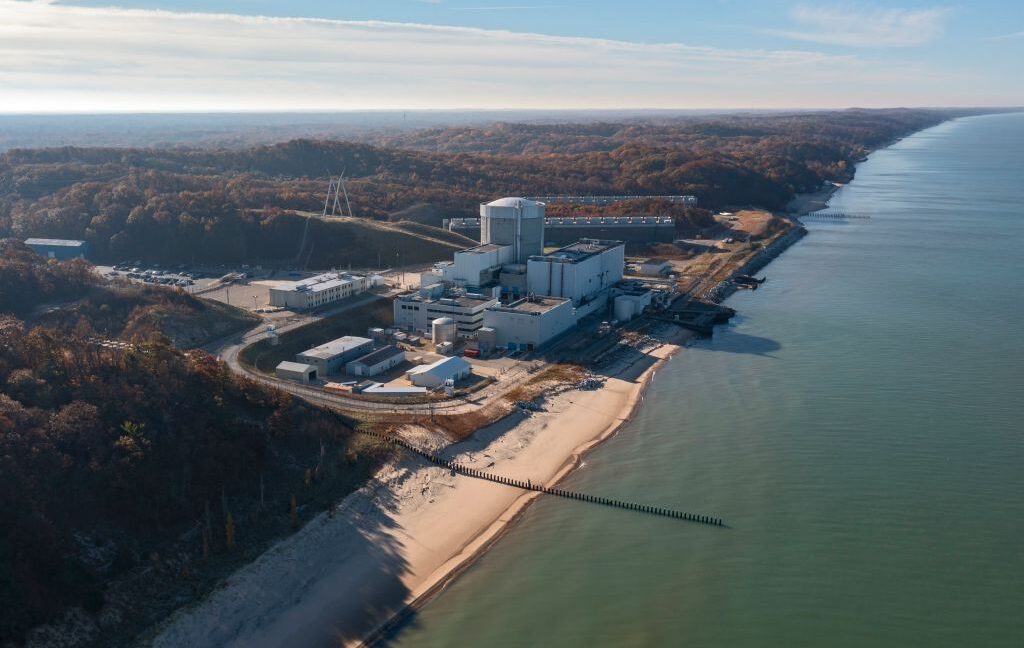
The nuclear renaissance, it turns out, is not immune to the occasional pratfall. US regulators have issued a warning to Holtec International, the company racing to reopen the shuttered Palisades nuclear power plant in Michigan - a project central to Donald Trump's efforts to revive the industry - after a contractor fell into a reactor cavity and a bundle of fuel rods nearly tipped over during refuelling.
The Nuclear Regulatory Commission told Holtec to address a "chilled work environment" that has made staff hesitant to raise safety concerns without fear of retaliation. The warning has critics worried that the financial and political pressure to revitalise nuclear power - increasingly billed as the answer to booming AI-driven energy demand - is raising the risk of accidents.
The NRC inspected Palisades in July over safety awareness concerns. That followed an incident last year in which a worker fell into the reactor cavity, ingested some water, and was sent off-site for medical attention. The individual was decontaminated by radiation protection personnel but had 300 counts per minute detected in their hair, according to an incident report. In a second incident in August, a bundle of nuclear fuel rods tilted over during a refuelling operation, delaying what was expected to be the first reopening of a shuttered US nuclear reactor.
The NRC also reported that nine of the 15 reactor operators at Palisades failed an initial licence examination administered in July and August. Six individuals were issued operator licences - a pass rate that would raise eyebrows in any industry, let alone one where the stakes involve splitting atoms.
Holtec, which has never operated a nuclear power plant, has secured about $2.2 billion in government support for a project touted as a symbol of US nuclear resurgence. The owners of two other plants slated for decommissioning - Three Mile Island in Pennsylvania and Duane Arnold in Iowa - announced restarts soon after Palisades began work. The Trump administration has promoted nuclear energy as an edge in the AI race against China, slashing regulation, providing tens of billions of dollars in funds, and promising to reverse a culture of "risk aversion" at the NRC to accelerate projects.
The warning to Holtec landed as investor interest in the nuclear sector has faded, driven by concerns the AI boom is slowing. More than $30 billion has been wiped off the value of five of the largest US-listed nuclear energy companies in the last year - Oklo, Centrus Energy, BWX Technologies, NuScale, and Nano Nuclear. Last month, Holtec was forced to postpone a planned initial public offering expected to raise $900 million and value the New Jersey-based company at up to $10 billion.
Palisades first became operational in 1971. It was decommissioned in 2022 but received a $1.5 billion loan from the Department of Energy in 2024 to finance its restoration.
"The situation at Palisades is that you have a power plant operator newbie in Holtec trying to restart a nuclear reactor, and they may be under a lot of financial and political pressure to get this done speedily," said Allison Macfarlane, who served as NRC chair from 2012 to 2014. "The 'chilled work environment' warning issued by the NRC raises concerns that staff don't feel like they can speak up to raise safety concerns and prevent accidents. That perhaps reflects the new culture sweeping through part of the industry - move fast and break things. But to ensure safety, nuclear needs a culture based on going slowly and carefully."
Holtec faces a March 2027 contractual deadline to begin supplying power to customers, who secured an extra $1.3 billion in government funds to buy power from Palisades. In a statement to the FT, Holtec said it took the issues identified by the NRC seriously and was addressing them to ensure the plant runs safely. It said the fuel assembly that tilted over was successfully recovered without spilling in a "remarkable demonstration of technical ingenuity."
"A strong safety-conscious work environment is fundamental to our culture," the company said. "The assertion that we have rushed has directly been countered by the work that has been accomplished." The NRC told Holtec its concerns about workplace culture must be addressed promptly to prevent further "cultural decline" within the affected departments, and will review the company's plan within 30 days. The NRC downplayed any immediate risk to the public, saying mitigating measures ensured plant safety was not compromised. Holtec said the worker who fell into the reactor cavity last year sustained minor injuries from the fall but quickly returned to work.
Holtec, which is trying to transform itself from a supplier of nuclear components and services into a reactor design and plant operator, has faced governance questions in the past. It has been the target of a whistleblower lawsuit and legal disputes involving former executives, relating to allegations of financial misrepresentation, executive retaliation, and fraudulent practices. Kris Singh, founder and chief executive of Holtec, rejected the claims in a prior interview with the FT.
The Good Times
News in your inbox.
One sardonic roundup, delivered on your schedule. Free. Unsubscribe whenever your tolerance for wit runs out.
Already subscribed but we never reach your inbox? Check your spam folder and hit 'Not spam' (or 'Remove from spam') to bust us out of junk-mail purgatory. You'll be helping everyone else too.
Don't open any of our emails for a month and you'll be automatically removed from the mailing list.
Rewrite Article
Select parts to regenerate with a fresh AI pass. Translations will be updated automatically.
Generate AI Image
Creates a sardonic version of the article image using OpenAI.