North Carolina Sues Chemical Company for Turning a Creek Into a Science Experiment
North Carolina sues chemical company Brenntag for decades of toxic discharges into a Durham creek, with contamination levels up to 30 times the legal limit - and a side of 'mucilaginous goo.'
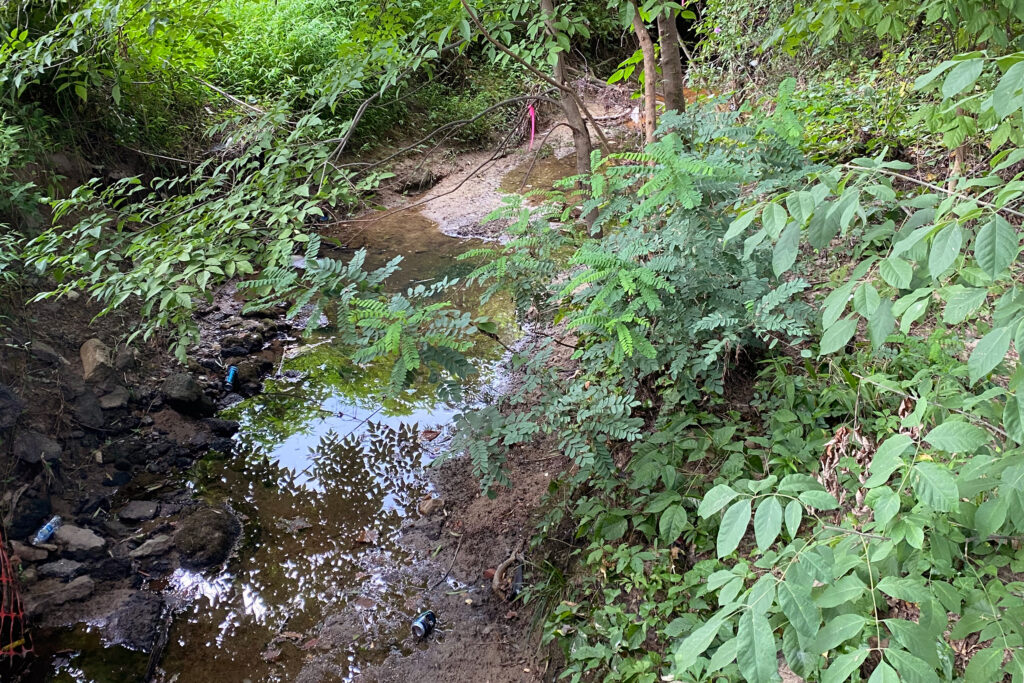
DURHAM, N.C. - Acetone and ethanol, 1,4-dioxane and “mucilaginous goo.” That's not the ingredient list for a particularly adventurous smoothie - it's what state regulators say a chemical repackaging company has been serving up in a neighborhood creek for decades.
The North Carolina attorney general has filed a lawsuit against Brenntag Mid-South, alleging the company has been illegally discharging high levels of toxic chemicals into a creek that flows behind an elementary school, through a public park in a predominantly Black neighborhood, and into a major drinking water supply. The complaint, filed Monday in Durham Superior Court, asks the court to require the company to submit a plan to eliminate the discharge and clean up previous contamination within 30 days.
“I’m thrilled that the attorney general is intervening in this longstanding environmental injustice in Durham,” said City Councilman Nate Baker. “The residents living around Burton Park and further downstream have suffered too long from the negligence of a large corporate neighbor, and it is time the harms rendered be repaired.”
Brenntag, a subsidiary of a global chemical company based in Germany, reported $1 billion in gross profits in the first quarter of the year. The company purchased the Durham property in 2001. Over the last year, the state Department of Environmental Quality (DEQ) has repeatedly cited Brenntag for violations related to water quality and reporting, but the company has allegedly failed to improve - opting instead for extension requests and missed deadlines.
“Residents of Durham, and across this state, deserve clean water,” DEQ Secretary Reid Wilson said in a prepared statement.
Testing shows groundwater contamination is the likely source, discharging into the creek through a pipe at the property line. March groundwater monitoring by a Brenntag contractor found levels of more than a half-dozen chemicals exceeding state standards, including known carcinogens benzene and trichloroethene (TCE). A company spokesperson told Inside Climate News that Brenntag does not generally comment on ongoing litigation, but earlier this year provided a statement about collaboration with local authorities.
The property at 2000 E. Pettigrew St. is a former cotton mill that operated from the late 1800s through the 1930s. A Brenntag spokesperson said last year that the issues “are complex and may be the result of multiple sources,” but state records show inspectors have repeatedly found leaking and rusted barrels of chemicals, including as recently as November.
Since the city issued a no-discharge order in 2023, Brenntag has collected and shipped water off-site and installed a remediation system - then shut it off two years ago without explanation. The city has fined Brenntag $157,000 since 2023 but hasn't collected, hoping the company would fix the problem. It hasn't.
“The contamination is getting worse,” said Haw Riverkeeper Emily Sutton, who routinely samples the creek. “It’s an ongoing public health and environmental crisis.” Testing in April showed acetone at 19,400 parts per billion, nearly 10 times the state standard, and ethanol ranging from 25,000 to 144,000 parts per billion - up to 30 times the maximum allowed. The chemical 1,4-dioxane, a probable carcinogen, consistently exceeded EPA health advisory goals.
In August 2023, the city fenced off the creek after high levels of acetone, toluene and ethanol were detected. Officials also collected a ropy, brown “mucilaginous goo.” But there are gaps in the plastic fencing, and City Councilwoman Javiera Caballero worries: “I played in creeks all the time growing up. What are the kids in the neighborhood doing? It’s hot. People will play in the creek.”
The problem dates to at least the mid-1990s. In 2004, a state environmental specialist wrote that the creek reeked so badly that “Durham police have been called in to look for dead bodies.” Brenntag owns two other North Carolina facilities, in Greensboro and Charlotte, which have their own compliance issues - including a $83,000 fine for improper hazardous waste storage in Charlotte.
The Good Times
News in your inbox.
One sardonic roundup, delivered on your schedule. Free. Unsubscribe whenever your tolerance for wit runs out.
Already subscribed but we never reach your inbox? Check your spam folder and hit 'Not spam' (or 'Remove from spam') to bust us out of junk-mail purgatory. You'll be helping everyone else too.
Don't open any of our emails for a month and you'll be automatically removed from the mailing list.
Rewrite Article
Select parts to regenerate with a fresh AI pass. Translations will be updated automatically.
Generate AI Image
Creates a sardonic version of the article image using OpenAI.