New York Healthcare Facilities Fail Pandemic Drill So Badly It's Almost Impressive
New York healthcare facilities faced a fake bird flu patient and mostly flunked, with only 60% passing the drill - proving we're still not ready for the next pandemic.
COVID-19 taught us many things, most of them unpleasant, and chief among them was that our pandemic preparedness was about as solid as a paper umbrella. Now, a new study confirms that even the first, local steps of an outbreak with pandemic potential are a bit of a mess.
Health officials in New York ran a regional test of healthcare facilities to see how they'd identify and respond to a patient with a mystery infection that could pose a pandemic-level threat. Spoiler: it did not go well. Responses were slow, personal protective equipment use was spotty, and only 60 percent of facilities passed the basics. That's a failing grade, in case you were wondering.
"These drills identified needs for health care workers and health care facility staff member training to achieve earlier identification, masking, and isolation of potentially infectious febrile patients," the officials wrote in the study, published in the Morbidity and Mortality Weekly Report. In other words: everyone needs a refresher.
The drill used "professional patient actors" who staggered into healthcare facilities pretending to have H5 bird flu, a virus type thought to have pandemic potential. They wore makeup to look unwell, used eye drops and petroleum jelly to mimic conjunctivitis (pink eye), and had a fake cough. They complained of weakness and fever and said they'd taken a Motrin before coming in. When asked about travel, they said they hadn't left the country. If asked about sick contacts, they'd reply, "Does a sick bird count?" Then they'd launch into a sad tale about trying to save a sick duck in a park. The duck dies, and the patient handled it without gloves. They'd share this story unprompted, because why not.
To pass, a facility needed to mask the patient and put them in an isolation room. Ideally, masking within a minute of arrival and isolation within 10 minutes. But for this drill, timing didn't matter - just doing both was enough to pass.
The drill ran between January and June 2026, with actors visiting 73 healthcare facilities. Most were in New York City (52), with 15 in New York outside the city, three in New Jersey, and three in the US Virgin Islands (which the US considers part of the same health region).
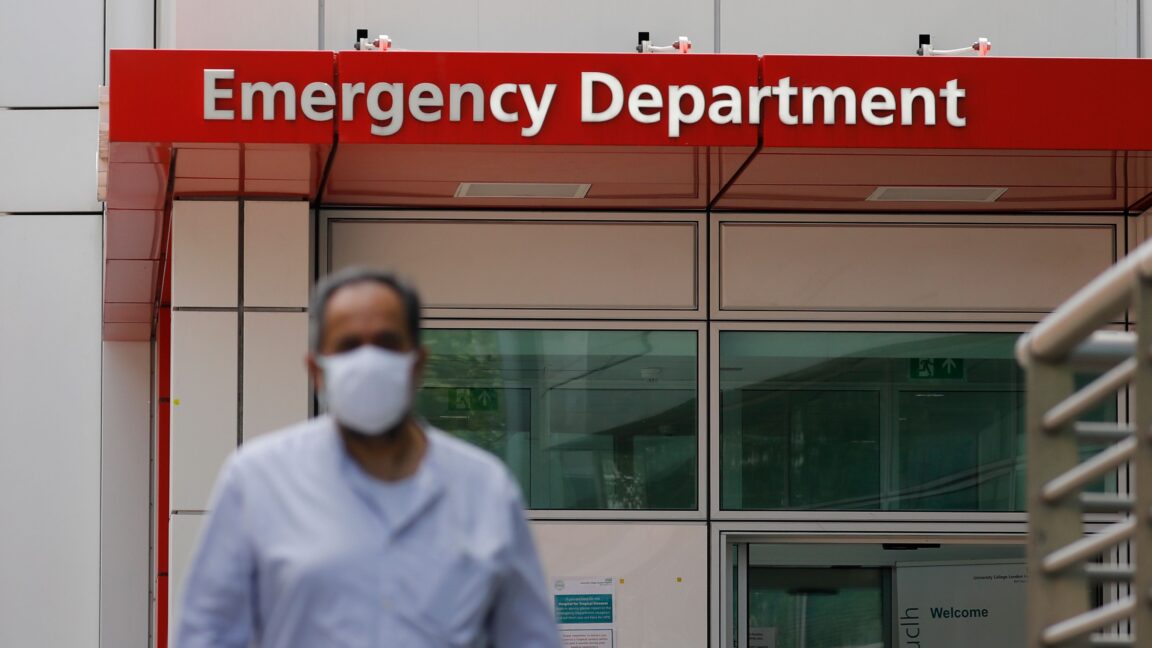
Actors mostly visited emergency departments (42 of 73), but also hospital outpatient clinics (19 of 73) and urgent care centers (12 of 73). Facilities had agreed to participate but didn't know when the drills would occur.
Overall, only 60 percent (44 of 73) of facilities both masked and isolated the actors. Only about 55 percent of emergency departments did both, while 68 percent of clinics and 67 percent of urgent cares passed. Eighteen percent of facilities didn't even offer a mask to a coughing patient who said they had a fever.
Of those that masked and isolated, fewer than half (43 percent) did so within the one-minute goal, and less than half (48 percent) moved the patient to an isolation room within the 10-minute goal. Outpatient clinics had a median time to isolation of 20 minutes, with at least one clinic taking nearly an hour. Overall, the median time to mask was 2 minutes, and the median time to isolation was 11 minutes.
Most facilities (93 percent) screened the actor for symptoms. But despite the dead duck tale, staff at only seven of the 73 facilities asked questions specific to bird flu exposure.
Clinicians interacting with the actors inconsistently wore recommended personal protective equipment (gloves, mask, gown, and eye protection). Only 25 percent wore all the recommended PPE; 6 percent wore none. Nineteen percent of clinicians didn't wear a mask or respirator. Staff at only 40 of the 73 facilities (55 percent) notified or planned to notify internal Infection Prevention and Control (IPC) staff as recommended.
The poor pass rate and lengthy times spell trouble. "Health care facility waiting areas can be high-risk settings for transmission of respiratory viruses if appropriate IPC measures are not implemented," the authors highlight.
And these substandard results may actually overestimate preparedness. Not all invited facilities agreed to participate - and those that declined may have scored even worse. Also, although the drills were unannounced, some facilities may have had a heads-up, which could have boosted their results. So the real picture might be even bleaker. Cheers.
The Good Times
News in your inbox.
One sardonic roundup, delivered on your schedule. Free. Unsubscribe whenever your tolerance for wit runs out.
Already subscribed but we never reach your inbox? Check your spam folder and hit 'Not spam' (or 'Remove from spam') to bust us out of junk-mail purgatory. You'll be helping everyone else too.
Don't open any of our emails for a month and you'll be automatically removed from the mailing list.
Rewrite Article
Select parts to regenerate with a fresh AI pass. Translations will be updated automatically.
Generate AI Image
Creates a sardonic version of the article image using OpenAI.