New York Governor Decides Climate Goals Are More of a Vague Suggestion Than a Binding Promise
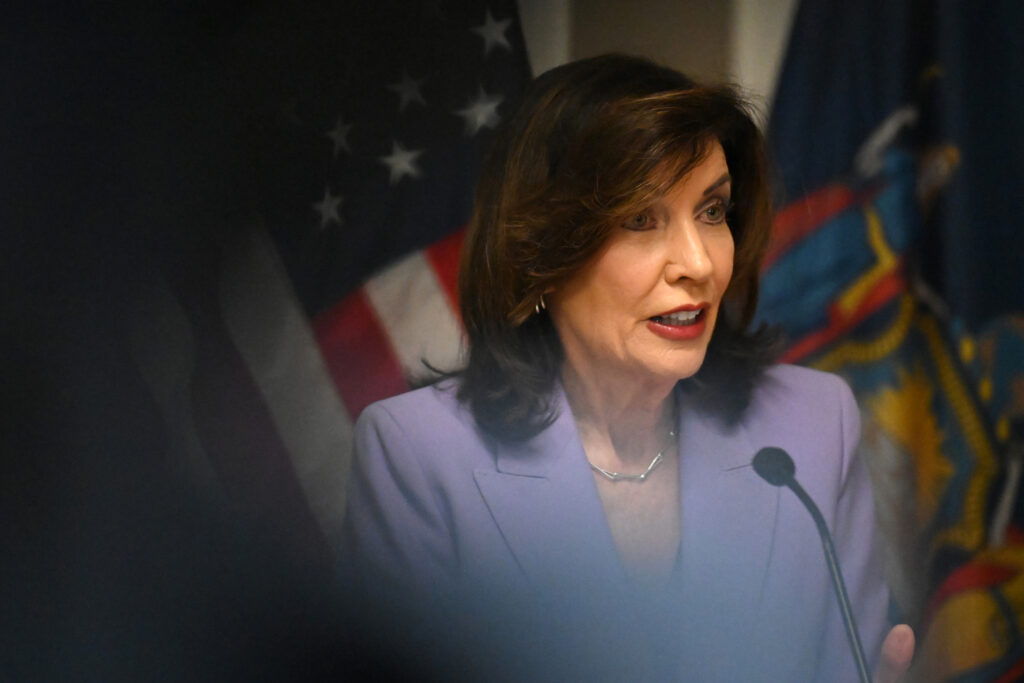
New York Governor Kathy Hochul wants to push back climate targets, arguing affordability, while environmental justice groups worry about prolonged pollution and asthma.
New York Gov. Kathy Hochul is reportedly trying to hit the snooze button on the state's climate ambitions, arguing that the 2019 Climate Act's deadlines were a bit too ambitious for comfort. The law originally demanded a 40 percent reduction in greenhouse gas emissions from 1990 levels by 2030, and an 85 percent cut by 2050. But Hochul, apparently not a fan of deadlines, wants to push the first target to a 60 percent reduction by 2040, while keeping the 2050 goal intact - presumably as a distant, guilt-inducing beacon.
During a press conference this month, Hochul justified the delay by claiming that hitting the original targets would send energy costs skyrocketing. "We cannot meet the current timelines without driving energy costs higher," she said, conveniently ignoring the fact that delaying action might also drive asthma rates higher. Environmental justice groups and their legislative allies are not amused, arguing that the postponement will prolong the suffering of low-income communities of color who bear the brunt of pollution from gas-fired power plants and traffic-choked highways.
Eunice Ko, deputy director of the New York City Environmental Justice Alliance, summed up the frustration: "The Climate Act was at the core about reducing the disproportionate pollution burden on low-income communities of color." She also noted that Hochul's budget-driven approach lacks transparency, musing, "What's to stop her from doing that again to any other law that she doesn't like?"
The state's own numbers paint a grim picture: in 2023, emissions were only 15 percent below 1990 levels - a far cry from the 2030 goal. The Climate Action Council's 2022 Scoping Plan laid out a roadmap, but progress has been spotty at best. Building electrification, a key strategy to reduce the 30 percent of emissions from buildings, has been delayed. The All-Electric Buildings Law, which would have banned gas in many new constructions, never took effect. Meanwhile, gas-fired power plants still supply nearly half of the state's electricity, and two "peaker" plants slated for closure last year will now run until at least May 2029.
Transportation isn't much better. While electric vehicle registrations have increased eightfold since 2019, the state is still far from its goal of 3 million EVs by 2030. And the Advanced Clean Trucks Rule, which aims for half of medium and heavy-duty vehicles to be zero-emission by 2030, faces fierce opposition from trucking groups. A leaked memo from the state energy planning agency warned that the original cap-and-invest program would raise utility costs, but critics argue that the real cost driver is the state's reliance on imported oil and gas.
State Sen. Kristen Gonzalez, whose district includes New York City's largest fossil fuel power plant - affectionately known as "asthma alley" - summed up the health stakes: "My constituents are breathing poisoned air for a longer period than anyone should have to." The Climate Scoping Plan itself notes that the cost of inaction exceeds the cost of action by more than $115 billion. But hey, that's a problem for future New Yorkers, right?
As Hochul pushes her budget revisions, environmental groups are left wondering if the state's climate law is really a law or just a really compelling suggestion.
The Good Times
News in your inbox.
One sardonic roundup, delivered on your schedule. Free. Unsubscribe whenever your tolerance for wit runs out.
Already subscribed but we never reach your inbox? Check your spam folder and hit 'Not spam' (or 'Remove from spam') to bust us out of junk-mail purgatory. You'll be helping everyone else too.
Don't open any of our emails for a month and you'll be automatically removed from the mailing list.
Rewrite Article
Select parts to regenerate with a fresh AI pass. Translations will be updated automatically.
Generate AI Image
Creates a sardonic version of the article image using OpenAI.