
Remember the 2023 Maui wildfires? The ones that killed more than 100 people, destroyed nearly 2,000 homes, and all but erased a historic island community? The ones that began when a broken power pole owned by the local electric utility sparked against dry vegetation on a windy day? Good. Now forget all that, because the internet has a better story.
In the aftermath of the fires, thousands of people across all major social media platforms shared posts and videos alleging a more sinister origin. The government, they claimed, had used a "direct energy weapon" - a laser, essentially - to ignite the area. Depending on which post you saw, this was part of a plot to reclaim the land for a high-speed rail line or a high-tech "smart city." Right-wing activists and social media personalities amplified these claims, including the late Charlie Kirk. Meanwhile, the Federal Emergency Management Agency saw accounts linked to China circulating rumors that a "weather weapon" had caused the fires. Other accounts alleged FEMA would seize the homes of Maui residents who applied for emergency aid - a claim that raised traumatic memories of colonization in a community with significant Indigenous historical and cultural ties.
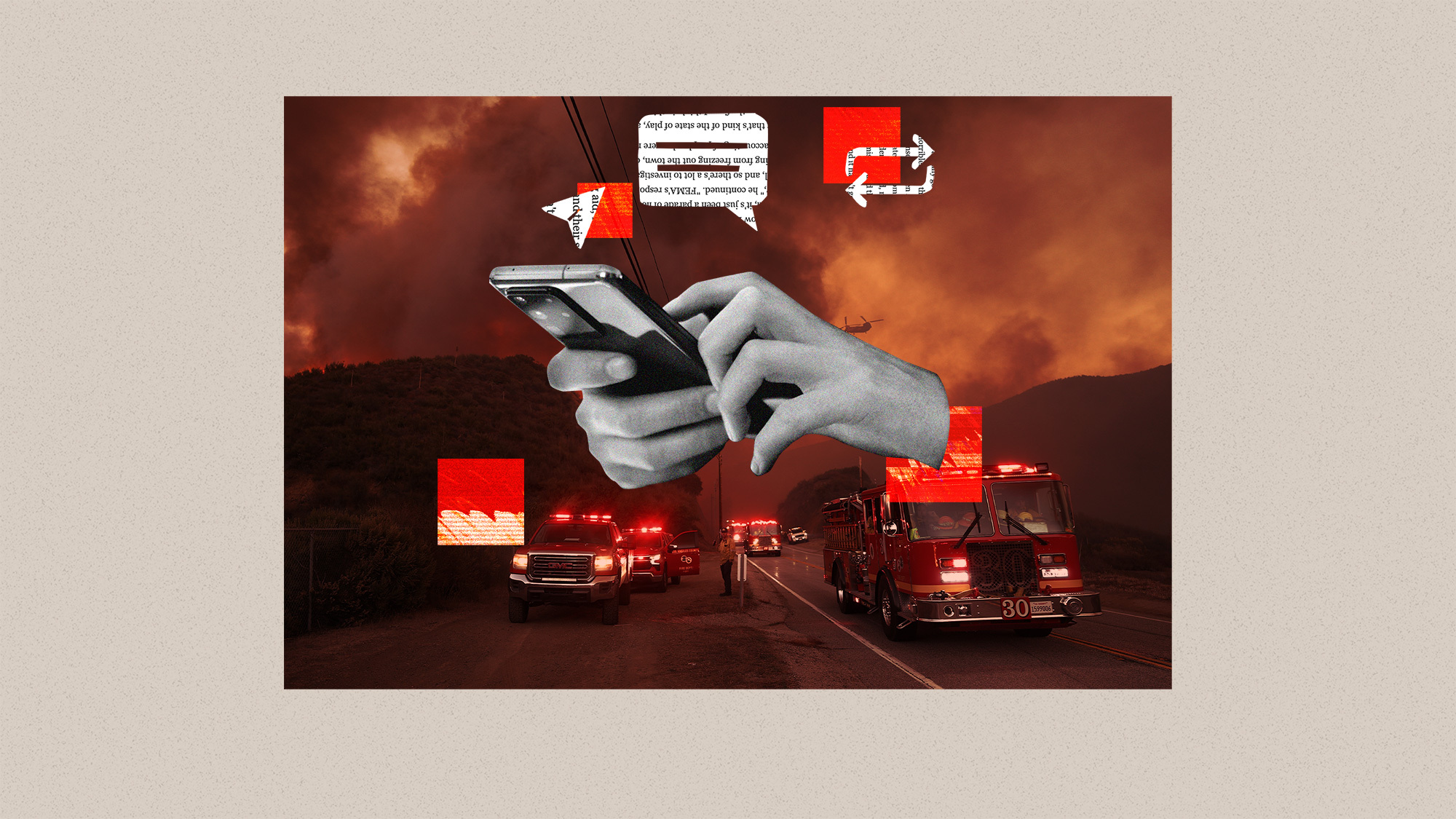
Extreme weather events have always been chaotic, and rumors have always spread during moments of calamity. But it has never been this bad. Climate change has produced a series of supercharged wildfires, rapidly intensifying hurricanes, devastating drought, and sudden floods, all plunging communities into confusion. Simultaneously, the information landscape has never been more fragmented: major social media companies have abandoned any pretense of fact-checking and content moderation; politicians distort and politicize disasters; government agencies are short-staffed following DOGE cuts; and generative AI models have created an entirely new and little-understood way to source information. This isn't just your weird uncle on Facebook. A recent report from the News Literacy Project found that a vast majority of teens encounter social media conspiracies - and a vast majority of those teens are inclined to believe them.
"Disasters are, by their nature, very urgent and have a lot of uncertainty surrounding them," said Amber Silver, a professor of emergency management at the University at Albany and an expert in disaster communications. Victims have an urgent need for facts, she said, but almost no way to get reliable data about their situation. "So now we have essentially all of the perfect conditions for the spread of misinformation."
This confluence does more than sow confusion. A void of good information after a disaster can lead to lost lives, traumatic displacement, or a slow recovery. It also strains the relationship between public authorities and citizens. A Department of Homeland Security study found that an inaccurate map tweeted during a 2017 California flood caused an unnecessary mass evacuation. Another study, from the Inter-American Development Bank, found that an earthquake in Mexico led to an 11 percent drop in people's trust in government. The federal government now often creates fact-checking and myth-busting websites to dispel rumors after disasters. A review of recent research found that bad information has often "led to resource misallocation, overwhelmed emergency services, and diverted attention away from genuine needs."
Grist has been hearing for years from emergency managers and disaster victims about this growing chaos. In its new series, Distorted, the publication explores this fragmented information landscape: Who do people actually trust when disaster strikes, and why do so many believe conspiracies that are clearly false? Is there anything authorities can do to fight social media rumors and post-disaster hysteria? What would it take to establish a shared sense of truth as a hurricane or wildfire bears down?
The concepts of "misinformation" (unintentional deception) and "disinformation" (intentional deception) have been the subject of innumerable academic papers and policy initiatives. The Biden administration even appointed a "disinformation governance board" at the Department of Homeland Security in 2022. The concepts are a little hard to pin down - whether a piece of information is "dis" depends on the beliefs and attitudes of the person reading or hearing it. Even so, it's clear that many people believe things about disasters that simply aren't true, and they often mistrust the people whose job it is to keep them safe. When disaster strikes, this lack of trust can be the difference between life and death.
How a series of unrelated photos morphed into a climate conspiracy theory: It all starts with an innocuous photo taken on January 16, 2018. The Marathon Petroleum Refinery in Canton, Ohio, conducts a flare in response to a mechanical issue. A local resident captures a blurry picture of the flare, which includes a lens flare pointing upward, and posts it on Facebook. SpaceX posts an Instagram photo of their Falcon 9 rocket launch from Vandenberg Space Force Base in California. A windstorm in Santiago, Chile, causes an electrical transformer to explode. A resident captures the event on video, which includes a lens flare from the bright explosion, and posts it on TikTok. A brush fire in Maui, Hawai'i, spreads out of control, destroying the town of Lahaina. The fires caused over $5.5 billion in damages and killed more than 100 people.
Soon after the fires ignite, social media posts on Instagram, TikTok, and X start to resurface these old photos of the refinery flare, the electrical explosion, and the rocket launch, attributing them as evidence of some kind of energy weapon used to ignite the Maui fire. These posts were viewed and reshared millions of times, and often took on a life of their own.
Hawai'i-based Instagram user @for_our_rights_kauai, for example, posted the old photo of the refinery flare and suggested the Maui fires were the result of an "attack." A few days later, she acknowledged that the photo was unrelated to the fires. "I want to apologize for contributing to spreading that photo that I was told came from Maui on the day of this event. It turns out it was not true," she said in a follow-up video. "It is very important for us to vet our information." But it was too late. The Instagram account @cultivateelevate, run by an influential MAHA-adjacent health food entrepreneur, had already published a video containing a screenshot of @for_our_rights_kauai's later-deleted post. "My friend in Hawai'i," the host said, pointing to the screenshot, "showed a laser beam coming out of the sky, directly targeting the city." @cultivateelevate's video received 432,000 views - over 40 times more views than the video apologizing for the mistake. Other accounts, like Instagram user @mama_speaks_truth, also contributed to the spread, posting screenshots of screenshots of screenshots, each getting further and further from the original photo of a refinery, taken five years earlier and 4,500 miles away. This is just one example of the twisty way misinformation can spread in the wake of a disaster. Images and facts can blend together with old fears and suspicions, morphing into a conspiracy with a new meaning and a life of its own.
Experts have identified a few main vectors where communication can collapse in the lead-up and aftermath of a disaster. The most important source of information around extreme weather is the government itself. Federal, state, and local agencies are responsible for predicting the weather, sending out warnings, coordinating mandatory evacuations, and leading disaster response. If people don't trust them, or if they can't get their messages out effectively, lives are at stake. The background trends are already bad: less than 20 percent of Americans say they believe the government does the right thing most of the time - the lowest level on record.
The most visible avatar of the government in a disaster is FEMA, so it's no coincidence that FEMA is also the most frequent subject of conspiracies and disinformation. Even though the agency is supposed to act as a backstop for state and local authorities, disaster-affected communities often swirl with allegations that federal relief is absent, that the government is restricting freedom of movement, or, as in the case of Maui, that officials are going to seize land and disenfranchise victims. "FEMA has been the source of misinformation since its incept" [article truncated].