
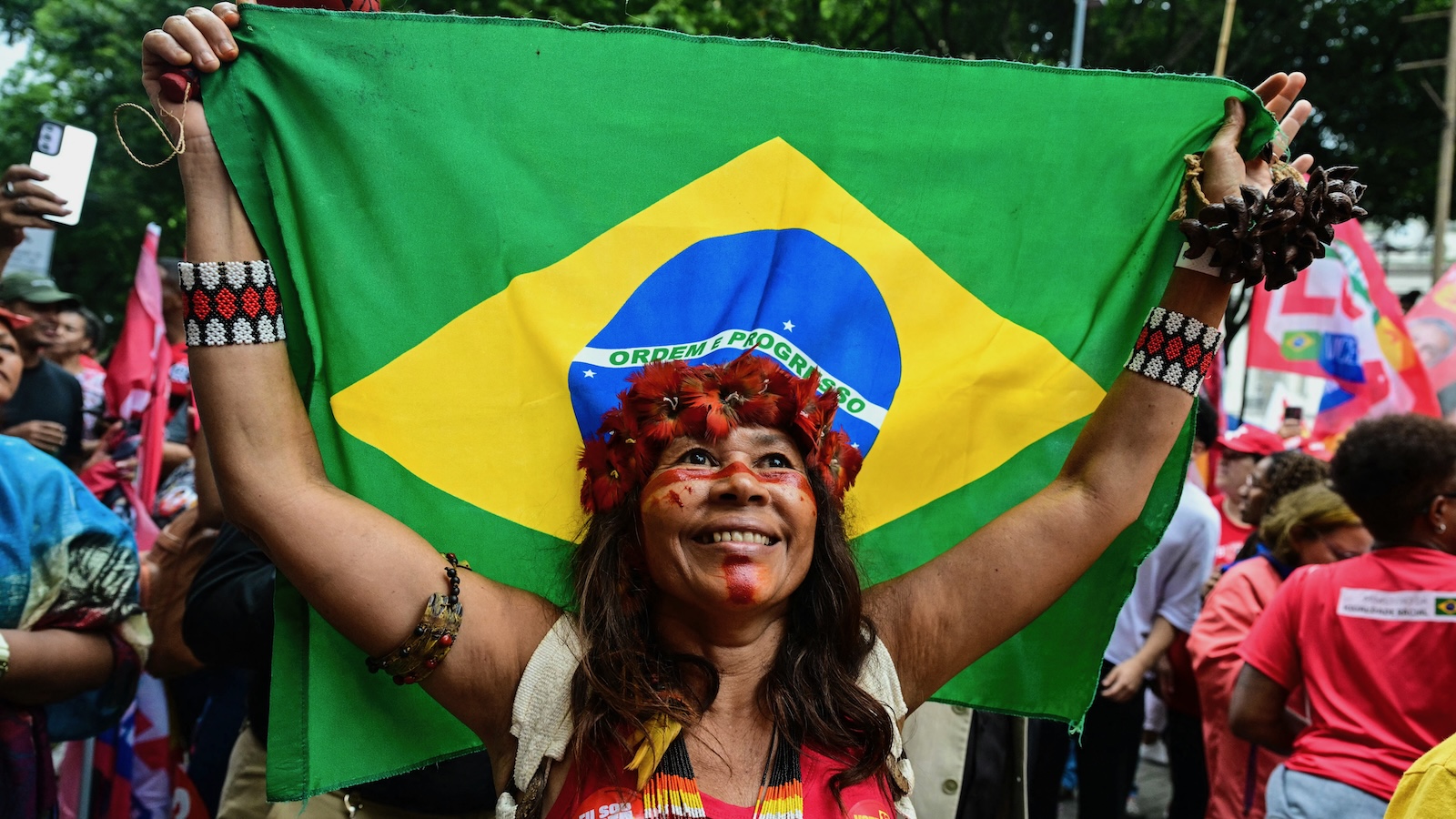
Luiz Inácio Lula da Silva's reelection as president of Brazil has given Indigenous communities a measure of relief - the kind of relief you feel when the meteor misses your house but lands in your backyard. His opponent, Flávio Bolsonaro, had campaigned on halting recognition of new Indigenous territories and pushing for more mining and development, a platform that apparently polled well enough to make everyone nervous.
"For Indigenous Peoples, the reelection of Luiz Inácio Lula da Silva is more than a victory, and it is bigger than Brazil," said Edson Krenak, who is Indigenous Krenak. "It is not about victory; it is about the possibility to dream and to fight without fear of death." Which is, admittedly, a low bar for democracy, but here we are.
Sunday's runoff election, however, also strengthened Bolsonaro's movement in Congress, where his Liberal Party won the largest number of seats in both houses and the broader right gained a Senate majority. Leaders warn this could open their territories to mining, weaken environmental protections, and roll back land rights - making it considerably harder for Lula to advance his Indigenous and environmental agendas. Climate Observatory, a nonprofit coalition of 172 organizations, says 70 percent of incoming lawmakers oppose the climate and environmental agenda, according to The Associated Press. So, a reprieve, not a resolution - more like a stay of execution with paperwork.
The stakes were especially high for Indigenous peoples because Bolsonaro campaigned on policies aligned with those of his father, Jair Bolsonaro, whose presidency from 2019 to 2023 saw an increase in mining, land grabs, deforestation, and attacks on their rights. Amazon deforestation reached a record in 2022, and Indigenous leaders say their communities endured unchecked violence from illegal mining operations during the elder Bolsonaro's time in office. Good times.
The younger Bolsonaro finished more than 2 million votes ahead of Lula in the first election earlier this month, but neither candidate secured the 50 percent required to win outright. That result sparked fear in Indigenous communities and environmental advocates, who warned that the future of the Amazon was at stake. Lula came back to win Sunday's runoff by roughly 4.4 million votes, securing a fourth, nonconsecutive term as president. Democracy: it's a marathon, not a sprint, and occasionally a triathlon through a minefield.
In an interview between the two rounds of voting, Toya Manchineri, general coordinator of the Coordination of Indigenous Organizations of the Brazilian Amazon (COIAB), said Indigenous peoples across the rainforest were deeply concerned about the possibility of a Bolsonaro win. Much of the last three years of Lula's administration were spent undoing the damage the Bolsonaro administration caused, Manchineri said. "We were only beginning to see the resources returning," he said. Ah, the sweet, slow trickle of things not being actively destroyed.
In 2023, the administration established the Ministry of Indigenous Peoples and appointed Sônia Guajajara to lead it. Lula also revitalized the federal Indigenous affairs agency FUNAI after Bolsonaro had used it to support agribusiness, despite Indigenous resistance. The government also announced just before the election that Amazon deforestation had fallen to its lowest level since recordkeeping began in 1988, according to the AP. Progress: it's not just a campaign slogan, sometimes it's a statistic.
Still, Indigenous leaders say the progress made under Lula has not resolved deeper conflicts over land, development, and decision-making. "Lula's victory prevents a president who promised to halt Indigenous land demarcation from taking office, but our territories are far from safe," Alessandra Korap Munduruku, coordinator of the Munduruku Pariri Indigenous Association, said in a statement. "We have demanded that Lula's government respect our decisions and listen to Indigenous Peoples before advancing projects that affect our rivers and forests. Congress has become more dangerous for us, and we must remain organized. Our struggle does not end with an election's outcome." In related news, the struggle also does not end with a victory speech, a concession speech, or a really nice summit photo.
For Indigenous organizations, Lula's victory is cause for hope, but they must now work with a Congress dominated by lawmakers who have already voted in favor of easing environmental protections and against Indigenous land claims. Given that dynamic, Krenak expressed concern about the difficulty Lula may face advancing his agenda. "The costs of negotiating with the Congress and senate will be very high, if ever successful," he said. High costs, low odds - the classic political two-for-one.
The election also came amid years of Indigenous voters struggling to access the polls. Earlier this month, a court denied a request for transportation assistance filed by Indigenous peoples in the Javari Valley in northern Brazil. Other efforts were more successful: Court rulings elsewhere helped secure government transportation for Indigenous voters in remote areas, while Indigenous communities across the Amazon organized to increase turnout, AP reported. Because nothing says "democracy" like having to sue for a ride to the ballot box.
"Despite the challenges faced throughout the electoral process, Indigenous peoples of the Amazon made their voices heard at the polls across all nine states of the Brazilian Amazon, reaffirming their commitment to democracy, national sovereignty, and the defense of Indigenous rights. We marked the ballot boxes in defense of life, our territories, and Brazil's future!" COIAB said in a statement. "Brazil's future is Indigenous, and it begins in our territories! WE ARE THE ANSWER!" Which is more than most of us can say after an election.
For Krenak, however, Lula's victory is only the beginning. He says he wants to see more meaningful progress during the president's next term. "By 2030, success should not be measured by how many Indigenous leaders stand besides officials at summits," he said. "But by whether Indigenous Peoples gain real authority to prevent their territories to become sacrifice zones, but territories of life, reciprocity and generosity." A novel idea: judging success by outcomes rather than photo ops. Someone get this man a policy memo.