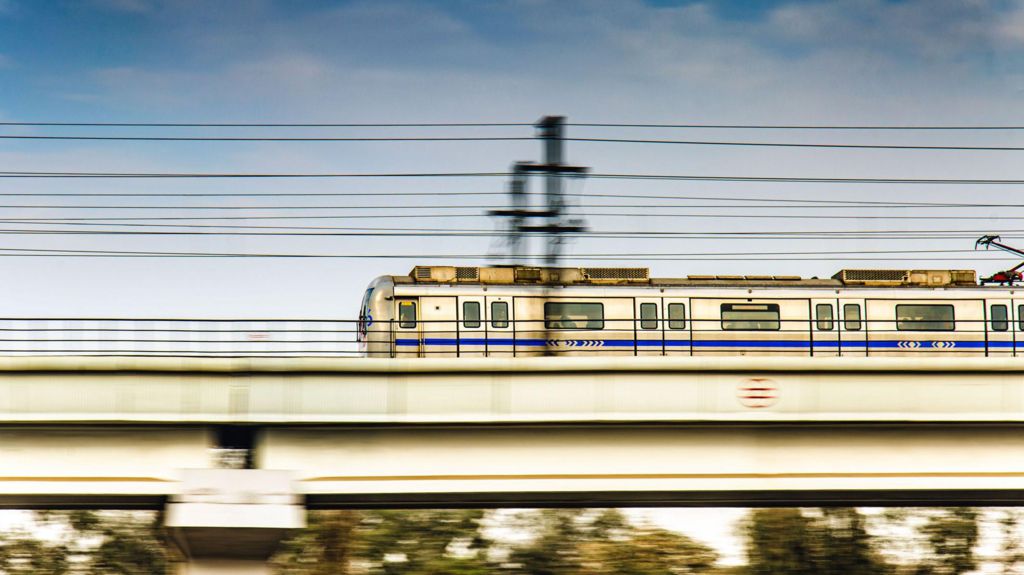
On a recent weekday evening, the southbound Aqua Line metro in Mumbai nearly emptied out a few stops early, leaving its final station looking less like a bustling terminal in a city famed for crowds and more like a desolate Soviet-era relic. This 33.5km (20.8 miles) fully underground line, opened last year to connect Cuffe Parade to BKC and the airport, was projected to carry nearly 1.5 million passengers daily. In a shocking twist, actual ridership is about a tenth of that.
This is not an isolated incident but a feature of India's breakneck metro expansion. Since 2014, the Narendra Modi government has splashed out over $26bn, growing the network fourfold from under 300km to over 1,000km by 2025. Daily ridership has also quadrupled to over 11 million people, but these grand aggregates are masterfully hiding the concerning reality that most systems are carrying a mere fraction of their projected loads.
A 2023 Indian Institute of Technology Delhi report showed ridership at a paltry 25-35% of projections, a figure unlikely to have significantly changed. Other studies corroborate this underwhelming performance: the Observer Research Foundation found ridership as low as 2% of estimates in Kanpur and 37% in Chennai's first phase. Data from the Institute for Transportation and Development Policy (ITDP) revealed actual ridership of 20-50% in cities like Pune and Nagpur. Delhi, with India's widest network, is the sole exception where usage slightly surpasses projections, though experts note this is partly because it now counts interchanges as separate trips.
So why is metro travel struggling in a country where other public transport is famously overcrowded? Experts point to a perfect storm of overly optimistic planning and practical failures. Ashish Verma of the Sustainable Transportation Lab notes that demand projections are complex and sometimes exaggerated to make projects seem economically viable. Forecasts often rely on 'offered capacity' - like certain train frequencies or coach numbers - that never materialize. In Bengaluru, for instance, peak-hour frequency on the busiest line is five minutes or more, while on a newer line, it stretches to 25 minutes.
Affordability is another critical barrier. A single journey on Mumbai's Aqua Line costs 10-70 rupees (£0.08- £0.56), while a three-month unlimited pass on the local suburban railway is a significantly cheaper 590 rupees. Aditya Rane of ITDP points out that integrated journey costs can consume 20% of a lower-income worker's income, well above the global benchmark of 10-15%. Fare hikes, like the one in Bengaluru last year that led to a 13% ridership drop, demonstrate the market's price sensitivity.
Poor network planning and last-mile connectivity further suppress demand. Nandan Dawda of ORF highlights the lack of feeder buses and high transit times between lines - at Delhi's Hauz Khas station, transferring can take 15-20 minutes. 'Institutional disaggregation' means different operators run various lines and bus networks, often working in silos. Add in poor walkways and safety concerns, especially for women like north Delhi resident Chetna Yadav, who fears being stranded at night, and the barriers stack up.
Despite these systemic issues, experts foresee incremental growth in metro use, driven by traffic, pollution, and parking crises reaching a tipping point in many cities. However, as Rane concludes, a swift and dramatic rise in adoption is unlikely without getting bus integration, station access, and fare integration right. Otherwise, India may continue building metros that are operationally useful but perpetually underperform against their original, wildly optimistic projections.
The Good Times
News in your inbox.
One sardonic roundup, delivered on your schedule. Free. Unsubscribe whenever your tolerance for wit runs out.
Already subscribed but we never reach your inbox? Check your spam folder and hit 'Not spam' (or 'Remove from spam') to bust us out of junk-mail purgatory. You'll be helping everyone else too.
Don't open any of our emails for a month and you'll be automatically removed from the mailing list.
Rewrite Article
Select parts to regenerate with a fresh AI pass. Translations will be updated automatically.
Generate AI Image
Creates a sardonic version of the article image using OpenAI.