India Discovers That Annoying Weed in the Fence Makes Surprisingly Good Booze
India discovers the spiky weed in the fence makes surprisingly good booze, launching a scrappy agave spirit industry that's growing 31% a year - just don't ask about the genetics.
A desert plant changed the life of Masapalli Venkatesh. His 10-acre farm in Kandukur on the Deccan Plateau usually grows tomatoes, peanuts and corn. But in 2010, traders came sniffing around for something else entirely: the agave americana cactus, which he and his neighbors had always dismissed as a "stubborn, valueless weed" useful only for keeping wild animals out of their crops. Plot twist: that same spiky nuisance is also a member of the agave family that feeds the $15bn global tequila and mezcal market.
Unlike Mexico, where blue agave is meticulously farmed in Jalisco (and only Jalisco, because rules are rules), nobody in India grows agave commercially - at least not yet. Instead, farmers and entrepreneurs collect the wild stuff. Venkatesh now coordinates villagers across a 100km radius, bundling yields from multiple farms to keep distilleries happy. "By combining the yields of multiple farms, I ensure a steady, high-volume supply that distilleries are willing to pay a premium for," he says, having turned a fence weed into what locals call "blue gold."
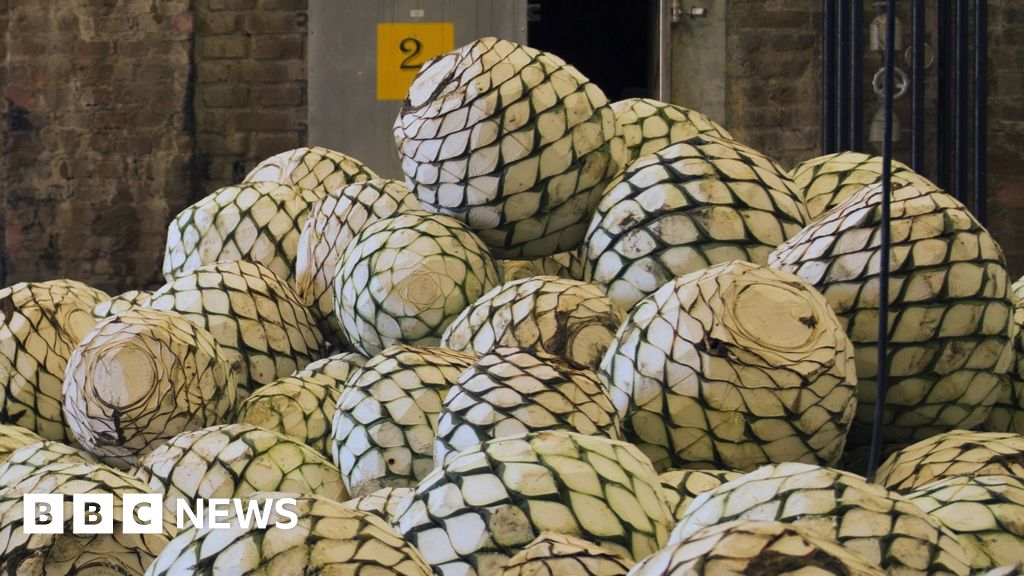
Harvesting agave is a delicate art. The heart, or piña (because it looks like a giant pineapple), must be extracted before the plant decides to bloom and drain all its sugar into a stalk. Miss that narrow window, and you've got a useless piña. "Gatherers must accurately identify the exact pre-blooming window to harvest the plant at its absolute peak sugar capacity," says Rakshay Dhariwal of distiller Maya Pistola Agavepura. Then the piñas must reach a pressure cooker within 24 hours, or the sugars start rotting. And transporting them is a logistical nightmare, with suppliers scattered across Karnataka, Maharashtra, Rajasthan, and Andhra Pradesh. "Brands like us cannot simply order from a centralized farming cooperative," Dhariwal sighs.
Despite the hurdles, India's agave spirit market is growing at 31%, according to Dhariwal. "It's only been a few years now, that India's finally caught the tequila bug," says Vikram Achanta of 30 Best Bars India. Agave drinks probably won't dethrone whisky as the national favourite, but they're carving out a niche - moving "from curiosity to something more credible."
Desmond Nazareth of Agave India launched the country's first homegrown agave spirit in 2011 after 12 years of kitchen experiments. Now he's using satellite imagery to map where agave grows best - because when a plant takes 9 - 13 years to mature, you really don't want to guess wrong. "If you plant in the wrong area, you lose a decade," he notes.
Could India's wild agave run out? Not for at least five years, says agricultural expert Miguel Braganza, because the plant is basically a cloning machine. "Beneath the soil, the mother agave is incredibly busy... Every few feet, a mini-clone of herself pops out." But wild agave is "genetically inconsistent," warns Sree Harsha Vadlamudi of tequila brand Loca Loka. "Mexico solved this over decades through selective breeding. India hasn't yet." His brand uses Mexican blue agave from Jalisco, because apparently the volcanic soil there imparts a flavour you just can't fake.
Mexico's big farms use drones and AI to monitor crops. India's informal system does not. Still, Nazareth is optimistic: "The Deccan Plateau alone has millions of acres suitable for cultivation. We could theoretically rival Mexico if there's long-term vision and patience." Theoretically. And if the fence weeds cooperate.
The Good Times
News in your inbox.
One sardonic roundup, delivered on your schedule. Free. Unsubscribe whenever your tolerance for wit runs out.
Already subscribed but we never reach your inbox? Check your spam folder and hit 'Not spam' (or 'Remove from spam') to bust us out of junk-mail purgatory. You'll be helping everyone else too.
Don't open any of our emails for a month and you'll be automatically removed from the mailing list.
Rewrite Article
Select parts to regenerate with a fresh AI pass. Translations will be updated automatically.
Generate AI Image
Creates a sardonic version of the article image using OpenAI.