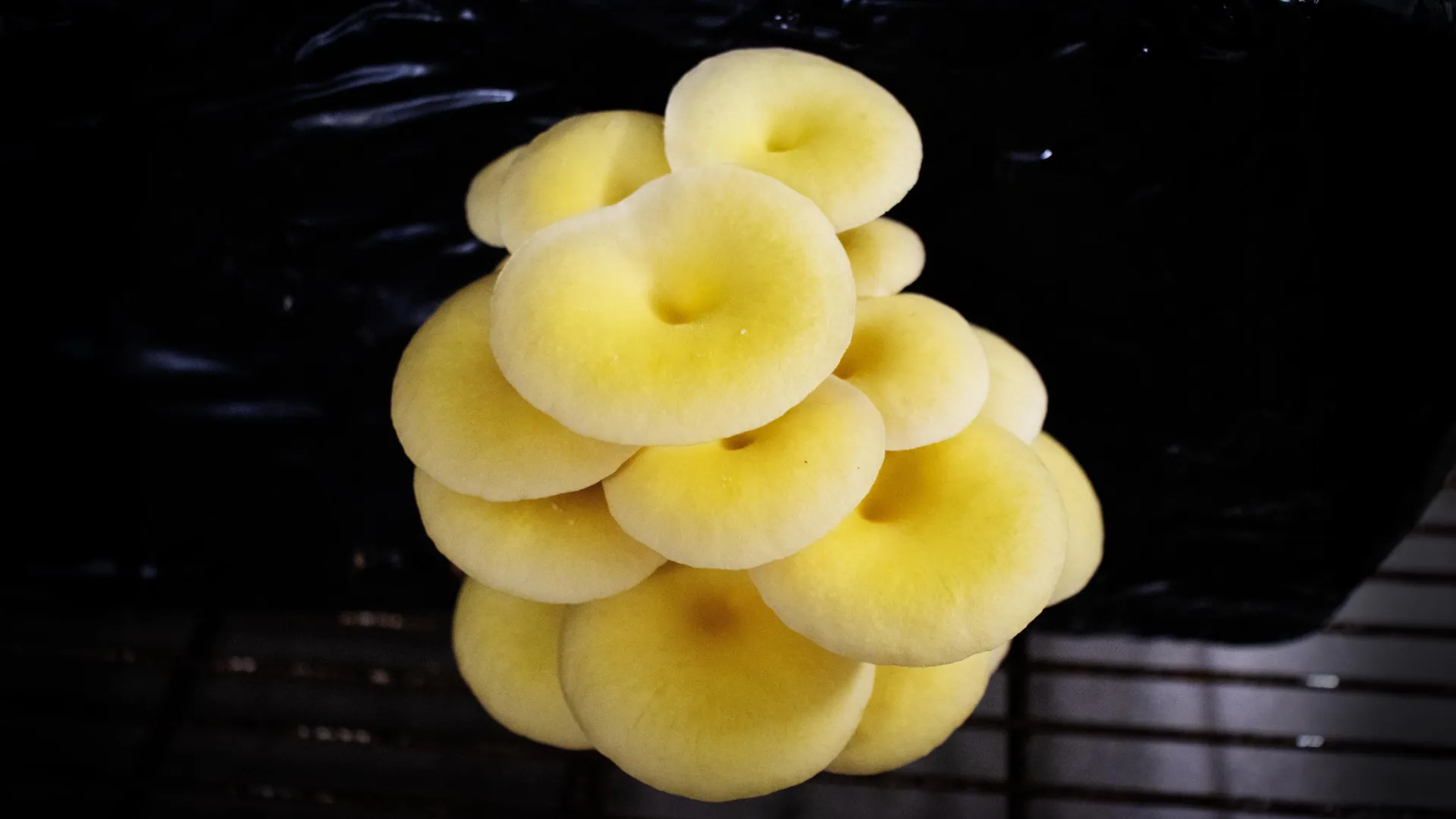
The golden oyster mushroom, with its cheerful yellow caps, has become a darling of home growers and foodies alike. It's sold in grow-your-own kits, grocery stores, farmers markets, and specialty shops. But University of Florida researcher Michelle Jusino has a warning: this appealing fungus is quietly invading natural forests and popping up in markets across Florida.
Jusino, an assistant professor of forest pathology at UF/IFAS, says that while the mushroom is prized in the kitchen, it may not stay put once introduced outdoors. "The golden oyster mushroom may look harmless on a log, but it appears to be a strong competitor in the forest," she said. "It is associated with changes in the fungal community, reducing biodiversity and potentially affecting processes like wood decomposition and carbon cycling."
A recently published field study in Wisconsin, which Jusino helped design during her time with the U.S. Forest Service, highlights how everyday human activities - purchasing, cultivating, and transporting mushrooms - can unintentionally spread invasive species. Researchers used community science platforms like iNaturalist and Mushroom Observer to map sightings across North America. In roughly ten years, the species has expanded into more than 25 U.S. states, including Texas, the District of Columbia, Virginia, North Carolina, Alabama, and Louisiana. Earlier research suggests the mushroom first entered the wild in the early 2010s.
"It is slowly marching south, which is really terrifying," said Jusino. "In 2016, the mushroom was found growing in the wild in just five states, all in the Midwest and Northeast, but today I think fewer than 10 states east of the Mississippi river remain without records of golden oyster in the wild."
To understand its ecological impact, Jusino and her team studied dead elm trees with and without golden oyster mushrooms. They collected wood samples from different heights and used DNA-based methods to identify fungi. Trees colonized by golden oyster mushrooms had far fewer fungal species, and the overall mix of fungi was altered. Some native fungi with ecological or medicinal importance were reduced, while only a few species could coexist with the invader.
"We want to remind growers that not all cultivated fungi stay where we put them. Once released outdoors, even accidentally, the golden oyster mushroom can spread quickly and outcompete native species," said Jusino. Researchers emphasize that prevention requires increased awareness, careful monitoring, and a preference for native mushroom species. Jusino is testing new methods to manage the issue.
As reports of golden oyster mushrooms grow, scientists stress that even edible fungi can have wide-ranging ecological effects. Protecting native fungal biodiversity is critical for healthy forests and adapting to climate change. Jusino's work also highlights a broader challenge: microbial invasions often receive far less attention than invasive plants, insects, or animals, yet they can significantly alter ecosystems. "Invasive fungi are part of the biodiversity crisis," she said. "They're small, but their impact can be enormous. Paying attention now gives us a chance to protect native ecosystems before the balance tips too far."
The Good Times
News in your inbox.
One sardonic roundup, delivered on your schedule. Free. Unsubscribe whenever your tolerance for wit runs out.
Already subscribed but we never reach your inbox? Check your spam folder and hit 'Not spam' (or 'Remove from spam') to bust us out of junk-mail purgatory. You'll be helping everyone else too.
Don't open any of our emails for a month and you'll be automatically removed from the mailing list.
Rewrite Article
Select parts to regenerate with a fresh AI pass. Translations will be updated automatically.
Generate AI Image
Creates a sardonic version of the article image using OpenAI.