Federal Judge Tells DOGE That Slashing Humanities Grants With ChatGPT Was, In Fact, Not Cool
A federal judge rules that DOGE's ChatGPT-powered humanities grant cancellations were unconstitutional - proving that even AI can't justify calling a whaling exhibit 'DEI.'
Winning a grant from the National Endowment for the Humanities is a grueling process that can take months of preparation and multiple attempts. So when DOGE officials with zero humanities experience last year used a chatbot and a haphazard search for terms like "BIPOC" and "gay" to yank the funds of hundreds of grantees, it stung more than a poorly worded AI poem.
"The NEH, NEA, Guggenheim, and maybe one or two other grants are considered just the gold standard for your prestige in the academy," Elizabeth Kadetsky, an English professor at Penn State, told us. Her grant to research stolen Indian antiquities for a nonfiction-writing project was canceled last year. "Can you imagine if you win the Pulitzer Prize or the Nobel and they’re like, Oh, I’m sorry, never mind, you don’t have it?"
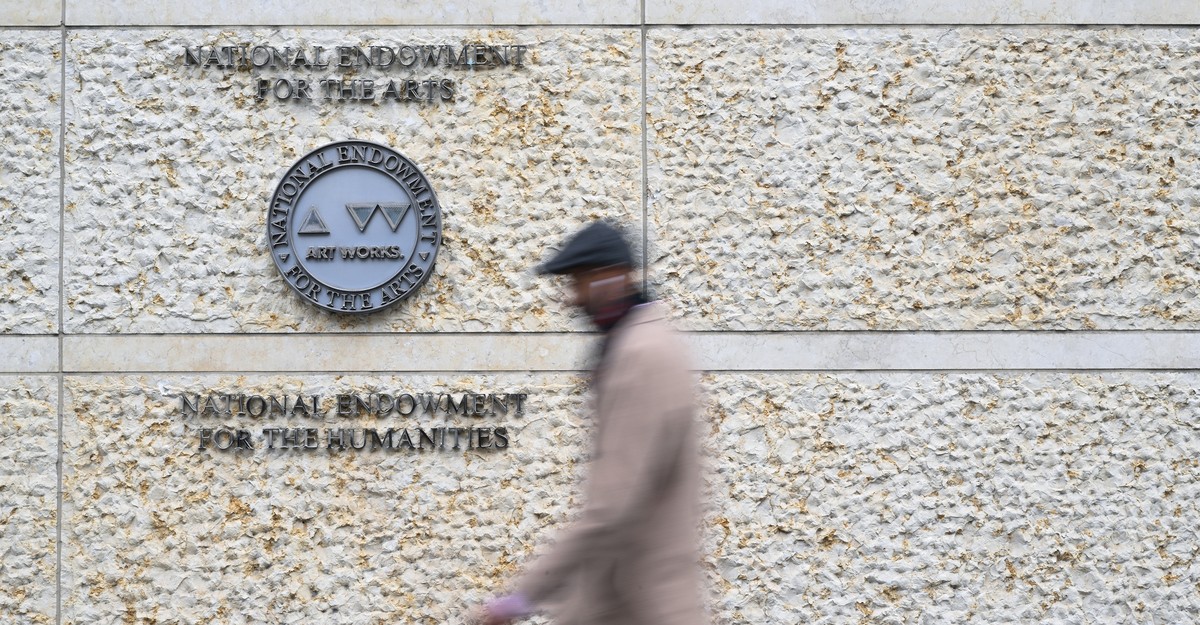
A federal court on Thursday ruled that the grant cancellations were unconstitutional, potentially reversing one of the many Trump administration moves to influence how experts uncover - and then tell - the country’s story. U.S. District Court Judge Colleen McMahon found that DOGE personnel had no authority to terminate NEH grants and that the cuts violated the First and Fifth Amendments. The NEH, she wrote, "was not created as a vehicle for government expression" but rather to "support the intellectual and cultural work of private citizens, scholars, teachers, writers, and institutions."
The court’s decision could reinstate funding for more than 1,400 grants totaling over $100 million, though the administration could still appeal to pause enforcement. White House spokesperson Davis Ingle wrote in an email that the ruling "provides yet another example of liberal judges trying to reinstate wasteful federal spending at the expense of the American taxpayer," adding that the Trump administration expects to be "vindicated" as the case proceeds. The NEH did not respond to requests for comment.
Almost immediately after President Trump returned to office last year, his administration began an ideological purge across federal agencies tasked with conveying history and promoting the arts. The Elon Musk - led Department of Government Efficiency ran unchecked, slashing programs and gutting the civil service. Videos of depositions from two 20-something DOGE employees became an internet sensation, partly because one of them seemed barely able to explain what DEI meant. Asked multiple times to define DEI, Fox struggled, saying "DEI is a very broad structure" and repeatedly referring back to an executive order.
Fox testified that he sent ChatGPT each grant with the prompt: "Does the following relate at all to DEI? Respond factually in less than 120 characters. Begin with ‘Yes.’ or ‘No.’ followed by a brief explanation." Among the canceled grants was one supporting a museum’s whaling-history project, canceled because it sought to "create an inclusive and impactful experience, which is aligned with DEI principles." Judge McMahon noted dryly: "This must represent the first time in history that an exhibit about the whaling industry - a cornerstone of New England’s economy during the 19th and early 20th centuries - has been thought to fall under the banner of ‘diversity, equity and inclusion,’ unless the whales’ status as a species endangered by the whalers places them in a ‘marginalized’ status."
Plaintiffs described the ruling as a moral victory. "Even if it takes a really long time to ever see any of this money, and even if we don’t see the money, this is a win for us," Paula Krebs, executive director of the Modern Language Association, told us. "The country’s commitment to the humanities has been affirmed in court, and I love that."
Oleh Kotsyuba of Harvard’s Ukrainian Research Institute spent more than a year preparing an application to translate Ukrainian literature into English, only to have funding reversed. The organization never received a response to its appeal. Gray Brechin, founder of the Living New Deal, which preserves public artworks from the New Deal era, saw a $150,000 grant canceled. "They want an ignorant society," he said.
Meanwhile, the administration redirected some NEH funding toward the proposed National Garden of American Heroes and prioritized fewer but larger grants, including $10.4 million to a Jewish educational and civic nonprofit associated with the right, and a $10 million award to the University of Virginia for humanities projects related to the Declaration of Independence and the American Revolution. One NEH staffer, speaking anonymously, said the ruling was welcome but major questions remain about whether recipients will actually regain access to funds and whether a drastically diminished agency can administer them. "It’s a good problem to have," the person said.
The Good Times
News in your inbox.
One sardonic roundup, delivered on your schedule. Free. Unsubscribe whenever your tolerance for wit runs out.
Already subscribed but we never reach your inbox? Check your spam folder and hit 'Not spam' (or 'Remove from spam') to bust us out of junk-mail purgatory. You'll be helping everyone else too.
Don't open any of our emails for a month and you'll be automatically removed from the mailing list.
Rewrite Article
Select parts to regenerate with a fresh AI pass. Translations will be updated automatically.
Generate AI Image
Creates a sardonic version of the article image using OpenAI.