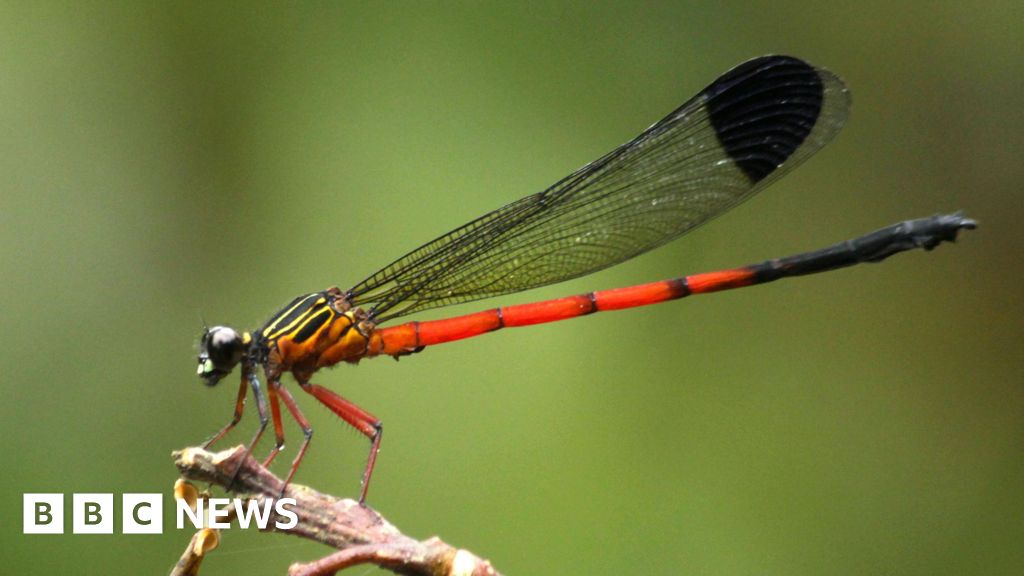
A first-of-its-kind study of dragonflies and damselflies in India's Western Ghats has revealed findings that are equal parts fascinating and alarming - which is basically every environmental study these days.
The research, funded by the Indian government's Department of Science and Technology and conducted over two years (2021 - 2023) across five Indian states, identified 143 species of dragonflies and damselflies in the Western Ghats, with at least 40 endemic to the region. But here's the twist: researchers couldn't find 79 additional species previously reported there, representing an almost 35% decline in species count.
Pankaj Koparde, the evolutionary ecologist who led the study, offers two possibilities: either those species are extremely rare or seasonal and were missed, or - the less cheerful option - some of them have gone extinct.
"Dragonflies and damselflies are good indicators of the health of a region," Koparde says. "Consequently, when their numbers drop, it could signal the potential degradation of an ecosystem." Translation: when the bugs disappear, the whole neighborhood is in trouble.
The Western Ghats - a UNESCO World Heritage Site and 1,600km-long mountain range along India's western coast - is one of the country's most important wetlands, home to at least 325 globally threatened species and over 30% of India's plant and animal life. It's also under serious pressure: The International Union for Conservation of Nature (IUCN) rated it as "significant concern" in its 2025 report, citing urbanisation, agricultural expansion, livestock grazing, infrastructure development (windmills and dams, we're looking at you), invasive species, and mining.
The bad news doesn't stop there. A 2025 study found that a population of rare galaxy frogs vanished after photographers trampled their delicate forest floor habitat. A 2024 study showed farming practices threatening frog species. And a 2023 bird survey noted a 75% decline in 12 endemic bird species. The Western Ghats is basically a biodiversity patient in critical condition.
Koparde and his team hiked through moss-covered riverbanks and mangrove swamps to conduct the study, discovering seven new species of dragonflies and damselflies along the way. They named one Protosticta armageddonia - a nod to "ecological armageddon," the term for catastrophic insect population declines worldwide. Because nothing says "we're in trouble" like naming a bug after the apocalypse.
The team is now creating a genetic library of all documented species, which could help trace evolutionary origins. Given that the Western Ghats formed when the supercontinent Gondwana split during the Jurassic Period about 150 million years ago - older than the Himalayas - the species there may have roots dating back to that ancient landmass. As Koparde puts it, "The species that exist there could have evolutionary roots in the Gondwana supercontinent."
So while dragonflies and damselflies are disappearing, at least we know they've been around since before Pangea had its breakup. Small consolation, but we'll take what we can get.
The Good Times
News in your inbox.
One sardonic roundup, delivered on your schedule. Free. Unsubscribe whenever your tolerance for wit runs out.
Already subscribed but we never reach your inbox? Check your spam folder and hit 'Not spam' (or 'Remove from spam') to bust us out of junk-mail purgatory. You'll be helping everyone else too.
Don't open any of our emails for a month and you'll be automatically removed from the mailing list.
Rewrite Article
Select parts to regenerate with a fresh AI pass. Translations will be updated automatically.
Generate AI Image
Creates a sardonic version of the article image using OpenAI.