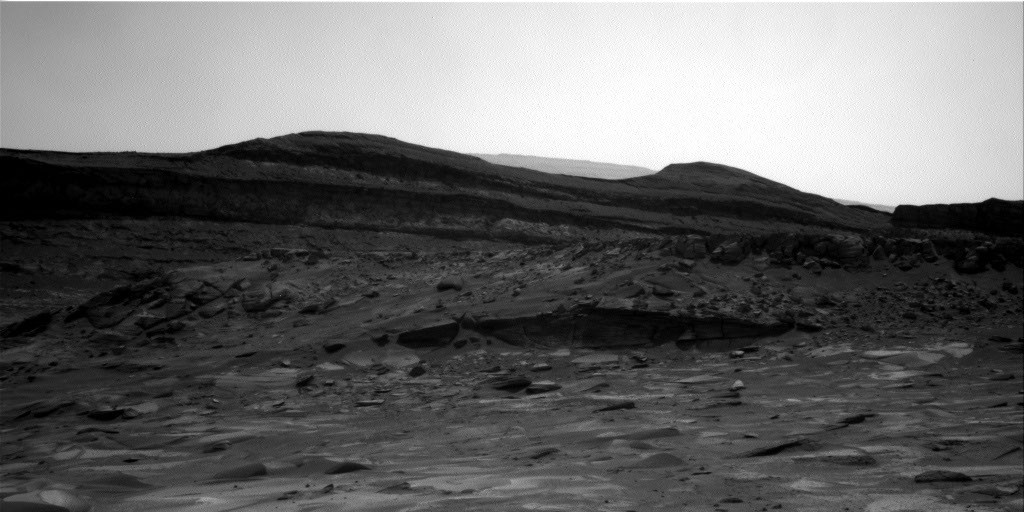
In a touching tribute that could make even a rock shed a tear, NASA’s Curiosity rover team took a moment this week to thank the engineers who keep the plucky robot rolling - and, you know, not getting stuck in Martian sand traps.
Lucy Thompson, a senior research scientist at the University of New Brunswick and the APXS uplink lead, penned a love letter to the rover engineers in the latest mission update. She noted that despite dusty workspaces and terrain that looks like a bad landscaping job, the engineers have managed to safely deploy the arm and instruments on five rock targets this week alone. That’s five chances to zap rocks with APXS and MAHLI, ensuring high-quality compositional data as Curiosity climbs Mount Sharp through rock layers of varying tone and texture.
But the engineers don’t just park the rover and let it take selfies. They’re also responsible for navigating Curiosity past hazards like large resistant blocks (wheel damage, anyone?), sandy patches (remember that time we got a little bogged down?), and steep slopes (slippery when Martian). Despite an early mission wheel mishap and a brief soil-related setback at the start of Mount Sharp’s ascent, the engineers have guided Curiosity over 23 miles (37 kilometers) of driving and more than 4,400 feet (about 1.35 kilometers) of elevation gain. Not bad for a machine that’s been roaming since 2012.
Recently, the science team asked the engineers to drive to specific locations to image what might be an erosional surface within the Mg-sulfate/carbonate-bearing unit. The engineers, being team players, obliged. First stop: checked off. Next stop: planned for this weekend.
And let’s not forget drilling. After a motor failure in 2016 forced a complete reconfiguration of the drilling process - which took JPL nearly a year and a half of behind-the-scenes work - Curiosity has since drilled more than 20 rock targets. So, thanks to the rover engineers (and all the other engineers and scientists), Curiosity had yet another full week of activities at Gale crater, tracking chemistry, textures, tone, and sedimentary structures as it inches ever closer to the Yardang unit.
The rover also continues to monitor the local environment within Gale and the atmosphere in general. Because when you’ve got a nuclear-powered science lab on wheels, you might as well take some air quality readings.
The Good Times
News in your inbox.
One sardonic roundup, delivered on your schedule. Free. Unsubscribe whenever your tolerance for wit runs out.
Already subscribed but we never reach your inbox? Check your spam folder and hit 'Not spam' (or 'Remove from spam') to bust us out of junk-mail purgatory. You'll be helping everyone else too.
Don't open any of our emails for a month and you'll be automatically removed from the mailing list.
Rewrite Article
Select parts to regenerate with a fresh AI pass. Translations will be updated automatically.
Generate AI Image
Creates a sardonic version of the article image using OpenAI.