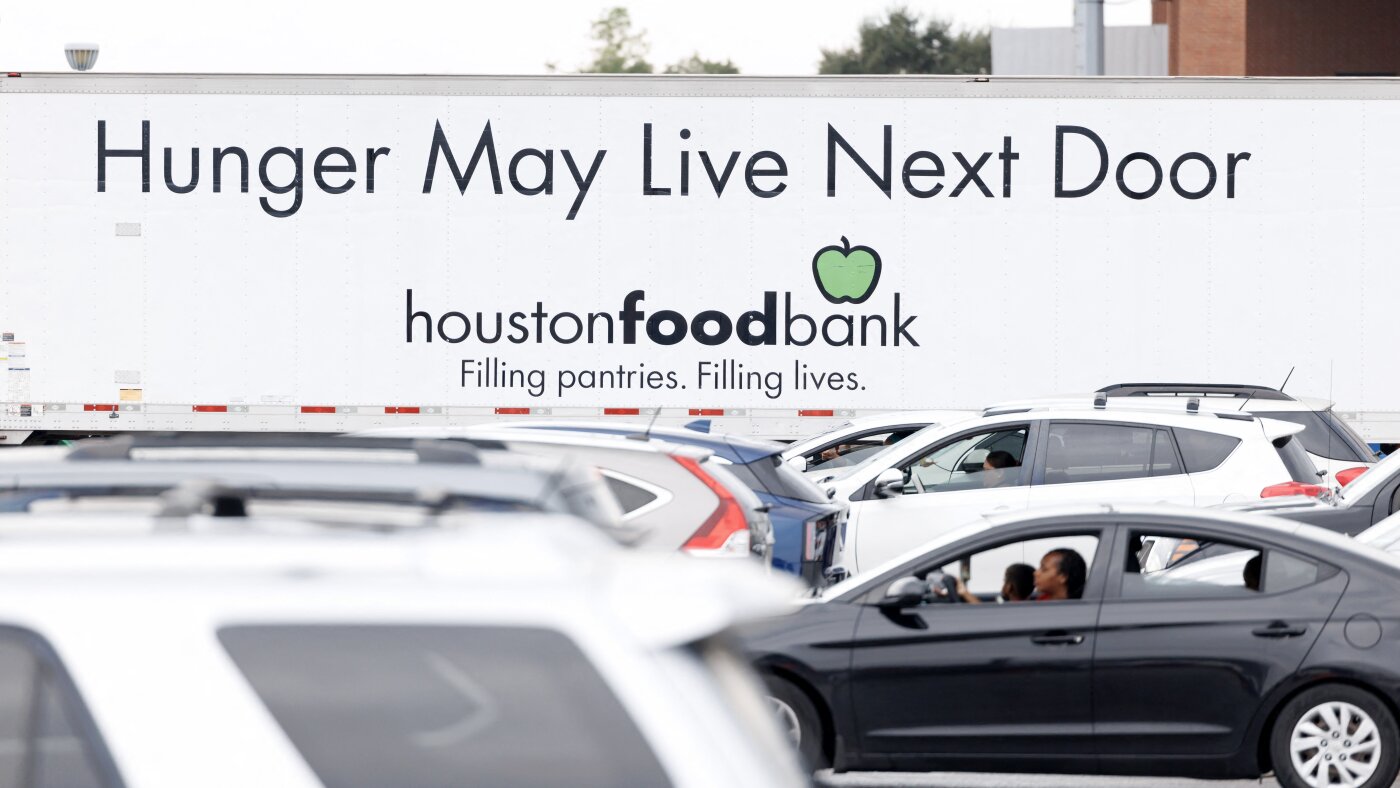
Congratulations, America: Hunger Is Worse Now Than During the Peak of the Pandemic
A New York Fed survey reveals that more Americans are going hungry now than during the pandemic's darkest days, proving that six years of 'progress' can really fill a stomach - with emptiness.
Remember when we thought things couldn't possibly get worse than the depths of the COVID-19 pandemic? The Federal Reserve Bank of New York would like a word. A survey released Wednesday found that food insecurity in the United States is actually higher this year than during the summer of 2020, when the economy was shedding jobs like a snake sheds skin - except less graceful and with more unemployment benefits.
The New York Fed's periodic survey asks Americans whether they're skipping meals, relying on food donations, or using federal assistance to buy groceries. The latest round, conducted in February, shows hunger is a more pervasive problem now than at any point in the last six years. In 2020, just 4% of households reported missing meals; today, 10% do. Among families earning less than $50,000 a year, nearly 20% are forced to skip meals or go without - roughly triple the 7% rate back in 2020.
Amy Breitmann, who runs the Golden Harvest Food Bank in Augusta, Ga., has witnessed the growing desperation firsthand. "We have some distributions where people are sitting in a 2-to-3-mile line the night before a distribution starts," she says. "They're sleeping in their cars." The Community Food Bank of Central Alabama is moving into a larger building to accommodate the increased need. Nicole Williams, its CEO, notes that food insecurity hits close to home: "It could be your next-door neighbor. When gas costs a little bit more or food costs a little bit more, or they have a repair on their car or a medical bill, that takes away what they might be using to spend on food."
The results underscore what economists have dubbed a "K-shaped economy" - a fancy way of saying the rich are doing great while everyone else is eating ramen and praying. As New York Fed economists wrote in a blog post, "While many households are doing fine and economic activity overall has been expanding at a solid pace, large segments of the population are facing high levels of economic insecurity and financial strain."
Food insecurity during the pandemic was partially offset by government relief payments and supplemental unemployment benefits - those are long gone. Food prices have risen rapidly since then, and the New York Fed's survey was conducted before the U.S. war with Iran sent gasoline prices spiking. "If you're adding on another $100 to your budget a month just to put gas in your car... where is that $100 coming from?" asks Breitmann. "Most typically, they're having to pull it from the grocery budget."
The survey also found a growing number of people relying on SNAP benefits, even though eligibility has been tightened. Nearly 18% of families surveyed this year had received SNAP benefits - up from 10.6% in 2020. Among lower-income families, more than 38% are receiving SNAP benefits, compared with about 22% six years ago. Meanwhile, the Agriculture Department, which oversees the program, halted its own research on food insecurity last year, saying the studies did "nothing more than fear monger." Because nothing says "we've got this under control" like stopping the measurement of the problem.
The Good Times
News in your inbox.
One sardonic roundup, delivered on your schedule. Free. Unsubscribe whenever your tolerance for wit runs out.
Already subscribed but we never reach your inbox? Check your spam folder and hit 'Not spam' (or 'Remove from spam') to bust us out of junk-mail purgatory. You'll be helping everyone else too.
Don't open any of our emails for a month and you'll be automatically removed from the mailing list.
Rewrite Article
Select parts to regenerate with a fresh AI pass. Translations will be updated automatically.
Generate AI Image
Creates a sardonic version of the article image using OpenAI.