China's Belt and Road: The Steel-Heavy Climate Cost No One Asked For
China's Belt and Road Initiative is a steel-heavy climate disaster, but at least the clean energy projects it enables might offset the damage - eventually.
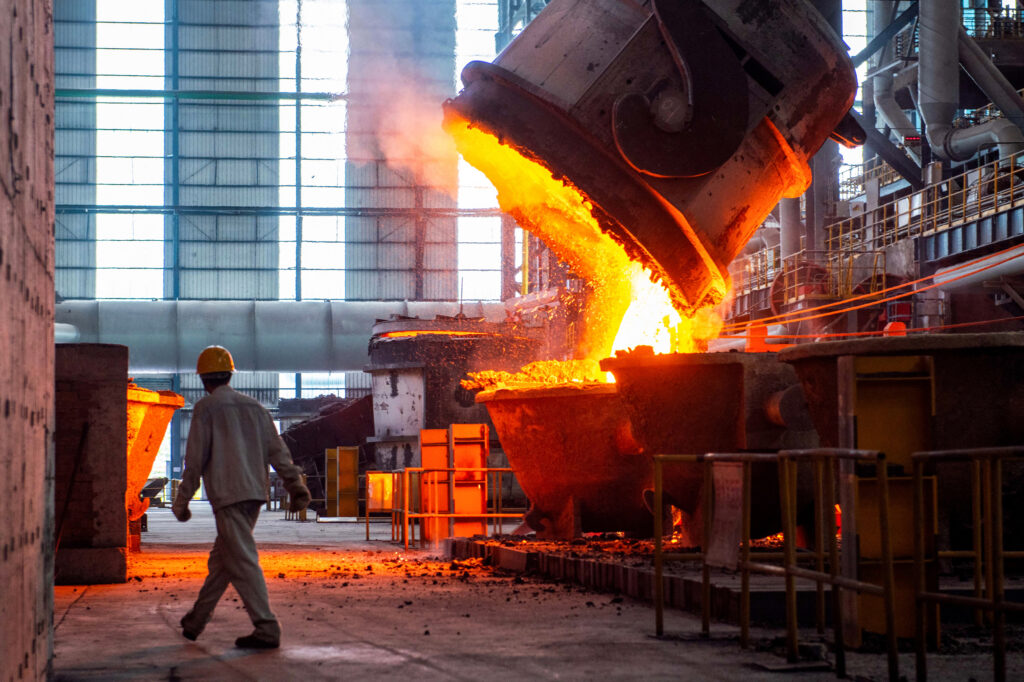
China’s Belt and Road Initiative, the world’s largest ongoing infrastructure program, has a climate impact as massive as its ambitions. More than half its emissions come from steel, and the majority of that steel was forged in China - because of course it was.
Cutting those emissions will require stronger environmental policies and major investment in cleaner manufacturing technologies, according to two new studies that basically say, “You knew this was coming.”
More than 130 million tons of carbon dioxide equivalent emissions are tied to the construction of transportation, energy, building and water projects under the Belt and Road from 2008 to 2024, per a study published Monday in Environmental Science & Technology. The global, project-level assessment tallied climate pollution from over 700 construction projects across 105 countries. That’s the equivalent of 35 coal-fired power plants running for a year, according to the EPA’s greenhouse gas equivalency calculator - because nothing says “green development” like a coal plant’s annual output.
Roughly half of all greenhouse gas emissions from these projects were generated outside the host countries. “It’s not only about the host country, but also all the actors through the supply chain [that] will be affecting those embodied emissions,” said Lingli Hou, a researcher at Leiden University and the study’s lead author. Translation: China’s steel emissions don’t stay in China.
Carbon-intensive steel accounted for 53 percent of the projects’ total emissions. China produces more than half of all steel worldwide, and its manufacturing accounts for about 15 percent of the country’s total CO2 emissions. That’s a big problem for Beijing’s climate goals - peaking emissions by 2030 and hitting carbon neutrality by 2060 - because, as Kate Logan of the Asia Society Policy Institute put it, “Around 90 percent of China’s steel is still produced using the dirtiest route by firing coal in blast furnaces.” So steel is both a hotspot and a huge opportunity, assuming someone lights a fire under the right kind of furnace.
A second study, published Monday in Proceedings of the National Academy of Sciences, modeled how over 700 Chinese companies would respond to different emission reduction policies. Lead author Xiao Liu from Beijing Normal University said, “Our findings suggest that ambitious climate targets cannot be achieved through isolated policy measures alone.” In other words, carrots and sticks - incentives for cleaner tech plus a carbon price - are needed. Steel production using hydrogen instead of coal could be a near-term fix, while electric arc furnaces recycling scrap steel will matter more down the road.
Here’s the kicker: much of the steel in Belt and Road projects goes to clean energy projects that actually reduce emissions. The vast majority of energy projects from 2008 to 2024 were renewable, and the study found that emissions reductions from operating those clean energy projects for about two years or less offset the total construction emissions of all 706 projects. That’s like building a coal plant to power a solar farm, but it actually works. A 2025 Carbon Brief report similarly found that China’s exports of solar panels, batteries, and EVs reduced global emissions outside China by 1 percent, with manufacturing emissions negated in under a year of operation.
Tomer Fishman, an assistant professor at Leiden University and co-author, said future research will assess broader effects on host countries: “How does it support the development of those countries, and what are the trade-offs?” Because if you’re going to build the world, you might as well know what you’re building on.
The Good Times
News in your inbox.
One sardonic roundup, delivered on your schedule. Free. Unsubscribe whenever your tolerance for wit runs out.
Already subscribed but we never reach your inbox? Check your spam folder and hit 'Not spam' (or 'Remove from spam') to bust us out of junk-mail purgatory. You'll be helping everyone else too.
Don't open any of our emails for a month and you'll be automatically removed from the mailing list.
Rewrite Article
Select parts to regenerate with a fresh AI pass. Translations will be updated automatically.
Generate AI Image
Creates a sardonic version of the article image using OpenAI.